Live Screenshot
Source link:
https://www.bbc.co.uk/news/science-environment-50210701Published by: BBC NEWS on 28 Oct 2019
1931 views · Last view: 17 hrs ago
News Text (from BBC NEWS)
The landscape is much drier today Scientists have pinpointed the homeland of all humans alive today to a region south of the Zambezi River. The area is now dominated by salt pans, but was once home to an enormous lake, which may have been our ancestral heartland 200,000 years ago. Our ancestorssettled for 70,000 years, until the local climate changed, researchers have proposed.
They began to move on as fertile green corridors opened up, paving the way for future migrations out of Africa.
"It has been clear for some time that anatomically modern humans appeared in Africa roughly 200,000 years ago," said Prof Vanessa Hayes, a geneticist at the Garvan Institute of Medical Research in Australia.
"What has been long debated is the exact location of this emergence and subsequent dispersal of our earliest ancestors."
Prof Hayes' conclusions have drawn scepticism from other researchers in the field, however.
The area in question is south of the Zambezi basin, in northern [...]
To view the original News article, click here
DISCLAIMER All news articles are shared for educational purposes only. The news content is hosted on the external news website. News articles titles are derived from the original news title, news content, dialogue, speech or general content theme. The news title may be edited and optimized for SEO, keyword density, information and internal website search purposes. You are advised to view the original news article for a better understanding. If you spot any mistakes, errors or omissions kindly contact us.
Search Results on 'Origin of modern humans 'traced to Botswana' - BBC News'
SCROLL TO: TOPICS | 1 NEWS | 89 ARTICLES | 0 FAQ | 0 VIDEO | 16 LINKS | 0Topics include BBC (1)
Who are the BBC? The British Broadcasting Corporation (BBC) is a British public service broadcaster. Its headquarters are at Broadcasting House in Westminster, London and it is the world's oldest national broadcasting organisation and the largest broadcaster in the world by number of employees. It employs over
20,950 staff in total. |
 Great British Islam -
 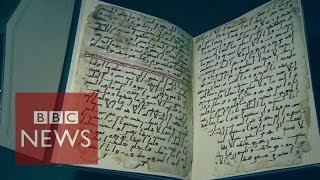 World's Oldest Quran, 1300-years old discovered in UK -
  Science and Islam -
  The Ancient Prophets & Biblical Prophecies -
  Why does the USA have so many Child Brides? -

 The Bible is not a book of historial facts. It is ancient writings tailored for a particular audience and genre -
 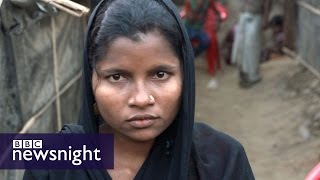 Are Myanmar's Buddhists committing crimes against Rohingya Muslims? -
 Our World: Tel Aviv, Israel Comes Out (Homosexuality) -
 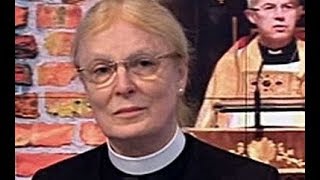 Church of England to hold Transgender services -
  Rise of the far-right in Britain -
  Is this the end for gay conversion therapy? -
  Accuracy of Coronavirus PCR Tests and 'unvalidated' False-Positive results -
  Israel has committed Genocide in Gaza, says UN commission of inquiry |