Live Screenshot
Source link:
https://www.livescience.com/pontius-pilate-street-jerusalem-found.htmlPublished by: LIVESCIENCE on 21 Oct 2019
2164 views · Last view: 11 hrs ago
 JESUS
JESUS
News Text (from LIVESCIENCE)
The street would have taken 10,000 tons of stone to construct. When you purchase through links on our site, we may earn an affiliate commission. Here’s how it works. Archaeologists have identified a grand street in Jerusalem that was built by Pontius Pilate, the Roman prefect of Judea who isfamous for overseeing the trial and crucifixion of Jesus.
The nearly 2,000-foot-long (600 meters) street would have connected the Siloam Pool — a place where pilgrims could stop to bathe and get fresh water — to the Temple Mount, the most holy place in Judaism. The street was likely used by ancient pilgrims on their way to worship at the Mount, the researchers said.
Archaeological evidence for Pontius Pilate is limited and the discovery sheds a bit of light on what the prefect was like, researchers wrote in a paper recently published in the journal "Tel Aviv: Journal of the Institute of Archaeology of Tel Aviv University." The fact that Pilate built a street that would have helped [...]
Explore More
Pontius Pilate Jerusalem Science USA
JESUS
Search Google Search Explore Topics
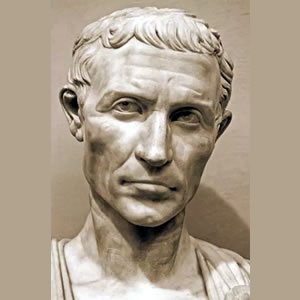 Who was Pontius Pilate?
Pontius Pilate was the fifth prefect of the Roman province of Judaea, serving under Emperor Tiberius from 26-37 AD. He is best known today for adjudicating on the trial and crucifixion of Jesus. In all four gospel accounts, Pilate lobbies for Jesus to be spared his eventual fate of execution, and acquiesces only when the crowd refuses to relent. He thus seeks to avoid personal responsibility for the death of Jesus. In the Gospel of Matthew, Pilate washes his hands to show that he is not responsible for the execution of Jesus and reluctantly sends him to his death. The Gospel of Mark, depicting Jesus as innocent of plotting against the Roman Empire, portrays Pilate as reluctant to execute him. In the Gospel of Luke, Pilate not only agrees that Jesus did not conspire against Rome, but Herod Antipas, the tetrarch of Galilee, also finds nothing treasonable in Jesus' actions. In the Gospel of John, Pilate states "I find no guilt in Him [Jesus]," and he asks the Jews if Jesus should be released from custody.
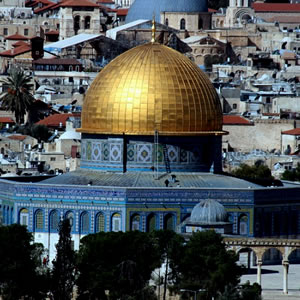 Where is Jerusalem?
Jerusalem is a city in the Middle East. It is located on a plateau in the Judaean Mountains between the Mediterranean and the Dead Sea. It is one of the oldest cities in the world, and is considered holy to the three major Abrahamic religions: Judaism, Christianity, and Islam. Both Israel and the Palestinian Authority claim Jerusalem as their capital, as Israel maintains its primary governmental institutions there and the State of Palestine ultimately foresees it as its seat of power; however, neither claim is widely recognized internationally.
 What is Science?
Science is a systematic enterprise that builds and organizes knowledge in the form of testable explanations and predictions about the universe. The earliest roots of science can be traced to the works of Ancient Egyptians and Mesopotamians, whose contributions entered and shaped Greek natural philosophy of classical antiquity. After the fall of the Western Roman Empire, knowledge of Greek science deteriorated in Western Europe during the Middle Ages but flourished in the Islamic Golden Age. Modern science is typically divided into three major branches that consist of the natural sciences (e.g. biology, chemistry, physics), which study nature in the broadest sense; the social sciences (e.g. psychology, sociology, economics), which study individuals and societies; and the formal sciences (e.g. mathematics, logic, theoretical computer science), which study abstract concepts.
 What is USA?
The United States of America (USA), commonly known as the United States or America. It is a country comprising 50 states, a federal district, five major self-governing territories, and various possessions. At 3.8 million square miles (9.8 million km2), the United States is the world's third or fourth largest country by total area and is slightly smaller than the entire continent of Europe's 3.9 million square miles (10.1 million km2). With a population of over 327 million people, the US is the third most populous country.