Live Screenshot
Source link:
https://www.biometricupdate.com/202208/pakistani-political-hecklers-threatened-with-blocked-biometric-id-bank-accountsPublished by: BIOMETRIC UPDATE on 22 Aug 2022
87 views · Last view: 6 days ago
News Text (from BIOMETRIC UPDATE)
Pakistan’s Interior Minister has warned that supporters of recently-ousted prime minister Imran Khan and his Pakistan Tehreek-e-Insaf (PTI) party whose behavior can be considered heckling or harassment will have their biometric identity cards blocked and therefore be unable to operate their bankaccounts, reports The Nation.
The political situation has since deteriorated, with large groups of Khan’s supporters threatening to “take over,” reports the BBC. Meanwhile the National Database and Registration Authority (NADRA) is working with all political parties to secure their help in reaching more people to register for the biometric national ID – the Computerized National Identity Card (CNIC). This is with a particular emphasis on maintaining the electoral roll.
Newsweek Pakistan reported that Interior Minister Rana Sanaullah Khan also claimed that individuals could have their passports blocked and even be arrested, after being found via Pakistan’s ID system, using [...]
Explore More
Biometric Update Digital ID Biometric PakistanSearch Google Search Explore Topics
 Who are Biometric Update?
Biometric Update is the leading online news and research platform dedicated to the global biometrics and digital identity industries.
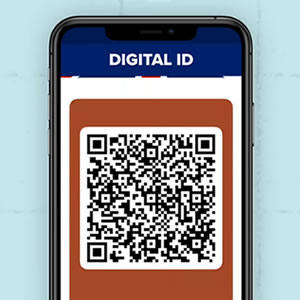 What is Digital ID?
A digital identity or digital ID is data stored on computer systems relating to an individual, organization, application, or device. For individuals, it involves the collection of personal data that is essential for facilitating automated access to digital services, confirming one's identity on the internet, and allowing digital systems to manage interactions between different parties. It is a component of a person's social identity in the digital realm, often referred to as their online identity. Digital identities are composed of the full range of data produced by a person's activities on the internet, which may include usernames and passwords, search histories, dates of birth, social security numbers, and records of online purchases. When such personal information is accessible in the public domain, it can be used by others to piece together a person's offline identity. Furthermore, this information can be compiled to construct a 'data double' - a comprehensive profile created from a person's scattered digital footprints across various platforms. These profiles are instrumental in enabling personalized experiences on the internet and within different digital services.
 What is Biometric?
Biometrics is the technical term for body measurements and calculations. It refers to metrics related to human characteristics. Biometrics authentication is used in computer science as a form of identification and access control. It is also used to identify individuals in groups that are under surveillance. Examples of biometric include fingerprint scan, palm veins, face recognition, DNA, palm print, hand geometry, iris recognition, retina and odour/scent.
What is Pakistan?Pakistan, officially the Islamic Republic of Pakistan, is a country in South Asia. It is the world's fifth-most populous country with a population exceeding 212.2 million. It has the world's second-largest Muslim population. It is the 33rd-largest country by area, spanning 881,913 square kilometres (340,509 square miles). Pakistan has a 1,046-kilometre (650-mile) coastline along the Arabian Sea and Gulf of Oman in the south and is bordered by India to the east, Afghanistan to the west, Iran to the southwest, and China to the northeast.