Live Screenshot
Source link:
https://www.businessinsider.com/microsoft-ibm-pope-francis-push-for-ai-principles-2020-2Published by: BUSINESS INSIDER on 29 Feb 2020
1206 views · Last view: 5 hrs ago
News Text (from BUSINESS INSIDER)
Explore More
Artificial Intelligence Business Insider Pope Francis Biometric Vatican Pope SinSearch Google Search Explore Topics
 What is Artificial Intelligence?
In computer science, artificial intelligence (AI), sometimes called machine intelligence, is intelligence demonstrated by machines. This is in contrast to the natural intelligence displayed by humans and other animals. Computer science defines AI research as the study of "intelligent agents": any device that perceives its environment and takes actions that maximize its chance of successfully achieving its goals. Colloquially, the term "artificial intelligence" is used to describe machines that mimic "cognitive" functions that humans associate with other human minds, such as "learning" and "problem solving".
 Who are Business Insider?
Business Insider is a digital media platform providing global coverage of technology, finance, markets, politics, and lifestyle. The publication features original journalism, analytical deep dives, and first-person essays spanning multiple sectors including artificial intelligence, macroeconomics, and consumer trends.
Who is Pope Francis?Pope Francis (born 1936) is the head of the Catholic Church and sovereign of the Vatican City State. Francis is the first Jesuit pope, the first from the Americas, the first from the Southern Hemisphere, and the first pope from outside Europe since the Syrian Gregory III, who reigned in the 8th century. He is also the first Pope since Gregory XVI (1831-1846) to have been a priest of a religious order.
 What is Biometric?
Biometrics is the technical term for body measurements and calculations. It refers to metrics related to human characteristics. Biometrics authentication is used in computer science as a form of identification and access control. It is also used to identify individuals in groups that are under surveillance. Examples of biometric include fingerprint scan, palm veins, face recognition, DNA, palm print, hand geometry, iris recognition, retina and odour/scent.
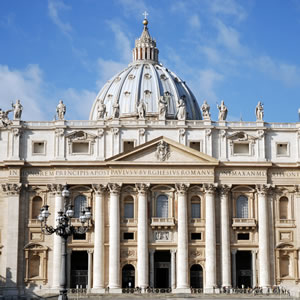 What is Vatican?
The Holy See, also called the See of Rome, is the ecclesiastical jurisdiction of the Catholic Church in Rome, the episcopal see of the Pope, and an independent sovereign entity. It serves as the central point of reference for the Catholic Church everywhere and the focal point of communion due to its position as the pre-eminent episcopal see of the universal church. Today, it is responsible for the governance of all Catholics, organised in their Particular Churches, Patriarchates and religious institutes.
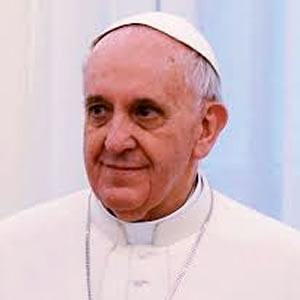 Who is the Pope?
The pope, or supreme pontiff is the Bishop of Rome and therefore ex officio the leader of the worldwide Catholic Church. The primacy of the Roman bishop is largely derived from his role as the apostolic successor to Saint Peter, to whom Jesus is said to have given the Keys of Heaven and the powers of "binding and loosing", naming him as the "rock" upon which the church would be built. Since the 1860s, the pope has also been head of state of Vatican City, a city-state entirely enclaved within Rome, Italy. The current pope is Pope Francis, who was elected on 13 March 2013, succeeding Benedict XVI.
What is Sin?In Abrahamic contexts, sin is the act of violating God's will. Sin can also be viewed as anything that violates the ideal relationship between an individual and God; or as any diversion from the ideal order for human living. To sin has been defined as "to miss the mark". Sins fall in a spectrum from minor errors to deadly misdeeds. Catholicism regards the least corrupt sins as venial sins which are part of human living and carry immediate consequences on earth, and, if unrepented for, more painful purgation, assuming the person is destined to heaven, as it is written in the formation letter "Purgatory", "most of the early Fathers of the Church speak of a cleansing fire, though we cannot tell whether this means actual or spiritual fire." Conversely, sins of great evil are mortal sins which bring the consequence of hell if they are not addressed either through an act of perfect contrition or going to confession about them.