Q What is the difference between the Torah and the Talmud?
A The Torah is the primary, foundational text of Judaism, consisting of the first five books of the Hebrew Bible (the Written Law) given to Moses on Mount Sinai. The Talmud is the comprehensive compilation of ancient rabbinic debates, commentaries, and discussions (the Oral Law) that interpret and explain how to apply the Torah's laws to everyday life.
0 views (57 years ago)
A The Torah is the primary, foundational text of Judaism, consisting of the first five books of the Hebrew Bible (the Written Law) given to Moses on Mount Sinai. The Talmud is the comprehensive compilation of ancient rabbinic debates, commentaries, and discussions (the Oral Law) that interpret and explain how to apply the Torah's laws to everyday life.
Explore More
Talmud Torah MOSESSearch Google Search Explore Topics
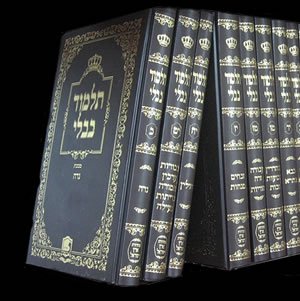 What is the Talmud?
The Talmud is the central text of Rabbinic Judaism and the primary source of Jewish religious law (halakha) and Jewish theology. Until the advent of modernity, in nearly all Jewish communities, the Talmud was the centerpiece of Jewish cultural life and was foundational to "all Jewish thought and aspirations", serving also as "the guide for the daily life" of Jews. The entire Talmud consists of 63 tractates, and in standard print is 2,711 double-sided folios. It is written in Mishnaic Hebrew and Jewish Babylonian Aramaic and contains the teachings and opinions of thousands of rabbis (dating from before the Common Era to the 5th century) on a variety of subjects, including halakha, Jewish ethics, philosophy, customs, history, and folklore, and many other topics. The Talmud is the basis for all codes of Jewish law, and is widely quoted in rabbinic literature.
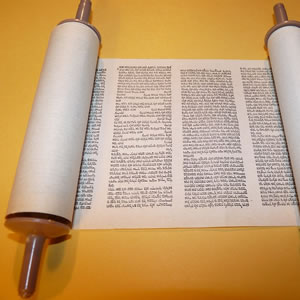 What is the Torah?
Torah, "Instruction", "Teaching" or "Law" has a range of meanings. Common to all these meanings, Torah consists of the origin of Jewish peoplehood: their call into being by God, their trials and tribulations, and their covenant with their God, which involves following a way of life embodied in a set of moral and religious obligations and civil laws. In rabbinic literature the word Torah denotes both the five books "Torah that is written" and the Oral Torah "Torah that is spoken". The Oral Torah consists of interpretations and amplifications which according to rabbinic tradition have been handed down from generation to generation and are now embodied in the Talmud and Midrash. According to rabbinic tradition, all of the teachings found in the Torah, both written and oral, were given by God through the prophet Moses, some at Mount Sinai and others at the Tabernacle, and all the teachings were written down by Moses, which resulted in the Torah that exists today. The majority of Biblical scholars believe the written books were a product of the Babylonian captivity (c. 600 BCE), based on earlier written and oral traditions, which could only have arisen from separate communities within ancient Israel, and that it was completed by the period of Achaemenid rule (c. 400 BCE).