Serapis

Who was Serapis ?

Serapis is a Graeco-Egyptian deity.
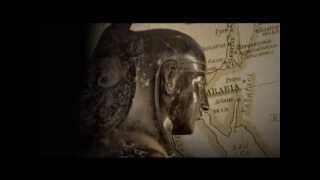
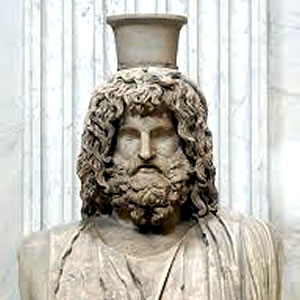
The cult of Serapis was introduced during the third century BC on the orders of Pharaoh Ptolemy I Soter of the Ptolemaic Kingdom as a means to unify the Greeks and Egyptians in his realm. A serapeum was any temple or religious precinct devoted to Serapis. The cultus of Serapis was spread as a matter of deliberate policy by the Ptolemaic kings, who also built the immense Serapeum of Alexandria. Serapis continued to increase in popularity during the Roman Empire, often replacing Osiris as the consort of Isis in temples outside Egypt. Serapis was depicted as Greek in appearance but with Egyptian trappings, and combined iconography from a great many cults, signifying both abundance and resurrection.
VIDEO OPTIONS: Latest Uploads Watching Now Popular Least Views

Video: Serapis Christus, Ptolemy and how Constantine created Jesus Christ at the Council of Nicaea - Ray Hagins
Video: History of Ptolemy, Serapis and Roman Gods unified in 30 BC - Vivian Laughlin
Video: Serapis Christ
  12:47
Video: Early Church, Mithraism, Serapis and the Messiah - Yahu Yisrael
Video: At Nicaea, Serapis Christus finally became Jesus Christ
Search results may not be accurate or suitable. These are generated using a string match technique where strings and phrases are matched approximately not exactly. Search again?.


Latest videos  •  6,061 videos  •  0 viewed/24 hour

SUBSCRIBE

Receive the latest news and updates by email - Subscribe Now!
About  |  Q&A  |  Contact Us    •    Terms  |  Privacy  |  Disclaimer  |  Sitemap
Connect:      Facebook  |    Twitter  |    Youtube
MuslimProphets.com is an educational website on the Prophets of God: David, Noah, Abraham, Moses, Jesus and Muhammad, who established the Abrahamic faiths of Judaism, Christianity and Islam. MuslimProphets.com explores contemporary social themes through Scripture, Evidences, Photo, Video, Maps, Current Affairs, Debate and 'alternative' Views held by Theologians, Apologists, Scholars and Street Preachers. Take a Site Tour

In accordance with Islamic etiquette, all prophet names should be followed with 'Peace Be Upon Him (PBUH)'. This is omitted to minimise text.

DISCLAIMER: All website content is for general information and educational purposes only and available in the public domain. Whilst all information comes from sources believed to be reliable, this cannot be guaranteed. External links are provided as a convenience and for informational purposes only. They do not constitute endorsement or approval for any products, services or comments by organizations or individuals. Title and Text links may be edited for external SEO, internal site and keyword search purposes. We bear no responsibility for the accuracy, legality, or content found on any external website or its subsequent links. Unless indicated, all images and content is licensed under a Creative Commons Attribution License distributed by Wikipedia, Wikimedia Commons, Pixabay, Pxhere, Pexels, Unsplash, Flickr and others. All Torah, Psalms, Old and New Testament Bible quotes are from the King James Version (KJV) Holy Bible in the public domain. All Quran quotes are from Taqi-ud-Din al-Hilali/Muhsin Khan English Quran translation.

ALWAYS DO YOUR OWN RESEARCH. If you spot any mistake, error or omission of information, contact us so we can correct it.