Who was Constantine?
Frequently Asked Questions (1) | Constantine
1.In 325 AD, did Emperor Constantine burn gospels, writings and religious text?
1183
1482192000
1787492048
How Christianity Was Invented by Titus Flavius Constantine
010203
1
614
1482192000
1787578235
Constantine did not choose the Books of the Bible | ReligionForBreakfast
000752
2
757
1493856000
1787264774
Rome and Constantine - Christian History 2/2
002890
3
836
1493856000
1787395823
Constantine and Roman Catholicism - Simcha Jacobovici
002638
4
1189
1493856000
1787572477
Christianity from Judaism to Constantine - Crash Course
000697
5
988
1501545600
1787457037
Serapis Christus, Ptolemy and how Constantine created Jesus Christ at the Council of Nicaea - Ray Hagins
003090
6
772
1501545600
1787452009
Constantine's Pagan Influence on Christianity - Greg Boyd
000345
7
804
1501545600
1787365930
Christianity Before Constantine - Charles Hedrick
003119
8
802
1501545600
1787532171
Constantine, Mithras and Paganism of the Church Exposed - Simcha Jacobovici
002453
9
865
1501895859
1787448558
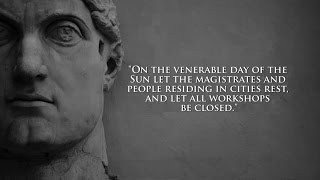
The Christian Story: Sun God, Horus, Constantine and 12 Stars
001920
10
678
1502911975
1787487463
In 321 AD, Emperor Constantine, a confirmed pagan Sun Worshipper changed the Sabbath from Saturday to Sunday
000177
11
210
1503652575
1787542815
Constantine's Sword - James Carroll
000136
12
754
1504441914
1787439692
Constantine worshipped Sol Invictus, the pagan Sun God. Christians today worship the same invincible Sun God - Richard Rives
000158
13

908
1504459849
1787562129
In 325 AD, Constantine imposed his vision of the Imperial Church on the Early Christians
000498
14
1109
1506722498
1787559613
Rome: Constantine & The Early Roman Church - Paul Freedman 3/18
002717
15
237
1510957067
1787431192
The Deception of Constantine
002638
16
832
1511300049
1787532269
Arius, Athanasius & Constantine at Nicaea: Who won the debate? - Richard Rubenstein
003353
17
505
1513217304
1787452648
Constantine worshipped the Sun God up until his death - BeyondTV
000134
18
982
1528566364
1787578517
Constantine converted to Christianity. Yet remained a blood-thirsty, violent, intolerant Roman Emperor - Doug Michael
000121
19
703
1528567049
1787456294
Emperor Constantine was a Pagan who praised Sol Invictus throughout his life - David Fitzgerald
000148
20
1073
1529107115
1787548646
Emperor Constantine made Christianity the official state religion and forced it on the people - Richard Carrier
000049
21
826
1532036807
1787260336
After Nicaea 325 AD, Constantine had Eusebius determine the earliest New Testament canon - Charles Hedrick
000108
22
1046
1533923501
1787560764
Did Constantine (d. 337 AD) convert to Christianity for political reasons? - Richard Rubenstein
000118
23
968
1534149741
1787452324
From 306 AD, Constantine used Christianity to restore power & glory to Rome - Richard Rubenstein
000048
24
947
1566426652
1787351910
Emperor Constantine merged Pagan and Christian values to define Christianity - Kegan Chandler
000077
25
907
1566426624
1787527763
Constantine inserted Homoousios ('same substance') into Christian doctrine, according to Eusebius - Kegan Chandler
000201
26
993
1566426618
1787535484
At Council of Nicaea, Constantine quoted Plato, a Pagan philosopher to justify Homoousios ('same substance') - Kegan Chandler
000134
27
1220
1566426608
1787327174
Lucius Lactantius, advisor to Constantine, harmonized Christianity with Paganism - Kegan Chandler
000149
28
707
1566426594
1787431183
What did Homoousios ('same substance') mean to Constantine? - Kegan Chandler
000351
29

128
1777514297
1787396506
Emperor Constantine and Augustine influence over the Early Church | Peter Bolland
001260
30
News on CONSTANTINE (1)
| Archeologists discover site of Emperor Constantine and Council of Nicaea, 325 AD in Turkey | RT News - 07 Sep 2018 |