Catholic Church Crimes


SEARCH RESULTS:   Catholic Church Crimes Video | 3 News | 0 Articles | 0 Faq | 2 
SEARCH AGAIN?   |   VIDEO   •   NEWS   •   ARTICLE

Frequently Asked Questions (2)   | Catholic Church Crimes


1.When was the word 'Catholic' first used?

The linguistic term 'Catholic' derived from a Greek word meaning 'universal' was historically recorded as early as 107 CE in the letters of Ignatius of Antioch.


2.When did Catholic Christianity become official religion of Rome?

In 380 CE, under the Edict of Thessalonica issued by Emperor Theodosius I, Nicene (Catholic) Christianity officially became the state religion of the Roman Empire, leading to the institutional regulation of religious practices and the formalisation of a calendar of feast days like Christmas and Easter.


3.How did early Catholics learn about Christianity?

Early Catholics were taught Christianity by the priests, nuns and at Catholic schools - and not through Bible study. The priests role was to pass on Christian beliefs and practise to his congregation. The priest acted as an intermediary between God and the people; as mankind was regarded as inherently sinful.

Catholics were discouraged from individual Bible study and pushed towards conforming with traditional Church teachings.


4.When were Catholics encouraged to read the Bible for themselves?

In 1909, Pope Pius X first encouraged Bible study. For the first time, Catholics could now study the Bible for themselves and Catholicism returned to being a 'religion of the book' for the people


5.Was Jesus a Catholic Christian?

Historically, Jesus was a practicing Jew, and the original Jesus movement was a reform movement within Judaism . Conversely, the Catholic Church views Jesus' mission as universal, intended for the entire world, not just the Jewish people .


6.Why did early Christians have church synods and councils?

Early Christian bishops organized regional synods and ecumenical councils to systematically define orthodox Christian doctrines and combat widespread heresies. These massive assemblies were essential for creating a unified creed, standardizing the New Testament canon, and establishing clear administrative laws for a rapidly growing global church. Prominent gatherings, like the Council of Nicaea, were often financed and politically mandated by Roman emperors to secure empire-wide religious stability.


7.How did James, leader of the Jerusalem Church, view Apostle Paul?

Paul's new doctrine met with disapproval from the Jewish-Christians of the Jerusalem Church led by James, who regarded the substitution of Jesus' atoning death for the observance of the Torah as a lapse into paganism.

Paul was duly summoned to Jerusalem by the leaders James, Peter and John to explain his doctrine in 50 AD.


8.What are the origins of Christian church music?

Saint Ambrose (334-397), a keen advocate of church music is credited with introducing it into Christian worship.


9.What are the main practices of the Aladura Church?

  • Fervent, charismatic worship.
  • Extended prayer and fasting.
  • Focus on divine healing.
  • Prophetic visions and revelations.


10.Why do Aladura church members wear white?

  • Members of many Aladura branches, like the Church of the Lord, traditionally wear white garments.
  • The white robes symbolize holiness, purity, and equality before God.


Video on Catholic Church Crimes (3)


VIDEO OPTIONS: Latest Uploads Watching Now Popular Least Views
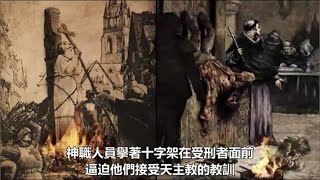
Video: Catholic Church Crimes  - Cruel Tortures 2/4 5:32
Video: Catholic Church Crimes  - Holocaust 3/4 6:59
Video: Catholic Church Crimes  - Hideous Popes 4/4 9:53


Latest videos  •  6,061 videos  •  0 viewed/24 hour

SUBSCRIBE

Receive the latest news and updates by email - Subscribe Now!
About  |  Q&A  |  Contact Us    •    Terms  |  Privacy  |  Disclaimer  |  Sitemap
Connect:      Facebook  |    Twitter  |    Youtube
MuslimProphets.com is an educational website on the Prophets of God: David, Noah, Abraham, Moses, Jesus and Muhammad, who established the Abrahamic faiths of Judaism, Christianity and Islam. MuslimProphets.com explores contemporary social themes through Scripture, Evidences, Photo, Video, Maps, Current Affairs, Debate and 'alternative' Views held by Theologians, Apologists, Scholars and Street Preachers. Take a Site Tour

In accordance with Islamic etiquette, all prophet names should be followed with 'Peace Be Upon Him (PBUH)'. This is omitted to minimise text.

DISCLAIMER: All website content is for general information and educational purposes only and available in the public domain. Whilst all information comes from sources believed to be reliable, this cannot be guaranteed. External links are provided as a convenience and for informational purposes only. They do not constitute endorsement or approval for any products, services or comments by organizations or individuals. Title and Text links may be edited for external SEO, internal site and keyword search purposes. We bear no responsibility for the accuracy, legality, or content found on any external website or its subsequent links. Unless indicated, all images and content is licensed under a Creative Commons Attribution License distributed by Wikipedia, Wikimedia Commons, Pixabay, Pxhere, Pexels, Unsplash, Flickr and others. All Torah, Psalms, Old and New Testament Bible quotes are from the King James Version (KJV) Holy Bible in the public domain. All Quran quotes are from Taqi-ud-Din al-Hilali/Muhsin Khan English Quran translation.

ALWAYS DO YOUR OWN RESEARCH. If you spot any mistake, error or omission of information, contact us so we can correct it.