668 views
·
Last viewed: 3 days ago
Uploaded: 04 Aug 2015 (11 years ago) · Shared: 28 Mar 2017
Duration: 1:54:56
Uploaded: 04 Aug 2015 (11 years ago) · Shared: 28 Mar 2017
Duration: 1:54:56
Video Description
In an enlightening debate, Shadid Lewis and Tony Costa delve into the profound question of whether the Quran is the word of God or man. This engaging discussion explores the rich tapestry of Islamic, Christian, and Jewish perspectives, offering viewers a deep dive into the historical and theological contexts. Shadid Lewis presents compelling arguments rooted in Islamic guidance and the early history of the Quran, while Tony Costa offers insights from the Christian and Biblical viewpoints. This video is a must-watch for anyone seeking a balanced and respectful dialogue on the divine origins of the Quran, the Bible, and the Torah, making it a valuable resource for spiritual seekers and scholars alike.
Explore More
Shadid Lewis Tony Costa The Quran GODSearch Google Search Explore Topics
 Who is Shadid Lewis?
Shadid Lewis is an American Muslim debater and apologist. Shawn Shadid Lewis has started a regular YouTube show where he tackles a range of issues from politics to religion and everything in-between.
 Who is Tony Costa?
Tony's chief passion is in teaching and engaging students of any background in lively class discussions and interactions. He encourages them to ask thought-provoking questions and believes that life-long learning should be fun and life-changing. He is a professor with Providence Theological Seminary in Franklin, Tennessee, USA. He is the author of Worship and the Risen Jesus in the Pauline Letters as well as a contributor of scholarly essays in Christian Origins and Greco-Roman Culture and Christian Origins and Hellenistic Judaism and various journals.
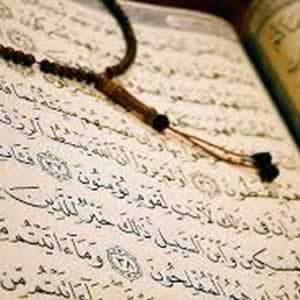 What is The Quran?
Quran, literally meaning "the recitation" is the central religious text of Islam, which Muslims believe to be a revelation from God (Allah). It is widely regarded as the finest work in classical Arabic literature. The Quran is divided into chapters (surah in Arabic), which are then divided into verses (ayah). Muslims believe that the Quran was verbally revealed by God to Muhammad through the angel Gabriel (Jibril), gradually over a period of approximately 23 years, beginning on 22 December 609 CE, when Muhammad was 40, and concluding in 632, the year of his death. Muslims regard the Quran as the most important miracle of Muhammad, a proof of his prophethood, and the culmination of a series of divine messages that started with the messages revealed to Adam and ended with Muhammad.
 Who is GOD?
In monotheism and henotheism, God is conceived as the Supreme Being and principal object of faith. The concept of God as described by theologians commonly includes the attributes of omniscience (infinite knowledge), omnipotence (unlimited power), omnipresence (present everywhere), omnibenevolence (perfect goodness), divine simplicity, and eternal and necessary existence. In theism, God is the creator and sustainer of the universe In deism, God is the creator, but not the sustainer, of the universe Monotheism is the belief in the existence of one God or in the oneness of God In pantheism, God is the universe itself In atheism, God is purported not to exist, while deemed unknown or unknowable within the context of agnosticism.