170 views
·
Last viewed: 1 day ago
Uploaded: 17 May 2024 (2 years ago) · Shared: 11 May 2026
Duration: 8:40
Uploaded: 17 May 2024 (2 years ago) · Shared: 11 May 2026
Duration: 8:40
Youtube Description
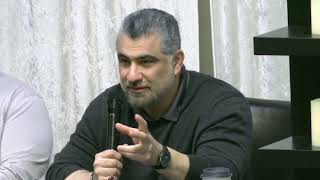
🎙️ In this episode of the Real Talk Podcast, we’re thrilled to welcome back to the channel the eminent Mr. James Howard-Johnston to discuss thecontents of his recent article, “The Qur’an as a Historical Source” 📜✨ (link below ⬇️).
James Howard-Johnston is a Lecturer in Byzantine Studies at the University of Oxford, and author of the monumental Witnesses to a World Crisis: Historians and Histories of the Middle East in the Seventh Century — a masterclass in deep source analysis. His work examines the formative phase of Islam through both Islamic and non-Islamic sources, offering an unparalleled look at this pivotal historical period.
In this discussion, we explore:
🔍 Why he considers the Qur’an a key historical source
📆 What a chronological reading of the text—alongside other materials—can reveal about the Prophet’s evolving role as both a spiritual and political leader of a religion that reshaped the world
🔗 Link to the article:
https://www.degruyter.com/document/doi/10.1515/jiqsa-2024-0006/html
💬 Be sure to like, share, subscribe, and let us know your thoughts on this powerful and thought-provoking discussion!
Explore More
James Howard-Johnston Skepsislamica Hudaybiya Quraysh Islam MeccaSearch Google Search Explore Topics
 Who is James Howard-Johnston?
James Howard-Johnston (born 1942) is an English historian of the Byzantine Empire. He was University Lecturer in Byzantine studies at the University of Oxford. He is an emeritus fellow of Corpus Christi College, Oxford. His approach to Byzantium follows that of Edward Gibbon and concentrates on comparisons between the Byzantine state and its Western counterparts. Howard-Johnston has also done research on Late Antiquity, especially the Roman-Persian Wars and the early history of Islam.
 Who are Skepsislamica?
We spotlight perspectives in Islamic history that often go unnoticed, keeping you informed on the latest academic research and discussions. Our content is non-sectarian and grounded in rigorous academic approaches to Islamic studies, offering deep and thoughtful analysis.
 What was Hudaybiya?
Hudaybiya or The Treaty of al-Hudaybiya was an event that took place during the lifetime of the Islamic prophet Muhammad. It was a pivotal treaty between Muhammad, representing the state of Medina, and the tribe of the Quraysh in Mecca in March 628 AD (6 AH). The treaty helped to decrease tension between the two cities, affirmed peace for a period of 10 years, and authorized Muhammad's followers to return the following year in a peaceful pilgrimage, which was later known as the First Pilgrimage. However, this treaty was broken in two years (according to Islamic sources, the treaty was broken by the Quraysh), which led Muhammad to march against Mecca in 630 with an army of 10,000 men.
Who were the Quraysh?Quraysh are an Arab tribe who controlled Mecca before the rise of Islam. Their members were divided into ten main clans, most notably the Banu Hashim, into which Islam's founder prophet Muhammad was born. By the 7th century, they had become wealthy merchants, dominating trade between the Indian Ocean, East Africa, and the Mediterranean. The tribe ran caravans to Gaza and Damascus in summer and to Yemen in winter, while also mining and pursuing other enterprises on these routes. When Muhammad began preaching Islam in Mecca, the Quraysh initially showed little concern. However, their opposition to his activities quickly grew as he increasingly challenged the polytheism prevalent throughout pre-Islamic Arabia.
 What is Islam?
One of the major religions of the world, Islam literally translates to "submission," as a follower of Islam (Muslims) devotes their life to that of their God. The religion began with the teachings of Muhammad in the 7th century. The theology of Islam is based on the Qur'an, which was given to Muhammad by God. Some of the major fundamental principles of Islam include the Five Pillars, which hope to unite all Muslims into a community. Two different factions of Muslims exist - the majority are known as Sunni, with a small percentage known as Shi'a - both predominantly reside throughout the Middle East. Muhammad died in 632 AD and the religion of Islam formally started after his death. The Quran was formally compiled and finalised in 650 AD, prior to which it was 'memorised' and written across many parchments.
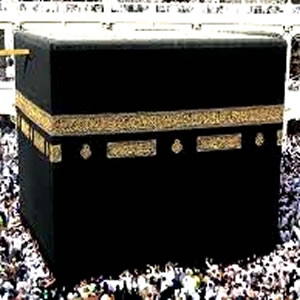 Where is Mecca?
Mecca, or Makkah is a city in the Hejazi region of the Arabian Peninsula, and the plain of Tihamah in Saudi Arabia. It is also the capital and administrative headquarters of the Makkah Region. The city is located 70 km (43 mi) inland from Jeddah in a narrow valley at a height of 277 m (909 ft) above sea level, and 340 kilometres (210 mi) south of Medina. Its resident population in 2012 was roughly 2 million,