Uploaded: 07 May 2026 (5 months ago) · Shared: 07 May 2026
Duration: 37:30
Video Description
In this insightful episode of History Valley, scholar Nicholas Allen examines how early Christianity was profoundly shaped by the intellectual traditions of the ancient Mediterranean world. The discussion explores the intersection of Egyptian cosmology, Hellenistic thought, and classical Greek philosophy, highlighting the lasting impact that thinkers like Plato and Plotinus had on early Christian theology and the intellectual development of the early Church.
By tracing these historical and philosophical influences, Nicholas Allen offers a rich perspective on how early believers articulated their faith, synthesized classical wisdom, and framed foundational scriptural concepts. Ideal for viewers passionate about biblical studies, Church history, and ancient religious traditions, this engaging conversation illuminates the dynamic exchange between classical philosophy and early Christian thought, providing deeper insight into the complex historical origins of modern theological doctrine.
Explore More
Early Christian History Valley Nicholas Allen Christianity Philosophy Egypt PhiloSearch Google Search Explore Topics
 What is Early Christian?
Early Christianity, the period of Christianity preceding the First Council of Nicaea in 325 AD. This typically divides historically into the Apostolic Age and the Ante-Nicene Period (from the Apostolic Age until Nicea). The first Christians, as described in the first chapters of the Book of Acts, were all Jews either by birth or conversion and historians refer to them as Jewish Christians. The early Gospel message spread orally, probably originally in Aramaic, and later in Greek. The New Testament's Acts of the Apostles and Epistle to the Galatians record that the first Christian community centered on Jerusalem and that its leaders included Peter, James, the brother of Jesus, and John the Apostle.
 Who are History Valley?
History Valley podcast is a world history/religious history channel in which we discuss historical events, interview authors, PhD's, Professors and other authors about subjects pertaining to those things.
 Who is Nicholas Allen?
Nicholas Allen is a researcher with the South African National Research Foundation. He is both an historian and an artist. He has authored and co-authored numerous academic books and accredited scientific articles on various topics including Art History, New Testament, Cognate and Deuterocanonical Literature, Sindonology and the History of Judaism and Christianity.
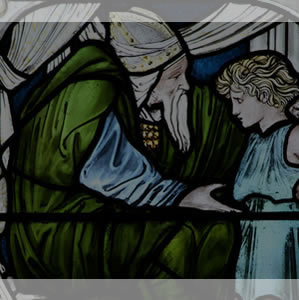 What is Christianity?
Christianity is a global religion centered on the life and teachings of Jesus Christ, who followers believe is the Son of God. It's a monotheistic faith, meaning Christians believe in one God who exists in three co-equal persons: God the Father, God the Son (Jesus Christ), and the Holy Spirit. Christianity is based on the Bible, with the Old Testament and New Testament serving as sacred texts.
What is Philosophy?Philosophy is the study of general and fundamental problems concerning matters such as existence, knowledge, values, reason, mind, and language. The term was probably coined by Pythagoras (c. 570-495 BCE). Philosophical methods include questioning, critical discussion, rational argument, and systematic presentation. Classic philosophical questions include: Is it possible to know anything and to prove it? What is most real? Philosophers also pose more practical and concrete questions such as: Is there a best way to live? Is it better to be just or unjust (if one can get away with it)? Do humans have free will?
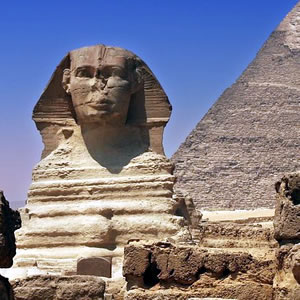 What is Egypt?
Egypt, officially the Arab Republic of Egypt, is a country spanning the northeast corner of Africa and southwest corner of Asia by a land bridge formed by the Sinai Peninsula. Egypt is a Mediterranean country bordered by the Gaza Strip and Israel to the northeast, the Gulf of Aqaba and the Red Sea to the east, Sudan to the south, and Libya to the west. Across the Gulf of Aqaba lies Jordan, across the Red Sea lies Saudi Arabia, and across the Mediterranean lie Greece, Turkey and Cyprus, although none share a land border with Egypt.
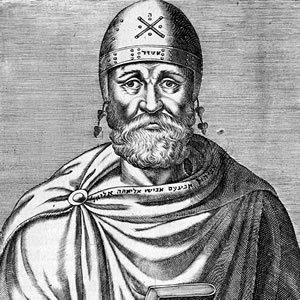 Who was Philo?
Philo of Alexandria (20 BC-50 AD) was a Hellenistic Jewish philosopher who lived in Alexandria, in the Roman province of Egypt. Philo used philosophical allegory to harmonize Jewish scripture, mainly the Torah, with Greek philosophy. His method followed the practices of both Jewish exegesis and Stoic philosophy. His allegorical exegesis was important for some Christian Church Fathers, but he had very little reception history within the Rabbinic Judaism. He adopted allegorical instead of literal interpretations of the Hebrew Bible. Some scholars hold that his concept of the Logos as God's creative principle influenced early Christology.