743 views
·
Last viewed: 11 hrs ago
Uploaded: 01 Dec 2023 (3 years ago) · Shared: 30 Jul 2025
Duration: 47:21
Uploaded: 01 Dec 2023 (3 years ago) · Shared: 30 Jul 2025
Duration: 47:21
Youtube Description
In the 8th century Middle East, a new dynasty seized control of one of the world’s greatest empires – the Islamic Caliphate. Though little rememberedin the west today, the Abbasids reigned for five centuries. They oversaw an era of Islamic military dominance... city-building… brilliant scholarship, and technological innovation. It has come to be remembered as Islam’s ‘golden age’. This is the rise and fall of the Abbasid Caliphate.
Thank you to our series historical consultant, Professor Antoine Borrut of the University of Maryland. Find out more about his research and publications here: https://history.umd.edu/directory/antoine-borrut.
Thank you also to YouTube channel Al Muqaddimah for additional help with research. Watch great history videos on Islamic history at: https://www.youtube.com/@AlMuqaddimahYT
---------------------------------
📚 Osprey Publishing books on military forces of the Caliphate:
📖 Armies of the Muslim Conquest https://www.ospreypublishing.com/uk/armies-of-the-muslim-conquest-9781855322790/
📖 The Armies of Islam 7th-11th Centuries https://www.ospreypublishing.com/uk/armies-of-islam-7th11th-centuries-9780850454482/
📖 Armies of the Caliphates 862-1098 https://www.ospreypublishing.com/uk/armies-of-the-caliphates-8621098-9781855327702/
📖 Mounted Archers of the Steppe 600 BC–AD 1300 https://www.ospreypublishing.com/uk/mounted-archers-of-the-steppe-600-bcad-1300-9781841768090/
📖 Saracen Faris AD 1050–1250 https://www.ospreypublishing.com/uk/saracen-faris-ad-10501250-9781855324534/
---------------------------------
📚 Some recommended reading provided by Prof. Borrut for those wishing to know about the Abbasids (as an Amazon Associate I earn from qualifying purchases):
📖 A recent & comprehensive overview of Abbasid Baghdad and Abbasid culture: Emily Selove, Baghdad at the Centre of a World, 8th-13th Century: An Introductory Textbook https://www.amazon.co.uk/Baghdad-Centre-World-8th-13th-Century/dp/1944296158?tag=ephitv0b-21
📖 The funniest (and excellent) introduction to the topic (comic book): Emily Selove, Popeye and Curly: 120 Days in Medieval Baghdad https://www.amazon.co.uk/Popeye-Curly-Days-Medieval-Baghdad/dp/1944296190/ref=sr_1_1?tag=ephitv0b-21&crid=382P06ICW8JUQ&keywords=Emily%20Selove,%20Popeye%20and%20Curly&qid=1683105572&s=books&sprefix=emily%20selove%20popeye%20and%20curly,stripbooks,66&sr=1-1
📖 The most accessible narrative on the Abbasid dynasty: Hugh Kennedy, When Baghdad Ruled the Muslim World: The Rise and Fall of Islam’s Greatest Dynasty https://www.amazon.co.uk/When-Baghdad-Ruled-Muslim-World/dp/0306814358/ref=sr_1_1?tag=ephitv0b-21&crid=6AXHGDF4BOJP&keywords=Hugh%20Kennedy,%20When%20Baghdad%20Ruled%20the%20Muslim%20World&qid=1683105401&s=books&sprefix=hugh%20kennedy%20when%20baghdad%20ruled%20the%20muslim%20world,stripbooks,71&sr=1-1
📖 To move away from the aura of masculinity surrounding the period: Nadia Maria El Cheikh, Women, Islam, and Abbasid Identity https://bookshop.org/a/99532/9780674736368 / https://uk.bookshop.org/a/12275/9780674736368
📖 An excellent biography of a major Abbasid caliph: Michael Cooperson, Al-Ma’mun https://uk.bookshop.org/a/12275/9781851683864 / https://www.amazon.co.uk/Al-Mamun-Makers-Muslim-Michael-Cooperson/dp/1851683860/ref=sr_1_fkmr0_1?tag=ephitv0b-21&crid=4T91N1E942Z3&keywords=Michael%20Cooperson,%20Al-Ma’mun&qid=1683105527&s=books&sprefix=michael%20cooperson%20al-ma%20mun,stripbooks,65&sr=1-1-fkmr0
📖 Many more excellent biographies in the same series, “Makers of the Muslim World”: https://www.simonandschuster.com/series/Makers-of-the-Muslim-World
📖 A thought-provoking discussion of the making of a discrete Muslim identity in pre-Abbasid times: Fred M. Donner, Muhammad and the Believers: At the Origins of Islam https://bookshop.org/a/99532/9780674064140 / https://uk.bookshop.org/a/12275/9780674064140
You can visit our online bookshop to find great books on the Abbasids and other topics:
UK site - https://uk.bookshop.org/shop/epichistorytv
US site - https://bookshop.org/shop/epichistorytv
As a bookshop.org affiliate we earn from qualifying purchases while donating 10% of sales to support independent bookshops!
---------------------------------
Support Epic History TV on Patreon from $1 per video, and get perks like ad-free early access & votes on future topics https://www.patreon.com/EpicHistoryTV
Or join the ranks of the Grognards with our YouTube memberships https://www.youtube.com/channel/UCvPXiKxH-eH9xq-80vpgmKQ/join
👕 Buy posters, t-shirts, hoodies, mugs & stickers at our merch store:
https://www.ehtvmerch.com/
🎶 Filmstro Music from: https://filmstro.com/?ref=7765
Get 20% off an annual license with this exclusive code: EPICHISTORYTV_ANN
#EpicHistoryTV #IslamicHistory #AbbasidCaliphate
Explore More
Epic History Abbasid IslamSearch Google Search Explore Topics
 Who are Epic History?
Epic History makes videos about the most dramatic and important stories from our past. From the rise and fall of empires to global conflicts and revolutions. Our team have history degrees and decades of experience in documentary production, and regularly collaborate with specialist historians around the world, so you're in safe hands as we explore some of the most epic moments in history.
 What is Abbasid?
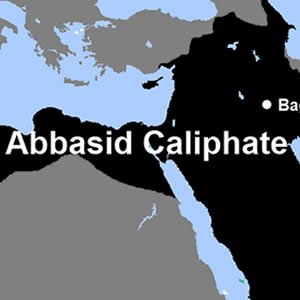
The Abbasid Caliphate was the third caliphate to succeed the Islamic prophet Muhammad. It was founded by a dynasty descended from Muhammad's uncle, Abbas ibn Abd al-Muttalib (566-653 CE), from whom the dynasty takes its name. After overthrowing the Umayyad Caliphate in the Abbasid Revolution of 750 CE (132 AH), they ruled as caliphs based in modern-day Iraq, with Baghdad being their capital for most of their history. The Abbasid Caliphate first centered its government in Kufa, modern-day Iraq, but in 762 the caliph al-Mansur founded the city of Baghdad as the new capital. Baghdad became the center of science, culture, arts, and invention in what became known as the Golden Age of Islam. By housing several key academic institutions, including the House of Wisdom, as well as a multiethnic and multi-religious environment, the city garnered an international reputation as a centre of learning.
 What is Islam?
One of the major religions of the world, Islam literally translates to "submission," as a follower of Islam (Muslims) devotes their life to that of their God. The religion began with the teachings of Muhammad in the 7th century. The theology of Islam is based on the Qur'an, which was given to Muhammad by God. Some of the major fundamental principles of Islam include the Five Pillars, which hope to unite all Muslims into a community. Two different factions of Muslims exist - the majority are known as Sunni, with a small percentage known as Shi'a - both predominantly reside throughout the Middle East. Muhammad died in 632 AD and the religion of Islam formally started after his death. The Quran was formally compiled and finalised in 650 AD, prior to which it was 'memorised' and written across many parchments.