Is The Quran an Early Text? | Sean Anthony | MythVision

   7:48
759 views  ·  Last viewed: 31 mins ago
Uploaded: 19 Oct 2021   (5 years ago)  ·  Shared: 13 Jun 2025

Video Description

This is a must watch show for anyone interested in getting to the bottom of the Historical Muhammad question. His book is a gold mine of information about the earliest history of Islam.

In Muhammad and the Empires of Faith, Sean W. Anthony demonstrates how critical readings of non-Muslim and Muslim sources in tandem can breathe new life into the historical study of Muhammad and how his message transformed the world. By placing these sources within the intellectual and cultural world of Late Antiquity, Anthony offers a fresh assessment of the earliest sources for Muhammad’s life, taking readers on a grand tour of the available evidence, and suggests what new insights stand to be gained from the techniques and methods pioneered by countless scholars over the decades in a variety of fields. Muhammad and the Empires of Faith offers both an authoritative introduction to the multilayered traditions surrounding the life of Muhammad and a compelling exploration of how these traditions interacted with the broader landscape of Late Antiquity.

GET THE BOOK HERE: 👉 https://amzn.to/35FqNYf

=================================


MythVision Website: 🔥 https://mythvisionpodcast.com/
MythVision Patreon 👉 https://www.patreon.com/mythvision
MythVision Paypal. 👉 https://www.paypal.me/dereklambert7
Cashapp: 👉 $rewiredaddiction
Venmo: 👉 @Derek-Lambert-9
Recommeded books 👉 https://amzn.to/35FqNYf
Email MythVision 👉 mythvisionpodcast@gmail.com
Facebook page: 👉 https://www.facebook.com/MythVision/
Facebook group: 👉 https://www.facebook.com/groups/TheWaterBoyZRadio/
Twitter: 👉 @DerekPodcast
Instagram: 👉 @dereklambert_7
MythVision Discord: https://discord.gg/dRQXdZBq6E

0:00 Introductions
4:08 Was there a Muhammad?
7:08 Non-Muslim sources that speak to the existence of a historical Muhammad.
18:40 Evidence of Muhammad’s existence from the Arabic side - the Hijri calendar and Muhammad’s Hijra to Medina.
27:30 Was there an eschatological motivation in the Arab conquest? Apocalyptic literature in the 7th century.
33:58 The compilation of the Quran, how early was the Quran compiled? 
41:43 Is the Quran preserved word for word?
44:50 Doctrina Jacobi
53:22 Jesus in the Quran - ‘Isa’, the hostility towards the iconography of the cross in the early Muslim communities.
1:03:42 How did the hadith corpus develop?
1:13:53 Was Muhammad a shepherd or a merchant?
1:20:20 Traditions and legends common to all Abrahamic religions, the Kaaba.
1:28:04 The origins of the name ‘Allah’
1:33:45 The Petra theory, Dhul al-Qarnayn/ Alexander the Great 
1:38:20 The sleepers of Ephesus.
1:40:24 Apocalypticism in the Quran
1:47:40 Dr. Sean Anthony’s hopes for the future of scholarship of Islam and the Muslim community in general.
1:55:20 Final remarks.


#MythVision #Muhammad #SeanWAnthony #IslamDISCLAIMER
All videos are shared for educational and information purposes only. All videos are hosted and viewable on Youtube servers. Video titles are generated using the original video title; overall content theme including actual dialogue and speech (Transcript); and A.I-based recommendations with a focus on SEO, keyword density, and internal search functions. The video title does not represent the views held by the Youtube video uploader, or any individual, organisation or business.

If you spot any mistake, omission or give feedback, kindly Contact Us with details

Keyword Search


Who is Sean Anthony?

Sean W. Anthony is a historian of early Islamic history and Arabic literature. After receiving his doctorate from the University of Chicago in 2009, Anthony taught at the University of Oregon (Eugene) and the Ohio State University, where he is currently professor of Near Eastern Languages and Cultures.
Who is MythVision?

MythVision Podcast (MVP) brings you some of the finest information surrounding Mythology. Knowledge from a variety of people in search of a better understanding of ancient text. We discuss mythology, syncretism, astrotheology, gematria, sacred geometry, secret societies, ancient languages, history, prophecy, scholarship, conspiracies, heretical [...]

What is Quran?

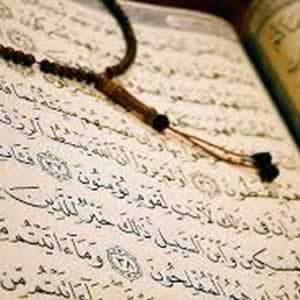
Quran, literally meaning "the recitation" is the central religious text of Islam, which Muslims believe to be a revelation from God (Allah). It is widely regarded as the finest work in classical Arabic literature. The Quran is divided into chapters (surah in Arabic), which are then divided into verses (ayah). Muslims believe that the Quran was [...]

Frequently Asked Questions


1.Why should we believe the Quran if it comes 600 years after Jesus?

The Quran may have come 600 years after Jesus, but does that make it false? Jesus came 1600 years after Moses, does that make Jesus false? The underlying or main argument here is the time between one person and another, but as we can see, if time is a problem then Christians should reject the other Prophets and Messengers since they have a greater number of years between them.

The complete manuscript collections of the New Testament and Old Testament date to the 4th and 5th century, within 100 years of the Qur'an, if Christians want to reject the Qur'an because it is 600 years after Jesus then they must be consistent and also reject the New Testament.

It should be noted that the Church itself did not ordain or make it canon (law) that the New Testament should be scripture until 393 and 397 CE in the Carthaginian councils. With all of these evidences, and centuries between Jesus and the New Testament, then they must reject the New Testament first. If not, then they are admitting that their argument is weak, unintelligent and absurd.


2.What is the Quran?

The Quran is the scripture revealed to Muhammad via the Angel Gabrial


3.Do Muslims believe in scripture other than their own Quran?

Muslims believe the scripture given to other prophets including Moses, David and Jesus have some elements of truth in them. But the Quran is the final revelation from God and takes precedence over other scripture.


4.How was the Quran revealed?

The Quran was revealed to Prophet Muhammad through the Angel Gabrial. Muhammad would repeat the exact words Gabrial gave him and they were written down and memorised.


5.What does the Quran say about Jews and Christians?

The Jews say "The Christians have nothing [true] to stand on," and the Christians say, "The Jews have nothing to stand on," although they [both] recite the Scripture. Thus the polytheists speak the same as their words. But Allah will judge between them on the Day of Resurrection concerning that over which they used to differ.
[Quran 2:113]


6.How authentic is the Quran?

Thanks to its undisputed authenticity, the text of the Quran holds a unique place among the books of Revelation, shared neither by the Old nor the New Testament.


7.How was the Quran text kept authentic?

As the Quran was revealed, the Prophet and the believers following him recited the text by heart and it was also written down by the scribes in his following.

It therefore starts off with two elements of authenticity that the Gospels do not possess. This continued up to the Prophet's death.

At a time when not everybody could write, but everyone was able to recite, recitation afforded a considerable advantage because of the double-checking possible when the definitive text was compiled.


8.How was the Quran revealed?

The Quranic revelation was made by Archangel Gabriel to Muhammad. It took place over a period of more than 23-years of the Prophet's life up to his death in 632 AD


9.How was the Quran preserved?

Whenever a fragment of the Quran was revealed, the Prophet called one of his literate companions and dictated it to him, and setting the exact position of the new fragment in the fabric of what had already been received.

Muhammad then asked the scribe to repeat back what he dictated so that he could correct any deficiencies.

Another famous story tells how every year in the month of Ramadan, the Prophet would recite the whole of the Quran (so far revealed) to Gabriel.

Since that day, Muslims recite the whole Quran during the month of Ramadan. The head scribe of the Quran was Zaid Ibn Thabit who was present at the final compilation of the Quran text.

Extremely diverse materials were used when recording: parchment, leather, wooden tablets, camels' scapula, soft stone for inscriptions, etc.

At the same time however, Muhammad encouraged the faithful to learn the Quran by heart. Many memorized the entire Quran by heart and helped to spread it abroad.

By preserving the Quran text both in writings (on materials) and by human memorization proved invaluable in the preservation of the entire text.


10.After the death of Muhammad, the Quran was changed?

This is false. The first three Caliphs, especially Uthman completed a critical analysis of the entire Quran text.

This was due to the rapid expansion of Islam in the first decade amongst people whose native language was not Arabic. So it was deemed essential the text retained its original purity.

Uthman sent copies of the standardized Quran text to the centre of the Islamic Empire. Today, copies attributed to Uthman exist can be found in Tashkent and Istanbul.

Apart from a few dialect variations in copying, the oldest documents known to the present day found throughout the Islamic world are identical; the same is true for documents preserved in Europe (fragments in the Bibliothèque Nationale in Paris which, according to the experts date from the 8th Century AD).

The minor dialect variations do not change the general meaning of the text. For example, the absence of diacritical marks could make a verb either active or passive and in some instances, masculine or feminine. This is a minor issue since the context indicated the meaning in many instances.

Therefore the Quran has been fully preserved since its revelation.


11.Is Muhammad mentioned in the Quran?

The Bible speaks about a prophet who cannot read Gods word


12.Does the Quran tell Jews and Christians to refer to their Scriptures (Torah and Bible)?

When the Quran refers to the previous Scriptures (Torah, Gospel etc.), this is understood to mean the original revelations sent to Moses and Jesus, and not the 'corrupted' versions we have today


13.Does the Quran encourage violence against the disbelievers (non-Muslims)?

The historical context is that this Quran verse was revealed at the Battle of Badr, a battle in which the pagans of Makkah traveled over 200 miles to destroy the Muslims of Madinah. The Pagans of Makkah had an army of about 1000 while the Muslims were only 300 followers. Muhammad and his followers had suffered severe persecutions and torture for 13 years in the city of Makkah. Having fled from Makkah to the safety of Madinah, they found that they were once again threatened.

It is obvious from historical and textual context therefore that this Quran verse does not promote the killing of innocents.


14.Are Muslims told to kill polytheists in the Quran?

This Quran verse is often quoted out of context. The preceeding Quran verses inform us there was a war treaty between the Muslims and pagan Arabs, which the pagans of Arabia broke.

Therefore this verse applies to a very specific historical event and applied only to those who broke the agreement.

Naturally, in war violence is expected. If country A declares war with country B because a peace treaty was violated, then both countries will expect their soldiers to kill or be killed.


15.Does the Quran promote killing?

This Quran verse is often misquoted. The previous verses clearly state the command is to fight those who fight you, and not to overstep the limits. This verse does not promote the killing of innocents, Muslim or non-Muslim, and only allows for fighting in self-defence (when attacked).


16.Does the Quran promote violence?

This verse was revealed by God to Muhammad at a time when Muslims were being attacked by the enemy from Makkah on a regular basis. The verse only allows for self-defence fighting against those who 'withdraw not from you nor give you (guarantees) of peace besides restraining their hands'. So the guarantee of a peace treaty or agreement is required for the war and fighting to completely stop.


17.Does the Quran encourage Muslims to kill non-Muslims?

This verse was revealed about the Battle of Badr. The pagans of Mecca travelled more than 200 miles to Madinah with an army of about 1000 to kill the Muslims who numbered around 300. The Prophet Muhammad and fellow Muslims had suffered severe persecution, torture and even murder of their brethren for 13 years in the city of Mecca at the hands of these very same pagans.

And once the Muslims had fled Mecca and found a sanctuary in the city of Madinah, they were followed by the pagans of Mecca. By this verse God gave the order to Muslims to fight to defend their lives and faith, as they had previously been forbidden from defending themselves.


18.Is their violence in the Quran?

This verse is applicable to the Muslims during the time of Muhammad – historical Muslims – who were terrified of fighting in the battles to defend themselves because they were out numbered.

God bolstered their bravery by assuring them that they would be rewarded.


19.Does the Quran encourage ill-treatment of non-Muslims?

The 'disbelievers' in this verse refers to those who persecuted and attacked the Muslims. This is not a verse directing Muslim to just go out and be awful to non-Muslims.

In fact there is a lot in the Quran and hadith collections that command Muslims to be compassionate and kind to all of God's creation. One such hadith states: Whoever is deprived of gentleness is deprived of all good. (Muslim, Abu Dawood)

It is also reported by Abu Dawood (a hadith collection) that Muhammad said, 'Beware! Whoever is cruel and hard on a non-Muslim minority, or curtails their rights, or burdens them with more than they can bear, or takes anything from them against their free will; I (Muhammad) will complain against the person on the Day of Judgement.'


20.Why does the Quran discourage the asking of questions?

This is in reference to those who asked useless questions about revelation. If all their questions were answered, it would have made the duties of faith more specific and, therefore, more difficult to perform. There is mercy in leaving questions alone and specifics unspecified. 7

In Chapter 2 of the Quran, when the Children of Israel were told to slaughter a cow, they began to ask useless questions about what type of cow. All the questions were answered to the point that it became very difficult for them to find such a cow. If they had not asked, any cow would have been acceptable.

Useless, petty questions are just a stalling tactic; ask any mother or teacher. But asking honest, sincere questions to clarify matters of faith is, in fact, encouraged.


  Snippet Video
This is a Youtube Video Clip. To view full video click here.


Videos on Mythvision (85)

Video: The Jesus Story is more Pagan-God, than Historical Truth - Timothy Freke (MythVision) 1/2 50:28
Video: The Jesus Story is more Pagan-God, than Historical Truth - Timothy Freke (MythVision) 2/2 37:27
Video: 74 Reasons Jesus is a copy of Joseph - MythVision 39:15
Video: 10:53
Video: 10:03
Video: Apostle Paul and his New Testament fantasy adventures - Ken Humphreys / MythVision 1/2 39:49
Video: Apostle Paul and his New Testament fantasy adventures - Ken Humphreys / MythVision 2/2 33:07
Video: Do Muslims follow the true Jesus? - Bart Ehrman / MythVision 10:19
Video: Christianity, a collection of Pre-Christian Pagan Beliefs - David Madison / MythVision 1:16:22
Video: Polytheism to Yahweh-Only Monotheism in the Old Testament - Kipp Davis / MythVision 10:00
Video: Jesus and The Dionysus Conspiracy | MythVision 2:32:17
Video: Adam & Eve Story copied from Early Polytheist Myths? | MythVision 27:29
Video: Jesus Resurrection Written for Greco-Roman Audience | Richard Miller | MythVision 18:36
Video: Before Noah: Alternative Mythical Flood Stories | MythVision 18:39
Video: Origins of Hellfire - A Social Tool for Population Control? | MythVision 47:55
Video: Ancient Pagan Myths Behind Biblical Stories | MythVision 24:33
Video: Critical Insight into Origins of Islam | MythVision 43:58
Video: Goddess Asherah, the Secret Wife of God Yahweh
| MythVision 27:10
Video: Adam And Eve's Origins Stolen from Mesopotamia? | MythVision 14:30
Video: History of Female Gods: Asherah, Ishtar and Cannabis | Edward Dodge | MythVision 1:26:52
Video: Origins of Cain & Abel in Ancient Mesopotamia | MythVision 18:39
Video: Muhammad & The Empires of Faith: The Making of The Prophet of Islam | Sean Anthony | MythVision 1:58:18
Video: Muhammad & The Empires of Faith: The Making of The Prophet of Islam | Sean Anthony | MythVision 14:15
Video: Muhammad & The Empires of Faith: The Making of The Prophet of Islam | Sean Anthony | MythVision 7:48
Video: Muhammad & The Empires of Faith: The Making of The Prophet of Islam | Sean Anthony | MythVision 2:02
Video: Muhammad & The Empires of Faith: The Making of The Prophet of Islam | Sean Anthony | MythVision 9:50
Video: Muhammad & The Empires of Faith: The Making of The Prophet of Islam | Sean Anthony | MythVision 9:29
Video: Muhammad & The Empires of Faith: The Making of The Prophet of Islam | Sean Anthony | MythVision 9:25
Video: Muhammad & The Empires of Faith: The Making of The Prophet of Islam | Sean Anthony | MythVision 6:05
Video: Muhammad & The Empires of Faith: The Making of The Prophet of Islam | Sean Anthony | MythVision 5:45
Video: Muhammad & The Empires of Faith: The Making of The Prophet of Islam | Sean Anthony | MythVision 4:21
Video: Muhammad & The Empires of Faith: The Making of The Prophet of Islam | Sean Anthony | MythVision 7:10
Video: Muhammad & The Empires of Faith: The Making of The Prophet of Islam | Sean Anthony | MythVision 7:50
Video: Origins of Islam and the Hidden connections to Judaism | Reuven Firestone | MythVision 1:24:25
Video: Did Muhammad borrow from Christianity & Judaism?
| Shady Nasser | MythVision 11:26
Video: Early Developments in Quran Compilation, Islam & Kabah, Mecca | Shady Nasser | MythVision 1:53:47
Video: Who wrote the Bible? Contradictions in the Torah 
| Joel Baden | MythVision 1:48:11
Video: Did Rome Create the New Testament Bible? | James Valliant | MythVision 1:14:59
Video: Why did David collect 100 Foreskins? | MythVision 12:20
Video: The Old Testament drove me AWAY from Christianity | MythVision 1:54:48
Video: The REAL Flood Story Was NOT in the Bible
| Irving Finkel | MythVision Reacts 19:02
Video: What happened before Jesus defeated Death? | MythVision 32:26
Video: Jesus is GOD in Gospel of John only? | Robert Price | MythVision 15:08
Video: Early Quran Manuscripts | Daniel Brubaker | MythVision 55:13
Video: Child Sacrifice in The Old Testament | Robert Price | MythVision 4:31
Video: Raglan Hero themes shared by Mythical characters: Romulus, Hercules, Dionysus, Zeus, Moses, Elijah and Jesus | Richard Miller | MythVision 24:44
Video: Jesus was copied from Osiris and Egyptian, North-African Mystery Cults? | Kara Cooney | MythVision 1:49:41
Video: Who Understood Jesus - Christians or Muslims? | Bart Ehrman | MythVision 10:19
Video: Real Jesus - A Jew Preaching Judaism to Other Jews
| Reza Aslan | MythVision 1:36:02
Video: Caesar Messiah EXPOSED: Did Rome Create Christianity? | Joseph Atwill | MythVision TV 1:29:57
Video: 2:30
Video: 5:30
Video: 5:25
Video: 7:20
Video: 3:25
Video: 19:35
Video: Fighting intolerance and advancing understanding of Biblical Texts | Joshua Bowen | MythVision 1:10:34
Video: 4000 year Secret Behind Jacob and Esau | MythVision 39:01
Video: The Mysterious, Hidden Origins of Islam | MythVision 43:58
Video: Was The Jesus Story REALLY an Exercise in Mind Control? | MythVision 52:03
Video: A Virgin Birth was a Common Narrative | MythVision 39:54
Video: Jesus vs Greek Gods: The Truth No One Talks About | Daniel Glover | MythVision 1:50:38
Video: Did Ebionites, Early Christians reject Apostle Paul? | James Tabor | MythVision 28:44
Video: The Gods of Jews and Early Christians | Paula Fredriksen | MythVision 13:33
Video: The Late Invention of Judaism | John Collins | MythVision 26:54
Video: The Invention of Judaism | John Collins | MythVision 1:14:44
Video: Quran written in mix of Arabic Dialects | Marijn Van Putten | MythVision 5:54
Video: Comparing Adam with Earlier, Ancient Mythology | Robert Price | MythVision 1:12:18
Video: Jerusalem, City of Islam | Paul Ellis | MythVision 1/2 48:30
Video: Jerusalem, City of Islam | Paul Ellis | MythVision 2/2 44:44
Video: Rome-Persia War (602-628 AD) set the context for Early Islam to emerge in Arabia | James Howard-Johnston | MythVision 1:14:16
Video: The Evolution of God from Yahweh to Christian Trinity | Paula Fredriksen | MythVision 11:27
Video: Did Early Islam emerge from Petra or Mecca? | Peter Von Sivers | MythVision 2:02:28
Video: Bart Ehrman Says NO ONE Can Prove The Resurrection of Jesus | MythVision 2:48:41
Video: Did Apostle Paul even exist? Scholar DESTROYS the Mythicist Argument | Mark Goodacre | MythVision 21:08
Video: Did Christianity borrow from Pagan Myths? | Inspiring Philosophy vs MythVision 28:27
Video: Did Apostle Paul EVER Exist? Nina Livesey claims his Letters Are FICTION | MythVision 1:42:19
Video: How Satan, Demons, Hell & Evil were found in Christianity | Derreck Bennett on MythVision 59:16
Video: Jesus Existed - Just NOT in The Bible | Richard Miller on MythVision 21:23
Video: 12 Tribes of Israel are 12 Zodiac Signs | Robert Price on Astrotheology | MythVision 13:06
Video: Was Jesus Born of a Virgin? The Earliest Gospel Say Otherwise | Elaine Pagels | MythVision 11:27
Video: The Original Jesus Was Hidden in Gospel of Mark | Bart Ehrman on MythVision 30:03
Video: Did Ancient Israelites Sacrifice Children to Yahweh? | MythVision 45:29
Video: Did Governments Create the World's Major Religions? | Robert Price | MythVision
Video: Was James the Leader of Christianity before Peter and Apostle Paul? | James Tabor | MythVision TV

SEARCH BY TAG : QURAN | 303 MYTHVISION | 82 SEAN ANTHONY | 13

Latest videos  •  6,059 videos  •  0 viewed/24 hour

SUBSCRIBE

Receive the latest news and updates by email - Subscribe Now!
About  |  Q&A  |  Contact Us    •    Terms  |  Privacy  |  Disclaimer  |  Sitemap
Connect:      Facebook  |    Twitter  |    Youtube
MuslimProphets.com is an educational website on the Prophets of God: David, Noah, Abraham, Moses, Jesus and Muhammad, who established the Abrahamic faiths of Judaism, Christianity and Islam. MuslimProphets.com explores contemporary social themes through Scripture, Evidences, Photo, Video, Maps, Current Affairs, Debate and 'alternative' Views held by Theologians, Apologists, Scholars and Street Preachers. Take a Site Tour

In accordance with Islamic etiquette, all prophet names should be followed with 'Peace Be Upon Him (PBUH)'. This is omitted to minimise text.

DISCLAIMER: All website content is for general information and educational purposes only and available in the public domain. Whilst all information comes from sources believed to be reliable, this cannot be guaranteed. External links are provided as a convenience and for informational purposes only. They do not constitute endorsement or approval for any products, services or comments by organizations or individuals. Title and Text links may be edited for external SEO, internal site and keyword search purposes. We bear no responsibility for the accuracy, legality, or content found on any external website or its subsequent links. Unless indicated, all images and content is licensed under a Creative Commons Attribution License distributed by Wikipedia, Wikimedia Commons, Pixabay, Pxhere, Pexels, Unsplash, Flickr and others. All Torah, Psalms, Old and New Testament Bible quotes are from the King James Version (KJV) Holy Bible in the public domain. All Quran quotes are from Taqi-ud-Din al-Hilali/Muhsin Khan English Quran translation.

ALWAYS DO YOUR OWN RESEARCH. If you spot any mistake, error or omission of information, contact us so we can correct it.