935 views
·
Last viewed: 19 hrs ago
Uploaded: 16 May 2025 (1 year ago) · Shared: 16 May 2025
Duration: 2:52:20
Uploaded: 16 May 2025 (1 year ago) · Shared: 16 May 2025
Duration: 2:52:20
Youtube Description
Dr. Robert M. Price 2x Ph.D https://www.patreon.com/GnosticInformant Please Consider joining my Patreon to help finding scholars to bring on. Anyamount helps me. Thank you existing Patrons.
2nd Channel:
https://www.youtube.com/@GnosticInformantTV
Follow me on Twitter:
https://x.com/Gnosisinformant
Discord:
https://discord.com/invite/uWBZkxd4UX
#gnosticinformant #religion #mythology
🎙️ New to streaming or looking to level up? Check out StreamYard and get $10 discount! 😍 https://streamyard.com/pal/d/5245596228386816
Explore More
Gnostic Informant Robert Price Gnostic Prophet MythSearch Google Search Explore Topics
 Who is Gnostic Informant?
Gnostic Informant is a channel by Neal Sendlak, focusing on History, Mythology, and Comparative Religion.
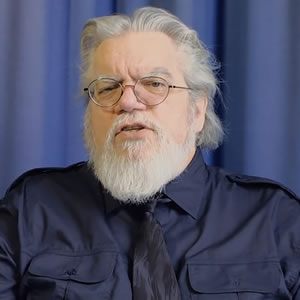 Who is Robert Price?
Robert McNair Price (born July 7, 1954) is an American theologian and writer, known for arguing against the existence of a historical Jesus (the Christ myth theory). He taught philosophy and religion at the Johnnie Colemon Theological Seminary. He is a professor of biblical criticism at the Center for Inquiry Institute, and the author of a number of books on theology and the historicity of Jesus. Price is a fellow of the Jesus Seminar, a group of 150 writers and scholars who study the historicity of Jesus, the organizer of a Web community for those interested in the history of Christianity, and sits on the advisory board of the Secular Student Alliance. He is a religious skeptic, especially of orthodox Christian beliefs, occasionally describing himself as a Christian atheist.
 What is Gnostic?
Gnosticism (from Ancient Greek: gnostikos, "having knowledge") is a modern name for a variety of ancient religious ideas and systems. Originating in Jewish-Christian milieus in the first and second century AD. These systems believed that the material world is created by an emanation of the highest God, trapping the divine spark within the human body.Gnosticism is also defined as the belief in, dualism of good and bad and special knowledge for salvation.
 What is a Prophet?
In religion, a prophet is an individual who is regarded as being in contact with a divine being and is said to speak on that entity's behalf. They claim to be serving as an intermediary with humanity by delivering messages or teachings from the supernatural source to other people. The message that the prophet conveys is called a prophecy. In Islam, all prophetic messengers are prophets (such as Adam, Noah, Abraham, Moses, Jesus, and Muhammad) though not all prophets are prophetic messengers. The primary distinction is that a prophet is required to demonstrate God's law through his actions, character, and behavior without necessarily calling people to follow him, while a prophetic messenger is required to pronounce God's law (i.e. revelation) and call his people to submit and follow him.
What is Myth?Mythology refers to a collection of sacred, traditional tales from a specific culture that explain natural phenomena, world origins, and cultural values. This often featuring gods, goddesses, and heroes. It serves as a lens for interpreting shared human experiences through stories, rituals, and art. Myth is a genre of folklore consisting primarily of narratives that play a fundamental role in a society. For scholars, this is totally different from the ordinary sense of the term myth, meaning a belief that is not true, as the veracity of a piece of folklore is entirely irrelevant to determining whether it constitutes a myth. Myths are often endorsed by religious and secular authorities, and may be natural or supernatural in character. Many societies group their myths, legends, and history together, considering myths and legends to be factual accounts of their remote past. In particular, creation myths take place in a primordial age when the world had not achieved its later form. Origin myths explain how a society's customs, institutions, and taboos were established and sanctified. National myths are narratives about a nation's past that symbolize the nation's values. There is a complex relationship between recital of myths and the enactment of rituals.