818 views
·
Last viewed: 5 hrs ago
Uploaded: 27 Apr 2025 (1 year ago) · Shared: 06 May 2025
Duration: 18:36
Uploaded: 27 Apr 2025 (1 year ago) · Shared: 06 May 2025
Duration: 18:36
Youtube Description
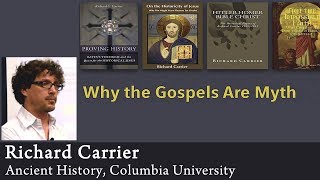
In this thought-provoking video, we dive deep into the fascinating connections between the Resurrection of Jesus and ancient mythologies. Expertscholar Richard Miller examines the striking parallels between biblical narratives and classical Greco-Roman tales, shedding new light on the origins of key Christian stories.
Explore the intriguing role of symbolism, ancient traditions, and the possible influence of Roman and Greek culture on the Gospel accounts. From the mysterious road to Emmaus to the powerful resurrection appearances, we unravel the ways in which these stories might have evolved—and how they continue to shape our understanding of faith today.
In this educational journey, we challenge conventional narratives and explore historical contexts, revealing how ancient myths may have influenced the foundational Christian story. Whether you're a student of history, theology, or simply curious about the untold connections between religion and mythology, this video offers eye-opening insights into the early Christian experience.
Key Topics Covered:
- The Road to Emmaus and its parallels in ancient legends
- The Resurrection and its connection to divine figures in Greco-Roman culture
- The historical and theological implications of these ancient narratives
- How the Gospel writers might have been influenced by pre-existing mythologies
Join us as we explore the intersection of myth and faith, and discover how ancient stories shaped one of the world’s most significant religious events.
Don't forget to like, subscribe, and click the bell icon to stay updated on more enlightening discussions. Share this video with anyone interested in deepening their understanding of religious history and mythology.
Grab his book Resurrection and Reception in Early Christianity
👉 https://amzn.to/35FqNYf
See Dr. Miller's critique of the gospels
https://www.debunking-christianity.com/2020/12/how-gospels-became-history-review-by-dr.html
Also grab Dr. Tomas Hagg's book, 'The Art of Biography in Antiquity'
👉 https://amzn.to/35FqNYf
==============================
SIGN UP FOR ONLINE COURSES HERE
James Tabor: Jesus and The Dead Sea Scrolls - www.mythvisionpodcast.com/dss
Joshua Bowen: Myths Borrowed By The Old Testament - www.mythvisionpodcast.com/ot-myths
James Tabor: Creating Jesus: Why Mark’s Gospel Was Forgotten? - www.mythvisionpodcast.com/firstgospel
Dennis MacDonald: The Gospels & Greek Poetry - www.mythvisionpodcast.com/homeric-mimesis
Kipp Davis: Real Ancient Israelite Religions -
www.mythvisionpodcast.com/israelite-religions
Richard Carrier: New Testament Studies For Everyone -
www.mythvisionpodcast.com/nt-studies
M. David Litwa: The Ancient Greek Mysteries & Christianity - www.mythvisionpodcast.com/mysterycults
Dale C. Allison Jr: The Quest For The Historical Jesus -
www.mythvisionpodcast.com/jesus-quest
**GET RECOMMENDED BOOKS HERE: 👉 https://amzn.to/35FqNYf
============================
Please consider helping support MythVision's work by joining the Patreon or contributing a one-time donation through my links below:
MythVision Website: 🔥 https://mythvisionpodcast.com/
MythVision Patreon: 👉 / mythvision
MythVision Paypal: 👉 https://www.paypal.me/dereklambert7
Cashapp: 👉 $rewiredaddiction
Venmo: 👉 @Derek-Lambert-9
Email MythVision: 👉 mythvisionpodcast@gmail.com
Facebook page: 👉 / mythvision
Facebook group: 👉 / thewaterboyzradio
Twitter: 👉 / derekpodcast
TikTok: 👉 / mythvision
Instagram: 👉 / dereklambert_7
Discord: 👉 / discord
===========================
👉👉 Checkout Our Other YouTube Channel:
@mythvisionTV
👉👉 Checkout MVP Courses to find new and upcoming online courses:
https://mvp-courses.com/
===========================
#mythvision #Gospels #History
Explore More
Derek Lambert Resurrection Greco-Roman Roman Myth JESUS
JESUS
Search Google Search Explore Topics
 Who is Derek Lambert?
MythVision Podcast (MVP) brings you some of the finest information surrounding Mythology. Knowledge from a variety of people in search of a better understanding of ancient text. We discuss mythology, syncretism, astrotheology, gematria, sacred geometry, secret societies, ancient languages, history, prophecy, scholarship, conspiracies, heretical ideas, myth interpretations and much more.
 What is Resurrection?
Resurrection is the concept of coming back to life after death. In a number of ancient religions, a dying-and-rising god is a deity which dies and resurrects. The death and resurrection of Jesus, an example of resurrection, is the central focus of Christianity. As a religious concept, it is used in two distinct respects: a belief in the resurrection of individual souls that is current and ongoing (Christian idealism, realized eschatology), or else a belief in a singular resurrection of the dead at the end of the world. The resurrection of the dead is a standard eschatological belief in the Abrahamic religions.
 What is Greco-Roman?
The Greco-Roman world, also Greco-Roman civilization, Greco-Roman culture or Greco-Latin culture is the term used by modern scholars and writers to describe the geographical regions and countries. The regions that were culturally, and so historically, directly and intimately influenced by the language, culture, government, and religion of the ancient Greeks and Romans. The term "classical antiquity" is used for describing the time period when the Greco-Roman culture exerted its greatest influence and dominance on the European continent. Specifically, the term "Mediterranean world" refers to the extensive tracts of land centered on the Mediterranean and Black Sea basins which are considered the "swimming pool and spa" of the Greeks and the Romans. In these regions, the cultural perceptions, ideas, and sensitivities of these peoples became dominant in classical antiquity.
 What is Roman?
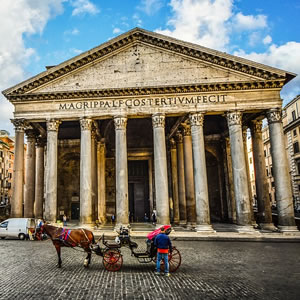
In historiography, ancient Rome is Roman civilization. From the founding of the city of Rome in the 8th century BC to the collapse of the Western Roman Empire in the 5th century AD, encompassing the Roman Kingdom, Roman Republic and Roman Empire until the fall of the western empire. The civilization began as an Italic settlement in the Italian peninsula, dating from the 8th century BC, that grew into the city of Rome and which subsequently gave its name to the empire over which it ruled and to the widespread civilisation the empire developed. The Roman empire expanded to become one of the largest empires in the ancient world, though still ruled from the city, with an estimated 50 to 90 million inhabitants (roughly 20% of the world's population) and covering 5.0 million square kilometres at its height in AD 117.
What is Myth?Mythology refers to a collection of sacred, traditional tales from a specific culture that explain natural phenomena, world origins, and cultural values. This often featuring gods, goddesses, and heroes. It serves as a lens for interpreting shared human experiences through stories, rituals, and art. Myth is a genre of folklore consisting primarily of narratives that play a fundamental role in a society. For scholars, this is totally different from the ordinary sense of the term myth, meaning a belief that is not true, as the veracity of a piece of folklore is entirely irrelevant to determining whether it constitutes a myth. Myths are often endorsed by religious and secular authorities, and may be natural or supernatural in character. Many societies group their myths, legends, and history together, considering myths and legends to be factual accounts of their remote past. In particular, creation myths take place in a primordial age when the world had not achieved its later form. Origin myths explain how a society's customs, institutions, and taboos were established and sanctified. National myths are narratives about a nation's past that symbolize the nation's values. There is a complex relationship between recital of myths and the enactment of rituals.