651 views
·
Last viewed: 3 hrs ago
Uploaded: 11 Oct 2024 (2 years ago) · Shared: 13 Oct 2024
Duration: 25:52
Uploaded: 11 Oct 2024 (2 years ago) · Shared: 13 Oct 2024
Duration: 25:52
Youtube Description
Whitney Webb unpacks the use of crises by the elite to usher in reforms of our society. Wars, pandemics, cyber pandemics, banking crises, are allexamples of distracting events that allow broad social controls to be implemented.
Sign up for email updates:
bigpicture.watch/newsletter
Please donate to the production of the film here:
https://bigpicture.watch/donations/support-our-work/
This interview was shot for the making of a documentary CBDCs: The End of Money. This segment focuses on the use of crisis to bring in reforms that wouldn't otherwise be accepted.
https://bigpicture.watch/crisis-politics-a-means-of-control-whitney-webb/
Explore More
Whitney Webb Digital ID Biometric CashlessSearch Google Search Explore Topics
 Who is Whitney Webb?
Whitney Webb has been a professional writer, researcher, and journalist since 2016. She has written for several websites and, from 2017 to 2020, was a staff writer and senior investigative reporter for Mint Press News. She currently writes for The Last American Vagabond and hosts an independent podcast called Unlimited Hangout. Her work aims to highlight under-reported issues and find common ground between people of different political persuasions regarding corruption, government overreach, the lack of accountability for militaries and intelligence agencies, and the military-industrial complex.
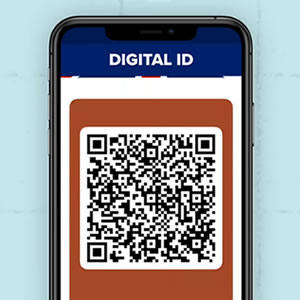 What is Digital ID?
A digital identity or digital ID is data stored on computer systems relating to an individual, organization, application, or device. For individuals, it involves the collection of personal data that is essential for facilitating automated access to digital services, confirming one's identity on the internet, and allowing digital systems to manage interactions between different parties. It is a component of a person's social identity in the digital realm, often referred to as their online identity. Digital identities are composed of the full range of data produced by a person's activities on the internet, which may include usernames and passwords, search histories, dates of birth, social security numbers, and records of online purchases. When such personal information is accessible in the public domain, it can be used by others to piece together a person's offline identity. Furthermore, this information can be compiled to construct a 'data double' - a comprehensive profile created from a person's scattered digital footprints across various platforms. These profiles are instrumental in enabling personalized experiences on the internet and within different digital services.
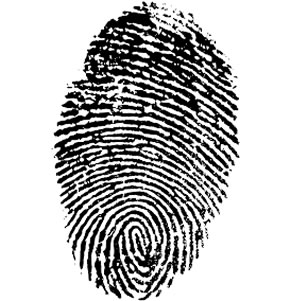 What is Biometric?
Biometrics is the technical term for body measurements and calculations. It refers to metrics related to human characteristics. Biometrics authentication is used in computer science as a form of identification and access control. It is also used to identify individuals in groups that are under surveillance. Examples of biometric include fingerprint scan, palm veins, face recognition, DNA, palm print, hand geometry, iris recognition, retina and odour/scent.
 What is Cashless?
A cashless society describes an economic state whereby financial transactions are not conducted with money in the form of physical banknotes or coins. Transactions are through the transfer of digital information (usually an electronic representation of money) between the transacting parties. Cashless societies have existed from the time when human society came into existence, based on barter and other methods of exchange, and cashless transactions have also become possible in modern times using digital currencies such as bitcoin.