Uploaded: 30 Aug 2022 (4 years ago) · Shared: 13 Sep 2022
Duration: 10:00
Video Description
In this captivating MythVision presentation, biblical scholar Dr. Kipp Davis explores the fascinating theological evolution within the Old Testament, tracing the shift from early polytheism to Yahweh-only monotheism. While traditional perspectives often view the ancient scriptures as strictly monotheistic from the start, critical academic research reveals textual traces of henotheism and divine councils deeply rooted in early Jewish history and ancient Israelite culture.
By carefully examining foundational passages within the Torah and historical biblical texts, Dr. Davis uncovers how ancient religious beliefs evolved across centuries to ultimately shape modern faith traditions in both Judaism and Christianity. This insightful discussion offers viewers a respectful, scholarly look into the development of scriptural theology, providing a richer understanding of how diverse ancient traditions transformed into the enduring monotheistic worship documented throughout the Hebrew Bible.
Explore More
Search Google Search Explore Topics Old Testament Monotheism MythVision Polytheism Yahweh What is Old Testament?
The Old Testament (OT) is the first part of Christian Bibles. This is based primarily upon the Hebrew Bible (or Tanakh), a collection of ancient religious writings by the Israelites believed by most Christians and religious Jews to be the sacred Word of God. The second part of the Christian Bible is the New Testament. The books that comprise the Old Testament canon, as well as their order and names, differ between Christian denominations. The Catholic canon comprises 46 books, and the canons of the Eastern Orthodox and Oriental Orthodox Churches comprise up to 51 books and the most common Protestant canon comprises 39 books.
 What is Monotheism?
Monotheism has been defined as the belief in the existence of only one god. A god that created the world, is all-powerful and intervenes in the world. A broader definition of monotheism is the belief in one god. A distinction may be made between exclusive monotheism, and both inclusive monotheism and pluriform (panentheistic) monotheism which, while recognising various distinct gods, postulate some underlying unity.
 Who is MythVision?
MythVision Podcast (MVP) brings you some of the finest information surrounding Mythology. Knowledge from a variety of people in search of a better understanding of ancient text. We discuss mythology, syncretism, astrotheology, gematria, sacred geometry, secret societies, ancient languages, history, prophecy, scholarship, conspiracies, heretical ideas, myth interpretations and much more.
 What is Polytheism?
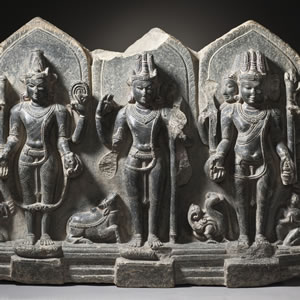
Polytheism is the worship of or belief in multiple deities, usually as a pantheon of gods and goddesses. In most religions which accept polytheism, the different gods and goddesses are representations of forces of nature or ancestral principles, and can be viewed either as autonomous or as aspects or emanations of a creator deity or transcendental absolute principle (monistic theologies), which manifests immanently in nature (panentheistic and pantheistic theologies). Most of the polytheistic deities of ancient religions, with the notable exceptions of the Ancient Egyptian and Hindu deities, were conceived as having physical bodies. Polytheism is a type of theism. Within theism, it contrasts with monotheism, the belief in a singular God, in most cases transcendent. Important polytheistic religions practiced today include Chinese traditional religion, Hinduism, Japanese Shinto, and various neopagan faiths.
 Who is Yahweh?
Yahweh was the national god of the Iron Age kingdoms of Israel (Samaria) and Judah. His exact origins are disputed, although they reach back to the early Iron Age and even the Late Bronze: his name may have begun as an epithet of El, head of the Bronze Age Canaanite pantheon, but the earliest plausible mentions of Yahweh are in Egyptian texts that refer to a similar-sounding place name associated with the Shasu nomads of the southern Transjordan. In the oldest biblical literature, Yahweh is a typical ancient Near Eastern "divine warrior", who leads the heavenly army against Israel's enemies; he later became the main god of the Kingdom of Israel (Samaria) and of Judah, and over time the royal court and temple promoted Yahweh as the god of the entire cosmos, possessing all the positive qualities previously attributed to the other gods and goddesses.