Uploaded: 21 Apr 2021 (5 years ago) · Shared: 26 Apr 2021
Duration: 1:42:37
Video Description
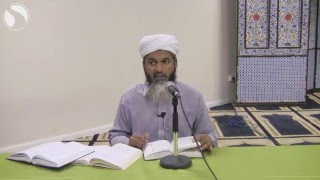
In this engaging comparative religion discussion, Dr. Tony Costa explores the fascinating early history and theological development surrounding Islam, focusing on the potential historical links between early Islamic practices and Sabian traditions. Delving into the origins of central observances—including structured worship, the holy month of Ramadan, and the Hajj pilgrimage—this video offers a thought-provoking exploration of religious influence across ancient faith communities.
By examining historical contexts alongside the background of the Quran, Bible, and ancient Near Eastern cultures, Dr. Costa provides valuable insights for viewers interested in Christian apologetics, Islamic history, and interfaith dialogue. Whether you are exploring Jewish traditions, early Church history, or comparative religious studies, this presentation serves as an informative guide to understanding how historical cultures interacted. Gain a deeper perspective on spiritual traditions, historical theology, and the academic study of early religious practices.
Explore More
Early Islam Tony Costa Sabian Islam HajjSearch Google Search Explore Topics
 What is Early Islam?
Early Islam or the history of Islam is believed, by most historians to have originated with Muhammad's mission in Mecca and Medina at the start of the 7th century CE. Although Muslims regard this time as a return to the original faith passed down by the Abrahamic prophets, such as Adam, Noah, Abraham, Moses, David, Solomon, and Jesus, with the submission (Islam) to the will of God. According to the traditional account, the Islamic prophet Muhammad began receiving what Muslims consider to be divine revelations in 610 CE, calling for submission to the one God, preparation for the imminent Last Judgement, and charity for the poor and needy.
 Who is Tony Costa?
Tony's chief passion is in teaching and engaging students of any background in lively class discussions and interactions. He encourages them to ask thought-provoking questions and believes that life-long learning should be fun and life-changing. He is a professor with Providence Theological Seminary in Franklin, Tennessee, USA. He is the author of Worship and the Risen Jesus in the Pauline Letters as well as a contributor of scholarly essays in Christian Origins and Greco-Roman Culture and Christian Origins and Hellenistic Judaism and various journals.
 Who are the Sabian?
The Sabians, sometimes also spelled Sabaeans or Sabeans, are a religious group mentioned three times in the Quran where it is implied that they belonged to the 'People of the Book' (ahl al-kitab). Modern scholars have identified them as Mandaeans, Manichaeans, Sabaeans, Elchasaites, Archontics or as adherents of the astral religion of Harran. Some scholars believe that it is impossible to establish their original identity with any degree of certainty.
What is Islam?One of the major religions of the world, Islam literally translates to "submission," as a follower of Islam (Muslims) devotes their life to that of their God. The religion began with the teachings of Muhammad in the 7th century. The theology of Islam is based on the Qur'an, which was given to Muhammad by God. Some of the major fundamental principles of Islam include the Five Pillars, which hope to unite all Muslims into a community. Two different factions of Muslims exist - the majority are known as Sunni, with a small percentage known as Shi'a - both predominantly reside throughout the Middle East. Muhammad died in 632 AD and the religion of Islam formally started after his death. The Quran was formally compiled and finalised in 650 AD, prior to which it was 'memorised' and written across many parchments.
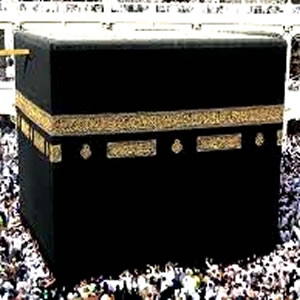 What is Hajj?
The Hajj is an annual Islamic pilgrimage to Mecca, Saudi Arabia, the holiest city for Muslims. It is a mandatory religious duty for Muslims that must be carried out at least once in their lifetime by all adult Muslims who are physically and financially capable of undertaking the journey, and can support their family during their absence. In Islamic terminology, Hajj is a pilgrimage made to Kaaba, the "House of God", in the sacred city of Mecca in Saudi Arabia. The rites of Hajj are performed over 5 or 6 days. It is a demonstration of the solidarity of the Muslim people, and their submission to God (Allah).