491 views
·
Last viewed: 8 hrs ago
Uploaded: 17 Apr 2021 (5 years ago) · Shared: 22 Apr 2021
Duration: 14:20
Uploaded: 17 Apr 2021 (5 years ago) · Shared: 22 Apr 2021
Duration: 14:20
Youtube Description
CRISPR: Can we control it? Watch the newest video from Big Think: https://bigth.ink/NewVideo Learn skills from the world's top minds at Big ThinkEdge: https://bigth.ink/Edge
----------------------------------------------------------------------------------
CRISPR (Clustered Regularly Interspaced Short Palindromic Repeats) is a revolutionary technology that gives scientists the ability to alter DNA. On the one hand, this tool could mean the elimination of certain diseases. On the other, there are concerns (both ethical and practical) about its misuse and the yet-unknown consequences of such experimentation.
'The technique could be misused in horrible ways,' says counter-terrorism expert Richard A. Clarke. Clarke lists biological weapons as one of the potential threats, 'Threats for which we don't have any known antidote.' CRISPR co-inventor, biochemist Jennifer Doudna, echos the concern, recounting a nightmare involving the technology, eugenics, and a meeting with Adolf Hitler.
Should humanity even have access to this type of tool? Do the positives outweigh the potential dangers? How could something like this ever be regulated, and should it be? These questions and more are considered by Doudna, Clarke, evolutionary biologist Richard Dawkins, psychologist Steven Pinker, and physician Siddhartha Mukherjee.
----------------------------------------------------------------------------------
TRANSCRIPT:
0:41 Jennifer Doudna defines CRISPR
3:47 CRISPR’s risks
4:52 Artificial selection vs. artificial mutation
6:25 Why Steven Pinker believes humanity will play it safe
9:20 Lessons from history
10:58 How CRISPR can help
11:22 Jennifer Doudna’s chimeric-Hitler dream
- Our ability to manipulate genes can be very powerful. It has been very powerful.
- This is going to revolutionize human life.
- Would the consequences be bad? And they might be.
- Every time you monkey with the genome you are taking a chance that something will go wrong.
- The technique could be misused in horrible ways.
- When I started this research project, I've kind of had this initial feeling of what have I done.
JENNIFER DOUDNA: CRISPR gene-editing technology is a tool that scientists can use to change the letters of DNA in cells in precise ways. So I like to use the analogy of a word processor on a computer. So we have a document, you can think about the DNA in a cell, like the text of a document that has the instructions to tell the cell how to grow and divide and become a brain cell or a liver cell, or develop into an entire organism. And just like in a document, the CRISPR technology gives scientists a way to go in and edit the letters of DNA. Just like we might cut and paste text in our document or replace whole sentences, even whole paragraphs or chapters. We can now do that using the CRISPR technology in the DNA of cells. CRISPR is an acronym that actually represents a sequence of DNA letters in the genomes of cells. It's found in bacteria and it was interesting to scientists originally because it's a bacterial immune system, a way that bacteria can fight viral infection. For scientists this is sort of really a gift that allows research to proceed very quickly in terms of understanding the genetics of cells and organisms but also provides a very practical way to solve problems. In clinical medicine, the opportunity to make changes to blood cells that would cure diseases like sickle cell anemia, a disease where we've understood the genetic cause for a long time. But until now there hasn't been a way to actually think about treating patients. And now with this technology, it's possible in principle to remove stem cells that give rise to blood cells in a person's body, make edits to those cells that would correct the mutation causing a sickle cell disease and then replace those cells to essentially give a patient a new set of cells that don't have the defect. It's one thing to talk about being able to remove mutations from the human population that cause genetic disease. And I think for many people that would be a desirable thing to do. On the other hand, I think it's a very different discussion to think about using a technology like this to create enhanced human beings. People that are taller or have a certain eye color or other kinds of physical or intellectual traits that might be considered desirable. And it sort of immediately brings up sort of the the whole area of eugenics and sort of access to technology. Who gets access, who pays for it, who decides, who decides whether or not to do such a thing, should companies be allowed to offer this as a service to parents who want to do this and if so, should they be regulated in some way? There's a lot of very interesting and challenging questions, I think that go along with that.
RICHARD CLARKE: The technique could be misused in horrible ways. It could be...
To read the full transcript, please visit https://bigthink.com/videos/crispr-can-we-control-it
Explore More
Technology Big Think CRISPR GODSearch Google Search Explore Topics
 What is Technology?
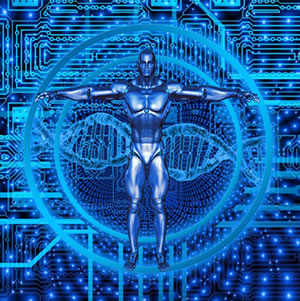
Technology is the collection of techniques, skills, methods, and processes used in the production of goods or services or in the accomplishment of objectives, such as scientific investigation. A modern example is the rise of communication technology, which has lessened barriers to human interaction and as a result has helped spawn new subcultures; the rise of cyberculture has at its basis the development of the Internet, computer, smartphone, and Artificial Intelligence.
 Who are Big Think?
Big Think is the leading source of expert-driven, actionable, educational content. We have thousands of videos, featuring experts ranging from Bill Clinton to Bill Nye, we help you get smarter, faster. Get actionable lessons from the world's greatest thinkers & doers. Our experts are either disrupting or leading their respective fields. We aim to help you explore the big ideas and core skills that define knowledge in the 21st century, so you can apply them to the questions and challenges in your own life.
What is CRISPR?CRISPR (clustered regularly interspaced short palindromic repeats) is a family of DNA sequences found in the genomes of prokaryotic organisms such as bacteria and archaea. These sequences are derived from DNA fragments of bacteriophages that had previously infected the prokaryote. They are used to detect and destroy DNA from similar bacteriophages during subsequent infections. CRISPR technology is a simple yet powerful tool for editing genomes. It allows researchers to easily alter DNA sequences and modify gene function. Its many potential applications include correcting genetic defects, treating and preventing the spread of diseases and improving crops.
Who is GOD?In monotheism and henotheism, God is conceived as the Supreme Being and principal object of faith. The concept of God as described by theologians commonly includes the attributes of omniscience (infinite knowledge), omnipotence (unlimited power), omnipresence (present everywhere), omnibenevolence (perfect goodness), divine simplicity, and eternal and necessary existence. In theism, God is the creator and sustainer of the universe In deism, God is the creator, but not the sustainer, of the universe Monotheism is the belief in the existence of one God or in the oneness of God In pantheism, God is the universe itself In atheism, God is purported not to exist, while deemed unknown or unknowable within the context of agnosticism.