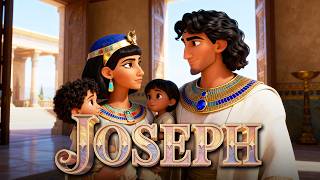
Youtube Description:
Please LIKE, COMMENT, & SHARE!
---------------------------------------------------------------------------------------------
► Credits:
Music in This Video:
Song: 004 An-Nisa النساء
Artist: Muhammad Seddiq Al-Menshawy
Album: Mojawad
Outro Nasheed:
Link:
-------------------------------------------------------------------------------------------
► Shaykh Dr. Yasir Qadhi - Official Social Media Pages
---------------------------------------------------------------------------------------------
Please LIKE, COMMENT, & SHARE!
---------------------------------------------------------------------------------------------
► Credits:
Music in This Video:
Song: 004 An-Nisa النساء
Artist: Muhammad Seddiq Al-Menshawy
Album: Mojawad
Outro Nasheed:
Link:
-------------------------------------------------------------------------------------------
► Shaykh Dr. Yasir Qadhi - Official Social Media Pages
---------------------------------------------------------------------------------------------
Explore More
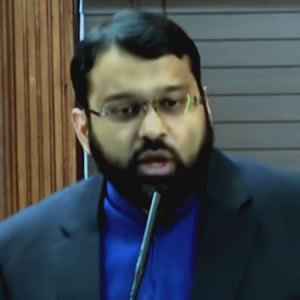 Who is Yasir Qadhi?
Yasir Qadhi is an American Muslim scholar and writer of Pakistani descent. Since 2001, he has served as Dean of Academic Affairs at the Al-Maghrib Institute, an international Islamic educational institution with a center in Houston, Texas. He also
teaches in the Religious Studies department at Rhodes College in Memphis, Tennessee, where he resides. Qadhi has written numerous books and lectured widely on Islam and contemporary Muslim issues. A 2011 The New York Times Magazine essay by Andea Elliott described Qadhi as "one of the most influential conservative clerics in American Islam."
 What is a Prophet?
In religion, a prophet is an individual who is regarded as being in contact with a divine being and is said to speak on that entity's behalf. They claim to be serving as an intermediary with humanity by delivering messages or teachings from the
supernatural source to other people. The message that the prophet conveys is called a prophecy. In Islam, all prophetic messengers are prophets (such as Adam, Noah, Abraham, Moses, Jesus, and Muhammad) though not all prophets are prophetic messengers. The primary distinction is that a prophet is required to demonstrate God's law through his actions, character, and behavior without necessarily calling people to follow him, while a prophetic messenger is required to pronounce God's law (i.e. revelation) and call his people to submit and follow him.
 Who is GOD?
In monotheism and henotheism, God is conceived as the Supreme Being and principal object of faith. The concept of God as described by theologians commonly includes the attributes of omniscience (infinite knowledge), omnipotence (unlimited power)
omnipresence (present everywhere), omnibenevolence (perfect goodness), divine simplicity, and eternal and necessary existence.
In theism, God is the creator and sustainer of the universe
In deism, God is the creator, but not the sustainer, of the universe
Monotheism is the belief in the existence of one God or in the oneness of God
In pantheism, God is the universe itself
In atheism, God is purported not to exist, while deemed unknown or unknowable within the context of agnosticism.