576 views
·
Last viewed: 4 hrs ago
Uploaded: 11 Oct 2019 (7 years ago) · Shared: 13 Oct 2019
Duration: 2:00
Uploaded: 11 Oct 2019 (7 years ago) · Shared: 13 Oct 2019
Duration: 2:00
Video Description
In this compelling discussion on MythVision, historian Dr. Richard Carrier explores intriguing historical claims surrounding the origins of Christianity and early Jewish literature. Analyzing references within the ancient Babylonian
Explore More
Richard Carrier Pontius Pilate Babylon Talmud JESUS
JESUS
Search Google Search Explore Topics
 Who is Richard Carrier?
Richard Carrier (born 1969) is an American historian, atheist activist, author, public speaker and blogger. Carrier has a doctorate in ancient history from Columbia University where his thesis was on the history of science in antiquity.
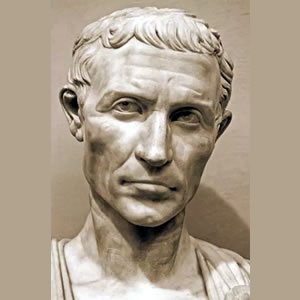 Who was Pontius Pilate?
Pontius Pilate was the fifth prefect of the Roman province of Judaea, serving under Emperor Tiberius from 26-37 AD. He is best known today for adjudicating on the trial and crucifixion of Jesus. In all four gospel accounts, Pilate lobbies for Jesus to be spared his eventual fate of execution, and acquiesces only when the crowd refuses to relent. He thus seeks to avoid personal responsibility for the death of Jesus. In the Gospel of Matthew, Pilate washes his hands to show that he is not responsible for the execution of Jesus and reluctantly sends him to his death. The Gospel of Mark, depicting Jesus as innocent of plotting against the Roman Empire, portrays Pilate as reluctant to execute him. In the Gospel of Luke, Pilate not only agrees that Jesus did not conspire against Rome, but Herod Antipas, the tetrarch of Galilee, also finds nothing treasonable in Jesus' actions. In the Gospel of John, Pilate states "I find no guilt in Him [Jesus]," and he asks the Jews if Jesus should be released from custody.
 Where is Babylon?
Babylon was an ancient city located on the lower Euphrates river in southern Mesopotamia, within modern-day Hillah, Iraq. This is about 85 kilometres (53 miles) south of modern-day Baghdad. Babylon functioned as the main cultural and political centre of the Akkadian-speaking region of Babylonia. Its rulers established two important empires in antiquity, the 19th-16th century BC Old Babylonian Empire, and the 7th-6th century BC Neo-Babylonian Empire. Babylon was also used as a regional capital of other empires, such as the Achaemenid Empire. Babylon was one of the most important urban centres of the ancient Near East, until its decline during the Hellenistic period.
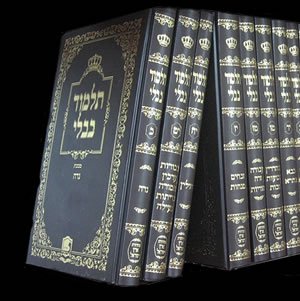 What is the Talmud?
The Talmud is the central text of Rabbinic Judaism and the primary source of Jewish religious law (halakha) and Jewish theology. Until the advent of modernity, in nearly all Jewish communities, the Talmud was the centerpiece of Jewish cultural life and was foundational to "all Jewish thought and aspirations", serving also as "the guide for the daily life" of Jews. The entire Talmud consists of 63 tractates, and in standard print is 2,711 double-sided folios. It is written in Mishnaic Hebrew and Jewish Babylonian Aramaic and contains the teachings and opinions of thousands of rabbis (dating from before the Common Era to the 5th century) on a variety of subjects, including halakha, Jewish ethics, philosophy, customs, history, and folklore, and many other topics. The Talmud is the basis for all codes of Jewish law, and is widely quoted in rabbinic literature.