Explore More
Anthony Buzzard Justin Martyr Irenaeus Polycarp TrinitySearch Google Search Explore Topics
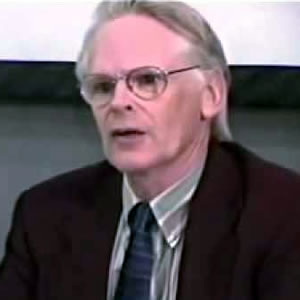 Who is Anthony Buzzard?
Sir Anthony Farquhar Buzzard, 3rd Baronet, ARCM (28 June 1935), is a biblical scholar, unitarian Christian theologian, author and professor on the faculty of Atlanta Bible College. Buzzard gained a Diploma in Biblical Hebrew from the University of Jerusalem in 1970. He attended the University of London. He gained a Masters in Theology from Bethany Theological Seminary, Chicago, in 1990. Buzzard taught French and German at The American School in London and taught theology and Biblical languages for 24 years at Atlanta Bible College, McDonough, Georgia.
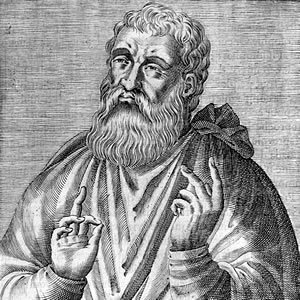 Who was Justin Martyr?
Justin Martyr was an early Christian apologist, and is regarded as the foremost interpreter of the theory of the Logos in the 2nd century. He was martyred, alongside some of his students, and is considered a saint by the Roman Catholic Church, the Anglican Church, the Eastern Orthodox Church, and the Oriental Orthodox Churches.
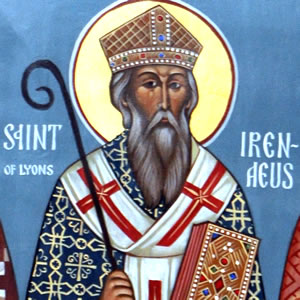 Who was Irenaeus?
Irenaeus (130-202 AD) was a Greek bishop. He is noted for his role in guiding and expanding Christian communities in what is now the south of France and, more widely, for the development of Christian theology by combating heresy and defining orthodoxy. Originating from Smyrna, now Izmir in Turkey, he had heard the preaching of Polycarp, who in turn was said to have heard John the Evangelist.
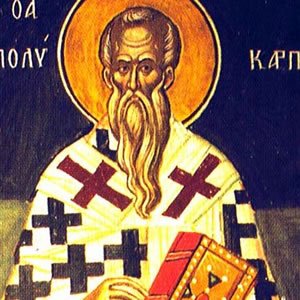 Who was Polycarp?
Polycarp (69-155 AD) was a 2nd-century Christian bishop of Smyrna. According to the Martyrdom of Polycarp he died a martyr, bound and burned at the stake, then stabbed when the fire failed to touch him. Polycarp is regarded as a saint and Church Father in the Eastern Orthodox, Oriental Orthodox, Catholic, Anglican, and Lutheran churches.
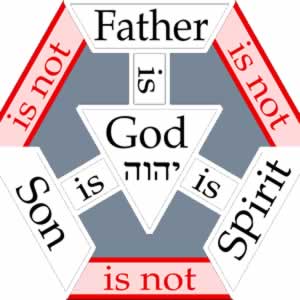 What is Trinity?
The Christian doctrine of the Trinity (Latin: trinus "threefold") holds that God is one God, but three coeternal consubstantial persons or hypostases. These being the Father, the Son (Jesus Christ), and the Holy Spirit - as "one God in three Divine Persons". The three Persons are distinct, yet are one "substance, essence or nature" (homoousios).