Youtube Description:
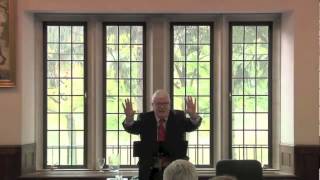
Kegan Chandler, author of the book, “The God of Jesus,” speaks to his audience regarding the question “Did John write his gospel to compete with Gnosticism?” Kegan asserts that orthodox Christology is ultimately Gnostic Christology repackaged and painted over.
Kegan Chandler, author of the book, “The God of Jesus,” speaks to his audience regarding the question “Did John write his gospel to compete with Gnosticism?” Kegan asserts that orthodox Christology is ultimately Gnostic Christology repackaged and painted over.
Explore More
 Who is Kegan Chandler?
Kegan Chandler is a Christian author and researcher of Early Christianity, pagan religion, and Gnosticism. He is an adjunct professor at Atlanta Bible College. Chandler holds a Master of Theology from Campbellsville University's School of Theology
where he studied Church History and Theology, and is a graduate of SCAD University, where he studied Graeco-Roman drama, medieval literature, and dramatic writing.
He is the author of the forthcoming book 'Constantine and the Divine Mind' (Wipf and Stock, TBD), and 'The God of Jesus in Light of Christian Dogma' (Restoration Fellowship, 2016). He is also an award-winning screenwriter, and currently writes for his blog on Church history.
Chandler also sits on the board of directors of the Unitarian Christian Alliance (formed 2019), and New Life Ministries of America, Inc., a small non-profit which has been producing Christian literature and financing overseas missions since 1994.
 What is Trinitarian?
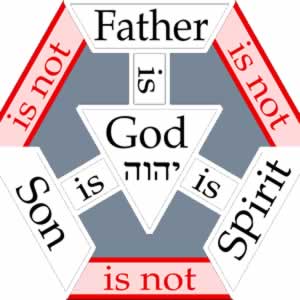
The Christian doctrine of the Trinity (Latin: trinus "threefold") holds that God is one God, but three coeternal consubstantial persons or hypostases. These being the Father, the Son (Jesus Christ), and the Holy Spirit - as "one God in three Divine
Persons". The three Persons are distinct, yet are one "substance, essence or nature" (homoousios).
 What is Gnostic?
Gnosticism (from Ancient Greek: gnostikos, "having knowledge") is a modern name for a variety of ancient religious ideas and systems. Originating in Jewish-Christian milieus in the first and second century AD. These systems believed that the material
world is created by an emanation of the highest God, trapping the divine spark within the human body.Gnosticism is also defined as the belief in, dualism of good and bad and special knowledge for salvation.
 Who are Nature?