Uploaded: 01 Aug 2016 (10 years ago) · Shared: 09 Aug 2019
Duration: 8:55
Video Description
In this insightful video, we explore the influential work of Edward Bernays, a pioneer in the field of public relations, and his strategies for organizing people through propaganda and technology. Delving into the ethical dimensions of his methods, the discussion highlights the importance of critical thinking and moral guidance in the age of information. For followers of Judaism, Christianity, and Islam, the video offers valuable insights into how these ancient faiths can provide a framework for navigating modern challenges. Through the lens of the Quran, Bible, and Torah, we examine the role of ethical leadership and the responsibility of the faithful in fostering unity and common action. Whether you are a student of history, a religious scholar, or simply curious about the intersection of technology and faith, this video is a must-watch.
Explore More
DW Documentary Edward Bernays Propaganda Technology Pagan SinSearch Google Search Explore Topics
 Who are DW Documentary?
DW.com is the official website of Deutsche Welle (DW), Germany's public, state-owned international broadcaster. Headquartered in Bonn and Berlin, DW serves as an independent, multilingual media outlet providing unbiased global news, regional reporting, and deep-dive analysis in 32 languages.
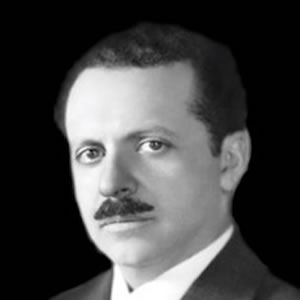 Who is Edward Bernays?
Edward Louis Bernays (1891-1995) was an Austrian-American pioneer in the field of public relations and propaganda, referred to in his obituary as "the father of public relations". Bernays was named one of the 100 most influential Americans of the 20th century by Life. Bernays described the masses of people as irrational and subject to herd instinct - and outlined how skilled practitioners could use crowd psychology and psycho-analysis to control them in desirable ways. Bernays worked for dozens of major American corporations including Procter & Gamble and General Electric, and for government agencies, politicians, and non-profit organizations.
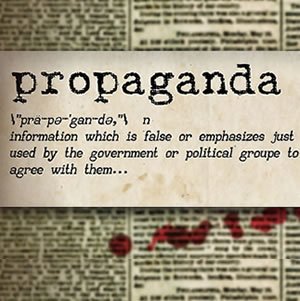 What is Propaganda?
Propaganda is information that is not objective and is used primarily to influence an audience and further an agenda. This is often by presenting facts selectively to encourage a particular synthesis or perception, or using loaded language to produce an emotional rather than a rational response to the information that is presented. Propaganda is often associated with material prepared by governments, but activist groups, companies, religious organizations and the media can also produce propaganda.
 What is Technology?
Technology is the collection of techniques, skills, methods, and processes used in the production of goods or services or in the accomplishment of objectives, such as scientific investigation. A modern example is the rise of communication technology, which has lessened barriers to human interaction and as a result has helped spawn new subcultures; the rise of cyberculture has at its basis the development of the Internet, computer, smartphone, and Artificial Intelligence.
 What is Pagan?
Paganism is a term first used in the fourth century by early Christians. It was applied on populations of the Roman Empire who practiced polytheism, either because they were increasingly rural and provincial relative to the Christian population or because they were not milites Christi (soldiers of Christ). Alternate terms in Christian texts for the same group were hellene, gentile, and heathen. Pagan and paganism were pejorative terms for the same polytheistic group, implying its inferiority. Paganism has broadly connoted the "religion of the peasantry", and for much of its history was a derogatory term. Both during and after the Middle Ages, pagan was a pejorative term that was applied to any non-Abrahamic or unfamiliar religion, and the term presumed a belief in false god(s).
 What is Sin?
In Abrahamic contexts, sin is the act of violating God's will. Sin can also be viewed as anything that violates the ideal relationship between an individual and God; or as any diversion from the ideal order for human living. To sin has been defined as "to miss the mark". Sins fall in a spectrum from minor errors to deadly misdeeds. Catholicism regards the least corrupt sins as venial sins which are part of human living and carry immediate consequences on earth, and, if unrepented for, more painful purgation, assuming the person is destined to heaven, as it is written in the formation letter "Purgatory", "most of the early Fathers of the Church speak of a cleansing fire, though we cannot tell whether this means actual or spiritual fire." Conversely, sins of great evil are mortal sins which bring the consequence of hell if they are not addressed either through an act of perfect contrition or going to confession about them.