595 views
·
Last viewed: 8 hrs ago
Uploaded: 21 Nov 2014 (12 years ago) · Shared: 05 Jul 2019
Duration: 20:28
Uploaded: 21 Nov 2014 (12 years ago) · Shared: 05 Jul 2019
Duration: 20:28
Youtube Description
Find out what Josephus says about Aramaic. Josephus was a Jewish historian living in First Century Israel. He says that ARAMAIC was the language ofhis country, NOT Greek!
Explore More
Josephus Aramaic Judaism RomanSearch Google Search Explore Topics
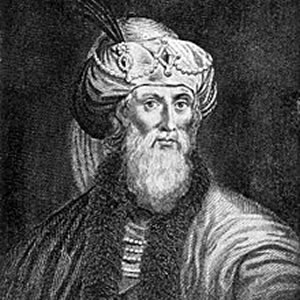 Who was Josephus?
Titus Flavius Josephus (37-100 AD), known as 'Josephus' was a first-century Romano-Jewish scholar. He was a historian and hagiographer, who was born in Jerusalem, then part of Roman Judea, to a father of priestly descent and a mother who claimed royal ancestry. He initially fought against the Romans during the First Jewish-Roman War as head of Jewish forces in Galilee, until surrendering in 67 CE to Roman forces led by Vespasian after the six-week siege of Jotapata. Josephus claimed the Jewish Messianic prophecies that initiated the First Roman-Jewish War made reference to Vespasian becoming Emperor of Rome. In response Vespasian decided to keep Josephus as a slave and presumably interpreter. After Vespasian became Emperor in 69 CE, he granted Josephus his freedom, at which time Josephus assumed the emperor's family name of Flavius. Flavius Josephus fully defected to the Roman side and was granted Roman citizenship. He became an advisor and friend of Vespasian's son Titus, serving as his translator when Titus led the Siege of Jerusalem.
 What is Aramaic?
Aramaic was the language of Jesus, who spoke the Galilean dialect during his public ministry, as well as the language of large sections of the biblical books of Daniel and Ezra, and also one of the languages of the Talmud. Aramaic is a language or group of languages belonging to the Semitic subfamily of the Afroasiatic language family. More specifically, it is part of the Northwest Semitic group, which also includes the Canaanite languages such as Hebrew and Phoenician. The Aramaic alphabet was widely adopted for other languages and is ancestral to the Hebrew, Syriac and Arabic alphabets. During its approximately 3,100 years of written history, Aramaic has served variously as a language of administration of empires and as a language of divine worship, religious study and as the spoken tongue of a number of Semitic peoples from the Near East.
 What is Judaism?
Judaism encompasses the religion, philosophy, culture and way of life of the Jewish people. Judaism is a monotheistic religion, with the Torah as its foundational text (part of the larger text known as the Tanakh or Hebrew Bible), and supplemental oral tradition represented by later texts such as the Midrash and the Talmud. Judaism is considered by religious Jews to be the expression of the covenantal relationship that God established with the Children of Israel. Judaism includes a wide corpus of texts, practices, theological positions, and forms of organization. Within Judaism there are a variety of movements, most of which emerged from Rabbinic Judaism, which holds that God revealed his laws and commandments to Moses on Mount Sinai in the form of both the Written and Oral Torah. The Jews are an ethnoreligious group and include those born Jewish and converts to Judaism. In 2012, the world Jewish population was estimated at about 14 million, or roughly 0.2% of the total world population. About 42% of all Jews reside in Israel and about 42% reside in the United States and Canada, with most of the remainder living in Europe.
 What is Roman?
In historiography, ancient Rome is Roman civilization. From the founding of the city of Rome in the 8th century BC to the collapse of the Western Roman Empire in the 5th century AD, encompassing the Roman Kingdom, Roman Republic and Roman Empire until the fall of the western empire. The civilization began as an Italic settlement in the Italian peninsula, dating from the 8th century BC, that grew into the city of Rome and which subsequently gave its name to the empire over which it ruled and to the widespread civilisation the empire developed. The Roman empire expanded to become one of the largest empires in the ancient world, though still ruled from the city, with an estimated 50 to 90 million inhabitants (roughly 20% of the world's population) and covering 5.0 million square kilometres at its height in AD 117.