Explore More
Richard Rubenstein Council of Nicaea Philosophy The Bible Nicaea PhiloSearch Google Search Explore Topics
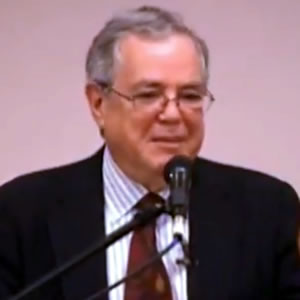 Who is Richard Rubenstein?
Richard Rubenstein (born 1938) is an author and University Professor of Conflict Resolution and Public Affairs at George Mason University. Rubenstein holds degrees from Harvard College, Oxford University (as a Rhodes Scholar), and Harvard Law School.
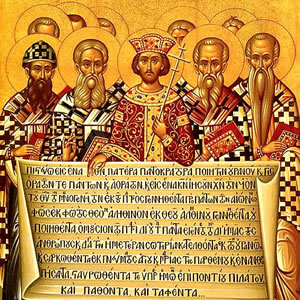 What was the Council of Nicaea?
The First Council of Nicaea was a council of Christian bishops convened in the Bithynian city of Nicaea (now ?znik, Bursa province, Turkey) by the Roman Emperor Constantine I in 325 AD. Its main accomplishments were settlement of the Christological issue of the divine nature of God the Son and his relationship to God the Father, the construction of the first part of the Nicene Creed, establishing uniform observance of the date of Easter, and promulgation of early canon law.
 What is Philosophy?
Philosophy is the study of general and fundamental problems concerning matters such as existence, knowledge, values, reason, mind, and language. The term was probably coined by Pythagoras (c. 570-495 BCE). Philosophical methods include questioning, critical discussion, rational argument, and systematic presentation. Classic philosophical questions include: Is it possible to know anything and to prove it? What is most real? Philosophers also pose more practical and concrete questions such as: Is there a best way to live? Is it better to be just or unjust (if one can get away with it)? Do humans have free will?
What is The Bible?The Bible is a canonical collection of texts sacred in Judaism and Christianity. There is no single "Bible" and many Bibles with varying contents exist. The term Bible is shared between Judaism and Christianity, although the contents of each of their collections of canonical texts is not the same. Different religious groups include different books within their Biblical canons, in different orders, and sometimes divide or combine books, or incorporate additional material into canonical books. The Hebrew Bible, or Tanakh, contains 24 books. Christian Bibles range from the 66 books of the Protestant canon to the 81 books of the Ethiopian Orthodox Church canon. The first part of Christian Bibles is the Old Testament, which contains, at minimum, the 24 books of the Hebrew Bible divided into 39 books and ordered differently from the Hebrew Bible. The Catholic Church and Eastern Christian churches also hold certain deuterocanonical books and passages to be part of the Old Testament canon. The second part is the New Testament, containing 27 books: the 4 Canonical gospels, Acts of the Apostles, 21 Epistles or didactic letters, and the Book of Revelation.
Where is Nicaea?Nicaea or Nicea was an ancient city in northwestern Anatolia. It is primarily known as the site of the First and Second Councils of Nicaea (the first and seventh Ecumenical councils in the early history of the Christian Church), the Nicene Creed (which comes from the First Council), and as the capital city of the Empire of Nicaea following the Fourth Crusade in 1204, until the recapture of Constantinople by the Byzantines in 1261.
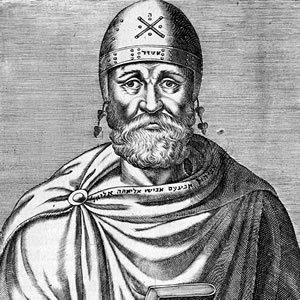 Who was Philo?
Philo of Alexandria (20 BC-50 AD) was a Hellenistic Jewish philosopher who lived in Alexandria, in the Roman province of Egypt. Philo used philosophical allegory to harmonize Jewish scripture, mainly the Torah, with Greek philosophy. His method followed the practices of both Jewish exegesis and Stoic philosophy. His allegorical exegesis was important for some Christian Church Fathers, but he had very little reception history within the Rabbinic Judaism. He adopted allegorical instead of literal interpretations of the Hebrew Bible. Some scholars hold that his concept of the Logos as God's creative principle influenced early Christology.