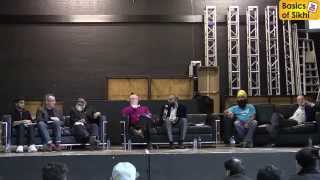
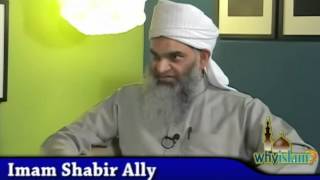
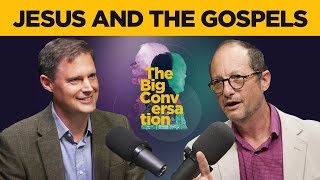
Which Church Council gave Athanasius authority to decide the 27 New Testament books? - Mohammed Hijab vs Jason

   56:50
975 views  ·  Last viewed: 39 mins ago
Uploaded: 24 Feb 2019   (7 years ago)  ·  Shared: 18 Mar 2019

Video Description (from Youtube)

» If you liked this video, please subscribe & share on your social media platforms. The Prophet said, “Whoever guides someone to goodness will have a similar reward.” [Sahih Muslim 1893] *Request to

all to please not abuse or swear in comments, Dawah is to invite not to insult. Jazak Allah Khair

Disclaimer: The views and opinions of partakers in these debates and videos in no way represent the views of Sam Dawah but are a representation of what takes place at Speakers Corner.

DISCLAIMER
All videos are shared for educational and information purposes only. All videos are hosted and viewable on Youtube servers. Video titles are generated using the original video title; overall content theme including actual dialogue and speech (Transcript); and A.I-based recommendations with a focus on SEO, keyword density, and internal search functions. The video title does not represent the views held by the Youtube video uploader, or any individual, organisation or business.

If you spot any mistake, omission or give feedback, kindly Contact Us with details

Overview & Key Concepts


Who is Mohammed Hijab?

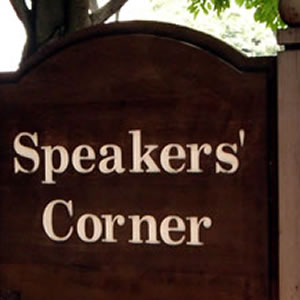
A Speakers' Corner is an area where open-air public speaking, debate, and discussion are allowed. The original and most noted is in the north-east

corner of Hyde Park in London, England. Speakers here may talk on any subject, as long as the police consider their speeches lawful, although this right is not restricted to Speakers' Corner only. Contrary to popular belief, there is no immunity from the law, nor are any subjects proscribed, but in practice the police intervene only when they receive a complaint. Speakers' Corner is often held up to demonstrate freedom of speech, as anyone can turn up unannounced and talk on almost any subject, although always at the risk of being heckled by regulars.

What is Church Council?

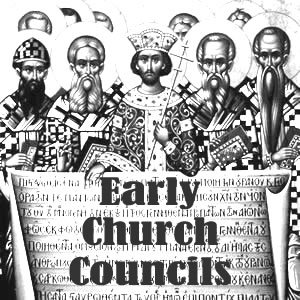
A Council, Church Council or Synod is a council of a church, usually convened to decide an issue of doctrine, administration or application. The word

synod means "assembly" or "meeting", and it is synonymous with the Latin word concilium meaning "council". Originally, synods were meetings of bishops, and the word is still used in that sense in Catholicism, Oriental Orthodoxy and Eastern Orthodoxy. In modern usage, the word often refers to the governing body of a particular church, whether its members are meeting or not.
What is New Testament?

The New Testament is the second part of the Christian biblical canon. The first part being the Old Testament, based on the Hebrew Bible. The New

Testament discusses the teachings and person of Jesus, as well as events in first-century Christianity. Christians regard both the Old and New Testaments together as sacred scripture. The New Testament (in whole or in part) has frequently accompanied the spread of Christianity around the world. It reflects and serves as a source for Christian theology and morality.

Who was Athanasius?

Athanasius of Alexandria (298-373 AD), also called Athanasius the Great, Athanasius the Confessor or Athanasius the Apostolic was the 20th bishop of

Alexandria (as Athanasius I). His on-again-off-again episcopate spanned 45 years of which over 17 encompassed five exiles, when his episcopate was replaced on the order of four different Roman emperors. Athanasius was a Christian theologian, a Church Father, the chief defender of Trinitarianism against Arianism, and a noted Egyptian leader of the fourth century. Conflict with Arius and Arianism as well as successive Roman emperors shaped Athanasius' career. In 325 AD, at the age of 27, Athanasius began his leading role against the Arians as a deacon and assistant to Bishop Alexander of Alexandria during the First Council of Nicaea. Roman emperor Constantine the Great had convened the council in August 325 to address the Arian position that the Son of God, Jesus of Nazareth, is of a distinct substance from the Father.
Frequently Asked Questions


1.What is the King James Version (KJV) of the New Testament?

The King James Version (KJV) of the New Testament was completed in 1611 by 8 members of the Church of England.

There were (and still are) no original texts to translate. The oldest manuscripts we have were written down hundreds of years after the last Apostle died. There are over 8000 of these old manuscripts, with no two alike.

The King James translators chose to use none of the texts. Instead, they edited previous translations to create the New Testament their king and parliament would approve.

So today, 21st century Christians believe the 'Word of God' is a book edited in the 17th century from 16th century translations of 8000 contradictory copies of 4th century scrolls that claim to copies of lost letters written in the 1st century by unknown authors.


2.Is the New Testament historically authentic?

Textual critics note that the original autographs of the New Testament books no longer exist, leaving thousands of handwritten Greek manuscripts that contain thousands of minor variants, mostly consisting of spelling or word order differences. Despite these historical copy changes, scholars emphasize that modern textual reconstruction methods allow historians to confidently identify the original 1st-century text, ensuring no essential historical narrative or Christian doctrine is left in doubt.


3.What is the oldest manuscript of the Bible New Testament?

It is of enormous importance in establishing the biblical text. There are three earliest manuscripts of the Bible New Testament:

1. Codex Alexandrinus is one of the earliest and most important manuscripts of the entire Bible in Greek

2. Codex Sinaiticus is one of the most important books in the world and is kept in the British Library. Handwritten well over 1600 years ago, the manuscript contains the Christian Bible in Greek, including the oldest complete copy of the New Testament.

3. Codex Vaticanus in Rome


4.What language is the earliest New Testament in?

The earliest New Testament manuscripts are in Koine Greek. But there are Aramaic phrases in the Gospels. Therefore, Scholars believe an Aramaic layer lies beneath the written Greek of the New Testament, one which may never have been written down.

If true, the Greek text is itself a translation, and English text would be a translation of a translation, which raises textual inerrancy and corruption issue.

Since every translation is a personal judgement of which word to best use, made at the translators discretion.


5.Why did early Christians have church synods and councils?

Early Christian bishops organized regional synods and ecumenical councils to systematically define orthodox Christian doctrines and combat widespread heresies. These massive assemblies were essential for creating a unified creed, standardizing the New Testament canon, and establishing clear administrative laws for a rapidly growing global church. Prominent gatherings, like the Council of Nicaea, were often financed and politically mandated by Roman emperors to secure empire-wide religious stability.


6.How did James, leader of the Jerusalem Church, view Apostle Paul?

Paul's new doctrine met with disapproval from the Jewish-Christians of the Jerusalem Church led by James, who regarded the substitution of Jesus' atoning death for the observance of the Torah as a lapse into paganism.

Paul was duly summoned to Jerusalem by the leaders James, Peter and John to explain his doctrine in 50 AD.


7.What are the origins of Christian church music?

Saint Ambrose (334-397), a keen advocate of church music is credited with introducing it into Christian worship.


8.What are the main practices of the Aladura Church?

  • Fervent, charismatic worship.
  • Extended prayer and fasting.
  • Focus on divine healing.
  • Prophetic visions and revelations.


9.Why do Aladura church members wear white?

  • Members of many Aladura branches, like the Church of the Lord, traditionally wear white garments.
  • The white robes symbolize holiness, purity, and equality before God.


Videos on Athanasius (11)

Video: Early Christianity: Arius, Athanasius and Nicaea - Ryan Reeves 32:34
Video: Arius, Athanasius & Constantine at Nicaea: Who won the debate? - Richard Rubenstein 55:53
Video: Origen (Lebanon, 253 AD) & Athanasius (Egypt, 363 AD) wrote of all 27 NT Bible books - Craig Blomberg 0:40
Video: Athanasius (340 AD) compiled NT Bible canon, refering to Septuagint (Greek OT) - Charles Hedrick 1:19
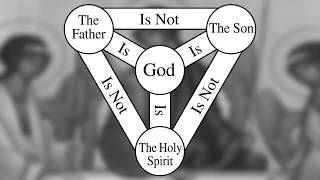
Video: In 500 AD, Athanasius explained Trinity was 3 distinct persons, co-eternal, co-equal - Lorence Yufa | Milwaukee Atheists 2:00
Video: In 367 AD, Athanasius decided the 27 books to include in the Christian NT Bible - Bart Ehrman 0:39
Video: Jesus' Divinity: Decided by Arius and Bishop Athanasius 13:25
Video: Athanasian Creed was NOT written by Athanasius - approvedofGod 2:29
Video: Which Church Council gave Athanasius authority to decide the 27 New Testament books? - Mohammed Hijab vs Jason 56:50
Video: In 367 AD, Athanasius decreed the 27 New Testament books. The Nag Hammadi Gnostic gospels declared illegal | ReligionForBreakfast 7:48
Video: In 325 AD, the Council of Nicaea defined Jesus as 'Homoousios', of same substance with God - Kegan Chandler 2:39

EXPLORE TOPICS : MOHAMMED HIJAB | 109 NEW TESTAMENT | 133 ATHANASIUS | 12 CHURCH COUNCIL | 7 HIJAB | 112 CHURCH | 256

Latest videos  •  6,061 videos  •  0 viewed/24 hour

SUBSCRIBE

Receive the latest news and updates by email - Subscribe Now!
About  |  Q&A  |  Contact Us    •    Terms  |  Privacy  |  Disclaimer  |  Sitemap
Connect:      Facebook  |    Twitter  |    Youtube
MuslimProphets.com is an educational website on the Prophets of God: David, Noah, Abraham, Moses, Jesus and Muhammad, who established the Abrahamic faiths of Judaism, Christianity and Islam. MuslimProphets.com explores contemporary social themes through Scripture, Evidences, Photo, Video, Maps, Current Affairs, Debate and 'alternative' Views held by Theologians, Apologists, Scholars and Street Preachers. Take a Site Tour

In accordance with Islamic etiquette, all prophet names should be followed with 'Peace Be Upon Him (PBUH)'. This is omitted to minimise text.

DISCLAIMER: All website content is for general information and educational purposes only and available in the public domain. Whilst all information comes from sources believed to be reliable, this cannot be guaranteed. External links are provided as a convenience and for informational purposes only. They do not constitute endorsement or approval for any products, services or comments by organizations or individuals. Title and Text links may be edited for external SEO, internal site and keyword search purposes. We bear no responsibility for the accuracy, legality, or content found on any external website or its subsequent links. Unless indicated, all images and content is licensed under a Creative Commons Attribution License distributed by Wikipedia, Wikimedia Commons, Pixabay, Pxhere, Pexels, Unsplash, Flickr and others. All Torah, Psalms, Old and New Testament Bible quotes are from the King James Version (KJV) Holy Bible in the public domain. All Quran quotes are from Taqi-ud-Din al-Hilali/Muhsin Khan English Quran translation.

ALWAYS DO YOUR OWN RESEARCH. If you spot any mistake, error or omission of information, contact us so we can correct it.