14:54
470 views
·
Last viewed: 14 hrs ago
Uploaded: 19 Feb 2015 (11 years ago) · Shared: 01 Feb 2019
Video Description (from Youtube)
This is one of the most debated topics within religious circles today. What does the Bible say about Alcohol? What are some clues that our Messiah gives us concerning alcohol back when He walked theearth. I think you might be surprised.
Alcohol is a natural preservative that occurs when natural yeast on the outside of a fruit eats at the sugars inside. Yeshua drank wine in the spring. Grapes are harvested in the fall. That is proof that it was alcoholic as there is no other way to preserve the juice. They didn't have the ability to vacuum pack bottles or refrigerate anything back then. Yeast eating sugars producing a natural preservative (alcohol) is part of the Father's creation.
For every 1 verse you can produce that seems to speak against alcohol, I can show you 2 that says otherwise. It's not a contradiction in scripture, its a contradiction in modern protestant doctrine that was born out of the temperance movement in the 18th century
http://www.New2Torah.com
See my response to comments here: https://www.youtube.com/watch?v=xA_Lh4YDzTI
DISCLAIMER
All videos are shared for educational and information purposes only. All videos are hosted and viewable on Youtube servers. Video titles are generated using the original video title; overall content theme including actual dialogue and speech (Transcript); and A.I-based recommendations with a focus on SEO, keyword density, and internal search functions. The video title does not represent the views held by the Youtube video uploader, or any individual, organisation or business.
If you spot any mistake, omission or give feedback, kindly Contact Us with details
Overview & Key Concepts
What is The Bible?
 The Bible is a canonical collection of texts sacred in Judaism and Christianity. There is no single "Bible" and many Bibles with varying contents
exist. The term Bible is shared between Judaism and Christianity, although the contents of each of their collections of canonical texts is not the same.
<br><br>
Different religious groups include different books within their Biblical canons, in different orders, and sometimes divide or combine books, or incorporate additional material into canonical books.
<br><br>
The Hebrew Bible, or Tanakh, contains 24 books. Christian Bibles range from the 66 books of the Protestant canon to the 81 books of the Ethiopian Orthodox Church canon.
<br><br>
The first part of Christian Bibles is the Old Testament, which contains, at minimum, the 24 books of the Hebrew Bible divided into 39 books and ordered differently from the Hebrew Bible. The Catholic Church and Eastern Christian churches also hold certain deuterocanonical books and passages to be part of the Old Testament canon.
<br><br>
The second part is the New Testament, containing 27 books: the 4 Canonical gospels, Acts of the Apostles, 21 Epistles or didactic letters, and the Book of Revelation.
What is Alcohol?
 Alcohol is a psychoactive and toxic substance primarily known for its use in alcoholic beverages, with the most common form being ethanol. It's a
depressant that affects the central nervous system, causing a range of effects from intoxication to addiction and various health problems.
What is the Torah?
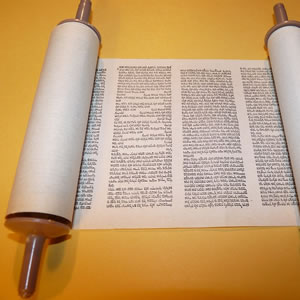 Torah, "Instruction", "Teaching" or "Law" has a range of meanings. Common to all these meanings, Torah consists of the origin of Jewish peoplehood:
their call into being by God, their trials and tribulations, and their covenant with their God, which involves following a way of life embodied in a set of moral and religious obligations and civil laws. In rabbinic literature the word Torah denotes both the five books "Torah that is written" and the Oral Torah "Torah that is spoken". The Oral Torah consists of interpretations and amplifications which according to rabbinic tradition have been handed down from generation to generation and are now embodied in the Talmud and Midrash. According to rabbinic tradition, all of the teachings found in the Torah, both written and oral, were given by God through the prophet Moses, some at Mount Sinai and others at the Tabernacle, and all the teachings were written down by Moses, which resulted in the Torah that exists today. The majority of Biblical scholars believe the written books were a product of the Babylonian captivity (c. 600 BCE), based on earlier written and oral traditions, which could only have arisen from separate communities within ancient Israel, and that it was completed by the period of Achaemenid rule (c. 400 BCE).
Videos on Alcohol (6)
 1:24:11
379
1508409174
1787296011
Alcohol is good for me. Doctors know nothing - Abbas London vs Kalam
005051
1
 11:22
11:22
514
1543713693
1787298086
Be Natural. Avoid excessive food, cigarettes and alcohol - Leo Muhammad (NOI)
000682
2
470 views
14:54
470
1549060878
1787326841
Alcohol & Wine in the Bible - New2Torah
000894
3
 3:40
3:40
507
1587722028
1787296211
China forces Uyghur Muslims forced to Eat Pork & Drink Alcohol
000220
4

577 views
6:23
577
1593736777
1787296756
Mike, homeless in Minnesota, blames himself and alcohol. Always ready to help others - Invisible People
000383
5
 14:34
14:34
802
1744073214
1787296495
Why Muslims Do Not Drink Alcohol or Eat Pork? | Shabir Ally
000874
6