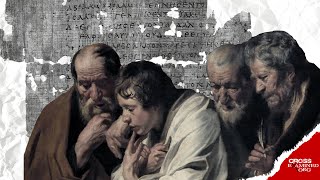
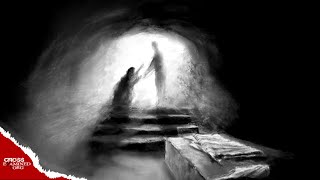
Christians believed in Jesus' Resurrection before the New Testament Bible existed - Frank Turek

   6:44
847 views  ·  Last viewed: 42 mins ago
Uploaded: 28 May 2017   (9 years ago)  ·  Shared: 13 Dec 2018

Video Description (from Youtube)

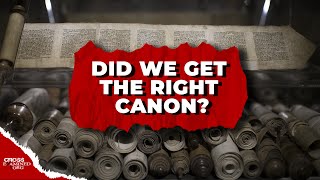
A question about the canon and what should Christians hold as authoritative.
DISCLAIMER
All videos are shared for educational and information purposes only. All videos are hosted and viewable on Youtube servers. Video titles are generated using the original video title; overall content theme including actual dialogue and speech (Transcript); and A.I-based recommendations with a focus on SEO, keyword density, and internal search functions. The video title does not represent the views held by the Youtube video uploader, or any individual, organisation or business.

If you spot any mistake, omission or give feedback, kindly Contact Us with details

Overview & Key Concepts


What is New Testament?

The New Testament is the second part of the Christian biblical canon. The first part being the Old Testament, based on the Hebrew Bible. The New

Testament discusses the teachings and person of Jesus, as well as events in first-century Christianity. Christians regard both the Old and New Testaments together as sacred scripture. The New Testament (in whole or in part) has frequently accompanied the spread of Christianity around the world. It reflects and serves as a source for Christian theology and morality.

What is Resurrection?

Resurrection is the concept of coming back to life after death. In a number of ancient religions, a dying-and-rising god is a deity which dies and

resurrects. The death and resurrection of Jesus, an example of resurrection, is the central focus of Christianity. As a religious concept, it is used in two distinct respects: a belief in the resurrection of individual souls that is current and ongoing (Christian idealism, realized eschatology), or else a belief in a singular resurrection of the dead at the end of the world. The resurrection of the dead is a standard eschatological belief in the Abrahamic religions.

Who is Frank Turek?

Frank Turek is an American Christian author, public speaker and radio host. He is the author of two books (Correct, Not Politically Correct and

Stealing from God) and co-author of two more with Norman Geisler. Turek hosts a call-in talk show called CrossExamined on American Family Radio. His television show, I Don't Have Enough Faith to be an Atheist, airs on the NRB Network.

What is Christian?

Christianity is a global religion centered on the life and teachings of Jesus Christ, who followers believe is the Son of God. It's a monotheistic

faith, meaning Christians believe in one God who exists in three co-equal persons: God the Father, God the Son (Jesus Christ), and the Holy Spirit. Christianity is based on the Bible, with the Old Testament and New Testament serving as sacred texts.

Frequently Asked Questions


1.Does the resurrection of Jesus prove he is God?

No. Jesus himself raised people after their death:

1. Jairus' daughter (Mark 5:35-43)
2. Son of a widow at Nain (Luke 11:11-17)
3. Lazarus, who was dead for four days (John 11-1-44)
4. Women received their dead by resurrection (Hebrews 11:35)
5. Elijah raised a widows son from death (I Kings 17:17-24)

Therefore, the resurrection itself would not make Jesus unique or divine even.


2.How did the early Jewish-Christians view Jesus' resurrection?

The earliest Jewish-Christians did not believe that the resurrection meant Jesus was God, but rather that he was a righteous man approved by God through miracles, wonders, and signs. Based on texts like Acts 2:22-24, they maintained the theological view that Jesus had been raised by God, not that he was the Creator himself.


3.What is the significance of Jesus' resurrection?

The resurrection of Jesus is of crucial importance to Christian doctrine. The Christian religion was founded many years after the death of Jesus based on the beliefs in his resurrection. Put simply, if there was no resurrection story, their would be no Christianity.

The reported resurrection of Jesus serves as the absolute foundational cornerstone of orthodox Christian theology and identity. Historical scholars note that institutional Christianity was organized years after Jesus' death primarily upon the early community's collective belief that he had triumphed over death. Academic consensus agrees that without the preservation and widespread propagation of this resurrection narrative, Christianity as an independent world religion would not exist.


4.Did Jesus' disciple question his resurrection?

Yes, the New Testament canonical records openly document that even members of Jesus' inner circle of chosen followers struggled to accept his physical resurrection. In the Gospel of Matthew (Matthew 28:17), the text captures his final appearance on a mountain in Galilee, explicitly stating that when the disciples saw him, they worshipped him, 'but some doubted'. Modern historians view this candid admission as highly credible, showing that belief in the resurrection was complex even for early eyewitnesses.


5.What is the credibility of the Jesus' resurrection?

The resurrection is the most controversial creed issue facing Christianity today. There are numerous explanations for the resurrection, all of which are contested. There is no concensus if Jesus' tomb was found empty or not; whether disciples saw anything or not; even if anything happened or not.


6.What is the King James Version (KJV) of the New Testament?

The King James Version (KJV) of the New Testament was completed in 1611 by 8 members of the Church of England.

There were (and still are) no original texts to translate. The oldest manuscripts we have were written down hundreds of years after the last Apostle died. There are over 8000 of these old manuscripts, with no two alike.

The King James translators chose to use none of the texts. Instead, they edited previous translations to create the New Testament their king and parliament would approve.

So today, 21st century Christians believe the 'Word of God' is a book edited in the 17th century from 16th century translations of 8000 contradictory copies of 4th century scrolls that claim to copies of lost letters written in the 1st century by unknown authors.


7.Is the New Testament historically authentic?

Textual critics note that the original autographs of the New Testament books no longer exist, leaving thousands of handwritten Greek manuscripts that contain thousands of minor variants, mostly consisting of spelling or word order differences. Despite these historical copy changes, scholars emphasize that modern textual reconstruction methods allow historians to confidently identify the original 1st-century text, ensuring no essential historical narrative or Christian doctrine is left in doubt.


8.What is the oldest manuscript of the Bible New Testament?

It is of enormous importance in establishing the biblical text. There are three earliest manuscripts of the Bible New Testament:

1. Codex Alexandrinus is one of the earliest and most important manuscripts of the entire Bible in Greek

2. Codex Sinaiticus is one of the most important books in the world and is kept in the British Library. Handwritten well over 1600 years ago, the manuscript contains the Christian Bible in Greek, including the oldest complete copy of the New Testament.

3. Codex Vaticanus in Rome


9.What language is the earliest New Testament in?

The earliest New Testament manuscripts are in Koine Greek. But there are Aramaic phrases in the Gospels. Therefore, Scholars believe an Aramaic layer lies beneath the written Greek of the New Testament, one which may never have been written down.

If true, the Greek text is itself a translation, and English text would be a translation of a translation, which raises textual inerrancy and corruption issue.

Since every translation is a personal judgement of which word to best use, made at the translators discretion.


Videos on Frank Turek (11)

Video: Christians believed in Jesus' Resurrection before the New Testament Bible existed - Frank Turek 6:44
Video: Jesus spoke Aramaic. Mark spoke Aramaic. Why is Mark's Gospel write in Koine Greek? - Frank Turek 11:36
Video: All religions make truth claims. Which is true? - Frank Turek 8:38
Video: Christianity needs Jesus' Resurrection, not the New Testament! - Frank Turek 1:41
Video: Jesus took the Punishment for our Sins - Frank Turek 1:46
Video: Some Bible scholars believe Matthew did not write Matthew's gospel - Frank Turek 1:44
Video: In John 20:15, Mary fails to recognize the 'resurrected' Jesus - Frank Turek 2:41
Video: The Catholic Bible includes Apocrypha books, but its not important - Frank Turek 2:47
Video: OT law applies to Israel. NT applies to the World - Frank Turek 4:37
Video: Jesus' Nature was both Human & Divine at same time - Frank Turek 3:36
Video: Christians observe the New Covenant. We can eat Shrimp & Bacon - Frank Turek 1:37

EXPLORE TOPICS : RESURRECTION | 51 NEW TESTAMENT | 133 FRANK TUREK | 11 CHRISTIANITY | 236 CHRISTIAN | 883   JESUS
Latest videos  •  6,061 videos  •  0 viewed/24 hour

SUBSCRIBE

Receive the latest news and updates by email - Subscribe Now!
About  |  Q&A  |  Contact Us    •    Terms  |  Privacy  |  Disclaimer  |  Sitemap
Connect:      Facebook  |    Twitter  |    Youtube
MuslimProphets.com is an educational website on the Prophets of God: David, Noah, Abraham, Moses, Jesus and Muhammad, who established the Abrahamic faiths of Judaism, Christianity and Islam. MuslimProphets.com explores contemporary social themes through Scripture, Evidences, Photo, Video, Maps, Current Affairs, Debate and 'alternative' Views held by Theologians, Apologists, Scholars and Street Preachers. Take a Site Tour

In accordance with Islamic etiquette, all prophet names should be followed with 'Peace Be Upon Him (PBUH)'. This is omitted to minimise text.

DISCLAIMER: All website content is for general information and educational purposes only and available in the public domain. Whilst all information comes from sources believed to be reliable, this cannot be guaranteed. External links are provided as a convenience and for informational purposes only. They do not constitute endorsement or approval for any products, services or comments by organizations or individuals. Title and Text links may be edited for external SEO, internal site and keyword search purposes. We bear no responsibility for the accuracy, legality, or content found on any external website or its subsequent links. Unless indicated, all images and content is licensed under a Creative Commons Attribution License distributed by Wikipedia, Wikimedia Commons, Pixabay, Pxhere, Pexels, Unsplash, Flickr and others. All Torah, Psalms, Old and New Testament Bible quotes are from the King James Version (KJV) Holy Bible in the public domain. All Quran quotes are from Taqi-ud-Din al-Hilali/Muhsin Khan English Quran translation.

ALWAYS DO YOUR OWN RESEARCH. If you spot any mistake, error or omission of information, contact us so we can correct it.