565 views
·
Last viewed: 1 day ago
Uploaded: 09 Aug 2018 (8 years ago) · Shared: 12 Aug 2018
Duration: 5:56
Uploaded: 09 Aug 2018 (8 years ago) · Shared: 12 Aug 2018
Duration: 5:56
Youtube Description
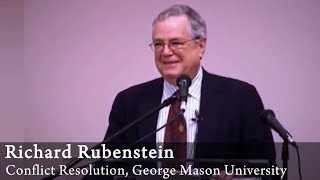
Richard Rubenstein (born February 24, 1938) is an author and University Professor of Conflict Resolution and Public Affairs at George MasonUniversity, holding degrees from Harvard College, Oxford University (as a Rhodes Scholar), and Harvard Law School.
Link to Richard Rubenstein videos:
http://muslimprophets.com/videos.php?search=Richard+Rubenstein
Link to the original video:
https://www.youtube.com/watch?v=1dOiZQhKU78
DISCLAIMER
We do NOT own the video materials and all credits belong to the respectful owners. In case of copyright issues, please contact us immediately for further credits or clip delete.
COPYRIGHT
Under Section 107 of the Copyright Act 1976, allowance is made for 'fair use' for purposes such as criticism, comment, news reporting, teaching, scholarship and research. Fair use is a use permitted by copyright statute that might otherwise be infringing. Non-profit, educational or personal use tips the balance in favour of fair use.
Explore More
Richard Rubenstein Arian Controversy Nicaea AriusSearch Google Search Explore Topics
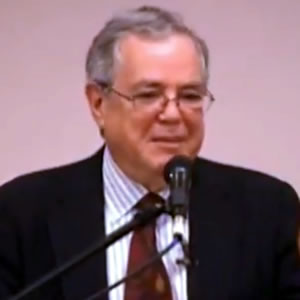 Who is Richard Rubenstein?
Richard Rubenstein (born 1938) is an author and University Professor of Conflict Resolution and Public Affairs at George Mason University. Rubenstein holds degrees from Harvard College, Oxford University (as a Rhodes Scholar), and Harvard Law School.
 What is the Arian Controversy?
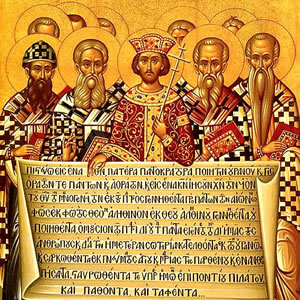
The Arian controversy was a series of Christian theological disputes that arose between Arius and Athanasius of Alexandria, two Christian theologians from Alexandria, Egypt. The most important of these controversies concerned the substantial relationship between God the Father and God the Son. The deep divisions created by the disputes were an ironic consequence of Emperor Constantine's efforts to unite Christianity and establish a single, imperially approved version of the faith during his reign. These disagreements divided the Church into two opposing theological factions for over 55 years, from the time before the First Council of Nicaea in 325 AD until after the First Council of Constantinople in 381 AD.
 Where is Nicaea?
Nicaea or Nicea was an ancient city in northwestern Anatolia. It is primarily known as the site of the First and Second Councils of Nicaea (the first and seventh Ecumenical councils in the early history of the Christian Church), the Nicene Creed (which comes from the First Council), and as the capital city of the Empire of Nicaea following the Fourth Crusade in 1204, until the recapture of Constantinople by the Byzantines in 1261.
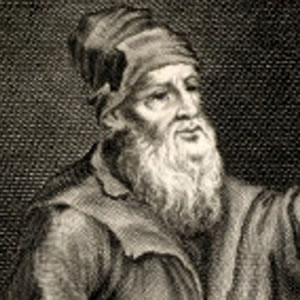 Who was Arius?
Arius 256-336 AD, was a Christian presbyter and ascetic of Berber origin, and priest in Baucalis in Alexandria, Egypt. His teachings about the nature of the Godhead in Christianity, which emphasized the Father's divinity over the Son, and his opposition to what would become the dominant Christology, Homoousian Christology, made him a primary topic of the First Council of Nicaea, which was convened by Emperor Constantine in 325 AD.
![Video: Prophet Adam [The First Human]](https://img.youtube.com/vi/NhbHHN-Y1fM/mqdefault.jpg)