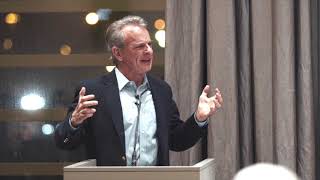
1056 views
·
Last viewed: 5 days ago
Uploaded: 07 Jun 2018 (8 years ago) · Shared: 09 Jun 2018
Duration: 1:51
Uploaded: 07 Jun 2018 (8 years ago) · Shared: 09 Jun 2018
Duration: 1:51
Youtube Description
Link to the original video: https://www.youtube.com/watch?v=bg4iPD31Eno DISCLAIMER We do NOT own the video materials and all credits belong to therespectful owners. In case of copyright issues, please contact us immediately for further credits or clip delete.
COPYRIGHT
Under Section 107 of the Copyright Act 1976, allowance is made for 'fair use' for purposes such as criticism, comment, news reporting, teaching, scholarship and research. Fair use is a use permitted by copyright statute that might otherwise be infringing. Non-profit, educational or personal use tips the balance in favour of fair use.
Explore More
Search Google Search Explore Topics Council of Nicaea Yaqeen Institute Jonathan Brown Omar Suleiman Christianity Doug Michael Nicaea Pagan GOD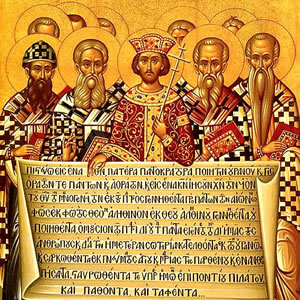 What was the Council of Nicaea?
The First Council of Nicaea was a council of Christian bishops convened in the Bithynian city of Nicaea (now ?znik, Bursa province, Turkey) by the Roman Emperor Constantine I in 325 AD. Its main accomplishments were settlement of the Christological issue of the divine nature of God the Son and his relationship to God the Father, the construction of the first part of the Nicene Creed, establishing uniform observance of the date of Easter, and promulgation of early canon law.
 Who are Yaqeen Institute? (MEMBER OF YI)
The Yaqeen Institute for Islamic Research is an independent American research institute and think tank founded in 2016, mainly interested in the advanced study of modernity, Islam and Muslim societies. It works to aggregate complex Islamic topics for audiences outside of the field of Islamic academia. Yaqeen Institute was founded by American Islamic scholar Omar Suleiman and is based in Irving, Texas. It has published works have covered a variety of topics at the intersection of Islam, including perennialism, international politics, parenting, and historical preservation of Islamic texts. It works to "pioneer Islamic research in cutting-edge, creative formats."
 Who is Jonathan Brown? (MEMBER OF YI)
Jonathan Andrew Cleveland Brown (born 1977) is an American scholar of Islamic studies. Since 2012, he has been associate professor at Georgetown University's Edmund A. Walsh School of Foreign Service. He holds the Alwaleed bin Talal Chair of Islamic Civilization at Georgetown University. Brown has also published articles in the fields of Hadith, Islamic law, Salafism, Sufism, and Arabic language.
 Who is Omar Suleiman? (MEMBER OF YI)
Omar Suleiman (born 1986) is an American Muslim scholar, civil rights activist and speaker. He is the Founder and President of the Yaqeen Institute for Islamic Research professor of Islamic Studies at Southern Methodist University. Suleiman is also the Resident Scholar of the Valley Ranch Islamic Center and the Co-Chair of Faith Forward Dallas at Thanks-Giving Square.
 What is Christianity?
Christianity is a global religion centered on the life and teachings of Jesus Christ, who followers believe is the Son of God. It's a monotheistic faith, meaning Christians believe in one God who exists in three co-equal persons: God the Father, God the Son (Jesus Christ), and the Holy Spirit. Christianity is based on the Bible, with the Old Testament and New Testament serving as sacred texts.
 Who is Doug Michael?Where is Nicaea?
Nicaea or Nicea was an ancient city in northwestern Anatolia. It is primarily known as the site of the First and Second Councils of Nicaea (the first and seventh Ecumenical councils in the early history of the Christian Church), the Nicene Creed (which comes from the First Council), and as the capital city of the Empire of Nicaea following the Fourth Crusade in 1204, until the recapture of Constantinople by the Byzantines in 1261.
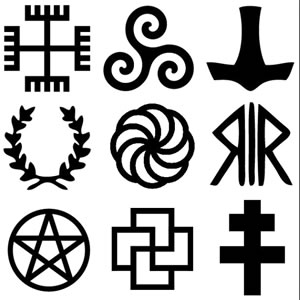 What is Pagan?
Paganism is a term first used in the fourth century by early Christians. It was applied on populations of the Roman Empire who practiced polytheism, either because they were increasingly rural and provincial relative to the Christian population or because they were not milites Christi (soldiers of Christ). Alternate terms in Christian texts for the same group were hellene, gentile, and heathen. Pagan and paganism were pejorative terms for the same polytheistic group, implying its inferiority. Paganism has broadly connoted the "religion of the peasantry", and for much of its history was a derogatory term. Both during and after the Middle Ages, pagan was a pejorative term that was applied to any non-Abrahamic or unfamiliar religion, and the term presumed a belief in false god(s).
Who is GOD?In monotheism and henotheism, God is conceived as the Supreme Being and principal object of faith. The concept of God as described by theologians commonly includes the attributes of omniscience (infinite knowledge), omnipotence (unlimited power), omnipresence (present everywhere), omnibenevolence (perfect goodness), divine simplicity, and eternal and necessary existence. In theism, God is the creator and sustainer of the universe In deism, God is the creator, but not the sustainer, of the universe Monotheism is the belief in the existence of one God or in the oneness of God In pantheism, God is the universe itself In atheism, God is purported not to exist, while deemed unknown or unknowable within the context of agnosticism.