810 views
·
Last viewed: 12 hrs ago
Uploaded: 07 Jun 2018 (8 years ago) · Shared: 09 Jun 2018
Duration: 1:10
Uploaded: 07 Jun 2018 (8 years ago) · Shared: 09 Jun 2018
Duration: 1:10
Youtube Description
Link to the original video: https://www.youtube.com/watch?v=bg4iPD31Eno DISCLAIMER We do NOT own the video materials and all credits belong to therespectful owners. In case of copyright issues, please contact us immediately for further credits or clip delete.
COPYRIGHT
Under Section 107 of the Copyright Act 1976, allowance is made for 'fair use' for purposes such as criticism, comment, news reporting, teaching, scholarship and research. Fair use is a use permitted by copyright statute that might otherwise be infringing. Non-profit, educational or personal use tips the balance in favour of fair use.
Explore More
Doug Michael Mithras Sun God Church Pagan GODSearch Google Search Explore Topics
 Who is Doug Michael?
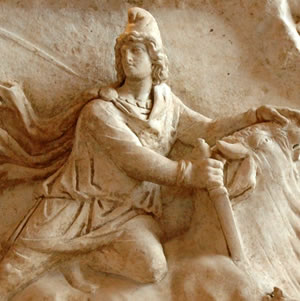 Who was Mithras?
Mithraism, was a mystery religion centered on the god Mithras that was practised in the Roman Empire from about the 1st to the 4th century CE. The religion was inspired by Persian worship of the god Mithra (Proto-Indo-Iranian/Vedic Mitra), though the Greek Mithras was linked to a new and distinctive imagery, and the level of continuity between Persian and Greco-Roman practice is debated. Worshippers of Mithras had a complex system of seven grades of initiation and communal ritual meals. Initiates called themselves syndexioi, those "united by the handshake". They met in underground temples, called mithraea, which survive in large numbers. The cult appears to have had its centre in Rome.
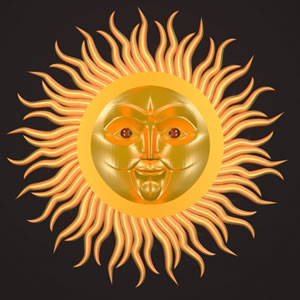 What is Sun God?
A solar deity (also sun god or sun goddess) is a sky deity. The diety represents the Sun, or an aspect of it, usually by its perceived power and strength. Solar deities and sun worship can be found throughout most of recorded history in various forms. The Sun is sometimes referred to by its Latin name Sol or by its Greek name Helios.
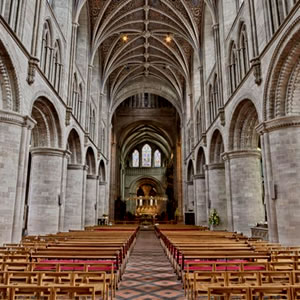 What is the Church?
A church is a building used for Christian worship services and Christian activities. The earliest identified Christian church is a house church founded between 233 AD and 256 AD. The word church also describes a body or assembly of Christian believers, while "the Church" refers to the worldwide Christian religious community.
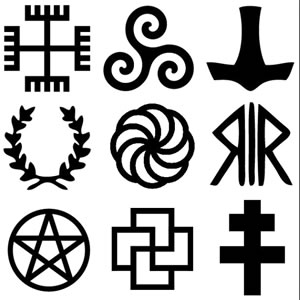 What is Pagan?
Paganism is a term first used in the fourth century by early Christians. It was applied on populations of the Roman Empire who practiced polytheism, either because they were increasingly rural and provincial relative to the Christian population or because they were not milites Christi (soldiers of Christ). Alternate terms in Christian texts for the same group were hellene, gentile, and heathen. Pagan and paganism were pejorative terms for the same polytheistic group, implying its inferiority. Paganism has broadly connoted the "religion of the peasantry", and for much of its history was a derogatory term. Both during and after the Middle Ages, pagan was a pejorative term that was applied to any non-Abrahamic or unfamiliar religion, and the term presumed a belief in false god(s).
Who is GOD?In monotheism and henotheism, God is conceived as the Supreme Being and principal object of faith. The concept of God as described by theologians commonly includes the attributes of omniscience (infinite knowledge), omnipotence (unlimited power), omnipresence (present everywhere), omnibenevolence (perfect goodness), divine simplicity, and eternal and necessary existence. In theism, God is the creator and sustainer of the universe In deism, God is the creator, but not the sustainer, of the universe Monotheism is the belief in the existence of one God or in the oneness of God In pantheism, God is the universe itself In atheism, God is purported not to exist, while deemed unknown or unknowable within the context of agnosticism.