Youtube Description:
Link to the original video:
DISCLAIMER
We do NOT own the video materials and all credits belong to the respectful owners. In case of copyright issues, please contact us immediately for further credits or clip delete.
COPYRIGHT
Under Section 107 of the Copyright Act 1976, allowance is made for 'fair use' for purposes such as criticism, comment, news reporting, teaching, scholarship and research. Fair use is a use permitted by copyright statute that might otherwise be infringing. Non-profit, educational or personal use tips the balance in favour of fair use.
Link to the original video:
DISCLAIMER
We do NOT own the video materials and all credits belong to the respectful owners. In case of copyright issues, please contact us immediately for further credits or clip delete.
COPYRIGHT
Under Section 107 of the Copyright Act 1976, allowance is made for 'fair use' for purposes such as criticism, comment, news reporting, teaching, scholarship and research. Fair use is a use permitted by copyright statute that might otherwise be infringing. Non-profit, educational or personal use tips the balance in favour of fair use.
Explore More
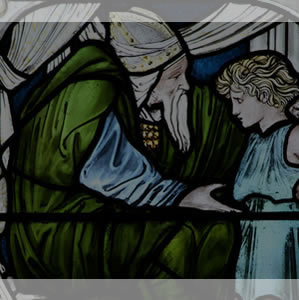 What is Christianity?
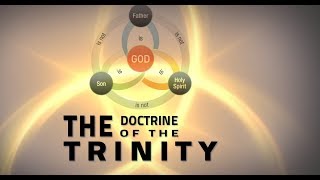
Christianity is a global religion centered on the life and teachings of Jesus Christ, who followers believe is the Son of God. It's a monotheistic faith, meaning Christians believe in one God who exists in three co-equal persons: God the Father, God
the Son (Jesus Christ), and the Holy Spirit. Christianity is based on the Bible, with the Old Testament and New Testament serving as sacred texts.
 Who is Doug Michael?What is Mythology?
Mythology refers to a collection of sacred, traditional tales from a specific culture that explain natural phenomena, world origins, and cultural values. This often featuring gods, goddesses, and heroes. It serves as a lens for interpreting shared
human experiences through stories, rituals, and art.
Myth is a genre of folklore consisting primarily of narratives that play a fundamental role in a society. For scholars, this is totally different from the ordinary sense of the term myth, meaning a belief that is not true, as the veracity of a piece of folklore is entirely irrelevant to determining whether it constitutes a myth.
Myths are often endorsed by religious and secular authorities, and may be natural or supernatural in character. Many societies group their myths, legends, and history together, considering myths and legends to be factual accounts of their remote past. In particular, creation myths take place in a primordial age when the world had not achieved its later form. Origin myths explain how a society's customs, institutions, and taboos were established and sanctified. National myths are narratives about a nation's past that symbolize the nation's values. There is a complex relationship between recital of myths and the enactment of rituals.
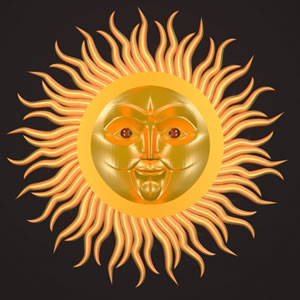 What is Sun God?
A solar deity (also sun god or sun goddess) is a sky deity. The diety represents the Sun, or an aspect of it, usually by its perceived power and strength. Solar deities and sun worship can be found throughout most of recorded history in various
forms. The Sun is sometimes referred to by its Latin name Sol or by its Greek name Helios.
 Who are The Sun?What is the Zodiac?
In Western astrology, and formerly astronomy, the zodiac is divided into 12 signs. Each sign occupying 30 degrees of celestial longitude and roughly corresponding to the constellations Aries, Taurus, Gemini, Cancer, Leo, Virgo, Libra, Scorpio
Sagittarius, Capricorn, Aquarius and Pisces. The twelve astrological signs form a celestial coordinate system, or more specifically an ecliptic coordinate system, which takes the ecliptic as the origin of latitude and the Sun's position at vernal equinox as the origin of longitude.
What is the Solar?In Western astrology, and formerly astronomy, the zodiac is divided into 12 signs. Each sign occupying 30 degrees of celestial longitude and roughly corresponding to the constellations Aries, Taurus, Gemini, Cancer, Leo, Virgo, Libra, Scorpio
Sagittarius, Capricorn, Aquarius and Pisces. The twelve astrological signs form a celestial coordinate system, or more specifically an ecliptic coordinate system, which takes the ecliptic as the origin of latitude and the Sun's position at vernal equinox as the origin of longitude.