339 views
·
Last viewed: 1 day ago
Uploaded: 09 Mar 2013 (14 years ago) · Shared: 13 Jan 2018
Duration: 1:53:03
Uploaded: 09 Mar 2013 (14 years ago) · Shared: 13 Jan 2018
Duration: 1:53:03
Youtube Description
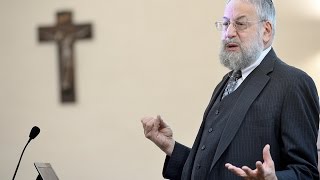
The Gospel of Caesar Documentary film about a linguist (Francesco Carotta) and a Catholic priest, who search for and find the origins of Christianityand the real historical Jesus: Julius Caesar,
Divus Gaius Julius Caesar, Christus
More details in following books:
'Jesus was Caesar' by Francesco Carotta
http://books.google.it/books/about/Jesus_was_Caesar.html?id=mLIrAAAACAAJ&redir_esc=y
http://www.scribd.com/doc/4090002/Jesus-was-Caesar
I would like to thank my new subscribers and I apologize for my absence. I'll be pumping out new videos soon, stay tuned and enjoy.
'I would not believe in the Gospel if the authority of the Catholic Church did not move me to do so.'
- Saint Augustine of Hippo (A.D. 427)
(responsible for initiating hatred and the slaughter of countless Jews, pagans and heretics (different christian sects), including the destruction of their writings and archeological patrimony).
Explore More
Francesco Carotta Caesar Myth JESUS
JESUS
Search Google Search Explore Topics
 Who is Francesco Carotta?
Francesco Carotta (born 1946 in Veneto, Italy) is an Italian writer. He developed a theory the historical Jesus was based on the life of Julius Caesar, that the Gospels were a re-writing of Roman historical sources, and that Christianity developed from the cult of the deified Caesar. Carotta's theory runs contrary to all established theories on the historical Jesus. Carotta postulates that the historical person behind the Biblical figure Jesus Christ was not Jesus of Nazareth, but the Roman statesman Gaius Julius Caesar, from whose cult Christianity developed over the course of several generations.
 Who was Caesar?
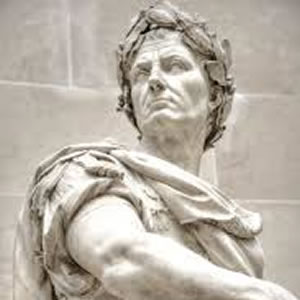
Gaius Julius Caesar, 100-44 BC, known by his cognomen Julius Caesar, was a Roman politician and military general. Caesar played a critical role in the events that led to the demise of the Roman Republic and the rise of the Roman Empire.
What is Myth?Mythology refers to a collection of sacred, traditional tales from a specific culture that explain natural phenomena, world origins, and cultural values. This often featuring gods, goddesses, and heroes. It serves as a lens for interpreting shared human experiences through stories, rituals, and art. Myth is a genre of folklore consisting primarily of narratives that play a fundamental role in a society. For scholars, this is totally different from the ordinary sense of the term myth, meaning a belief that is not true, as the veracity of a piece of folklore is entirely irrelevant to determining whether it constitutes a myth. Myths are often endorsed by religious and secular authorities, and may be natural or supernatural in character. Many societies group their myths, legends, and history together, considering myths and legends to be factual accounts of their remote past. In particular, creation myths take place in a primordial age when the world had not achieved its later form. Origin myths explain how a society's customs, institutions, and taboos were established and sanctified. National myths are narratives about a nation's past that symbolize the nation's values. There is a complex relationship between recital of myths and the enactment of rituals.