981 views
·
Last viewed: 10 hrs ago
Uploaded: 22 Aug 2011 (15 years ago) · Shared: 20 Sep 2017
Duration: 10:30
Uploaded: 22 Aug 2011 (15 years ago) · Shared: 20 Sep 2017
Duration: 10:30
Video Description
In this insightful video, speaker Prophet John Schoenheit from Spirit & Truth Fellowship International delves into foundational Bible scriptures to examine the true identity of Prophet Jesus Christ. By analyzing classic Old Testament prophecies in IsaiahExplore More
John Schoenheit Unitarian Isaiah Psalm GOD JESUSSearch Google Search Explore Topics
 Who are John Schoenheit?
BiblicalUnitarian serves as the digital media outlet for BiblicalUnitarian.com, a web resource operated in connection with Christian ministries like Spirit & Truth Fellowship International. The channel focuses on teaching non-Trinitarian theology based directly on Scripture.
 What is Unitarian?
Unitarianism can be viewed as a form of Nontrinitarianism which is a form of Christianity that rejects the mainstream Christian doctrine of the Trinity. The teaching that God is three distinct hypostases or persons who are coeternal, coequal, and indivisibly united in one being, or essence (from the Greek ousia). Certain religious groups that emerged during the Protestant Reformation have historically been known as antitrinitarian, but are not considered Protestant in popular discourse due to their nontrinitarian nature. According to churches that consider the decisions of ecumenical councils final, Trinitarianism was definitively declared to be Christian doctrine at the 4th-century ecumenical councils, that of the First Council of Nicaea (325 AD), which declared the full divinity of the Son, and the First Council of Constantinople (381 AD), which declared the divinity of the Holy Spirit. In terms of number of adherents, nontrinitarian denominations comprise a minority of modern Christianity. The largest nontrinitarian Christian denominations are The Church of Jesus Christ of Latter-day Saints ("Mormons") and Jehovah's Witnesses.
 What is Isaiah?
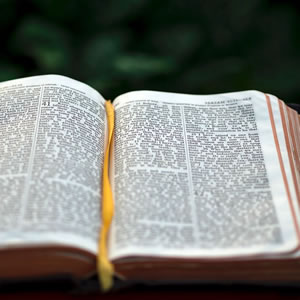
Book of Isaiah, or Isaiah is the first of the Latter Prophets in the Hebrew Bible and the first of the Major Prophets in the Christian Old Testament. It is identified by a superscription as the words of the 8th-century BCE prophet Isaiah ben Amoz, but there is extensive evidence that much of it was composed during the Babylonian captivity and later. The consensus through most of the 20th century, that the book comprises three separate collections of oracles: Proto-Isaiah (chapters 1-39), containing the words of Isaiah; Deutero-Isaiah (chapters 40-55), the work of an anonymous 6th-century BCE author writing during the Exile; and Trito-Isaiah (chapters 56-66), composed after the return from Exile. While virtually no scholars today attribute the entire book, or even most of it, to one person, the book's essential unity has become a focus in current research.
 What is Psalm?
The Book of Psalms ("praises"), commonly referred to simply as Psalms or "the Psalms". This is the first book of the Ketuvim ("Writings"), the third section of the Hebrew Bible, and thus a book of the Christian Old Testament. The title is derived from the Greek translation, psalmoi, meaning "instrumental music" and, by extension, "the words accompanying the music". The book is an anthology of individual psalms, with 150 in the Jewish and Western Christian tradition and more in the Eastern Christian churches. Many are linked to the name of David, but his authorship is not accepted by modern scholars.
Who is GOD?In monotheism and henotheism, God is conceived as the Supreme Being and principal object of faith. The concept of God as described by theologians commonly includes the attributes of omniscience (infinite knowledge), omnipotence (unlimited power), omnipresence (present everywhere), omnibenevolence (perfect goodness), divine simplicity, and eternal and necessary existence. In theism, God is the creator and sustainer of the universe In deism, God is the creator, but not the sustainer, of the universe Monotheism is the belief in the existence of one God or in the oneness of God In pantheism, God is the universe itself In atheism, God is purported not to exist, while deemed unknown or unknowable within the context of agnosticism.