Youtube Description:
What are the origins of the Easter holiday? Are these origins Christian or Pagan? Should a Bible believer celebrate Easter? What does the Bible say about Easter? Is Easter the same as Passover? Why does the church celebrate Easter? Why is Easter celebrated with eggs and bunnies? Discover the Pagan Origins of Easter!
We hope you enjoyed the teaching: The Pagan Origins of Easter
To continue your journey, please visit our extensive website:
Download our free mobile App for Apple or Android from the App Store. Search: Yahweh's Restoration Ministry
Join us on Roku! To find our channel search: Yahweh's Restoration Ministry
Watch live Sabbath services every Saturday at 1:30pm central.
Find us on Social Media:
To link this video:
-~-~~-~~~-~~-~-
Please watch: 'This Is Yahweh's Restoration Ministry - A HEBREW ROOTS, Messianic, Torah Observant, Congregation'
-~-~~-~~~-~~-~-
What are the origins of the Easter holiday? Are these origins Christian or Pagan? Should a Bible believer celebrate Easter? What does the Bible say about Easter? Is Easter the same as Passover? Why does the church celebrate Easter? Why is Easter celebrated with eggs and bunnies? Discover the Pagan Origins of Easter!
We hope you enjoyed the teaching: The Pagan Origins of Easter
To continue your journey, please visit our extensive website:
Download our free mobile App for Apple or Android from the App Store. Search: Yahweh's Restoration Ministry
Join us on Roku! To find our channel search: Yahweh's Restoration Ministry
Watch live Sabbath services every Saturday at 1:30pm central.
Find us on Social Media:
To link this video:
-~-~~-~~~-~~-~-
Please watch: 'This Is Yahweh's Restoration Ministry - A HEBREW ROOTS, Messianic, Torah Observant, Congregation'
-~-~~-~~~-~~-~-
Explore More
 Who are Yahweh Ministry?
Yahweh's Restoration Ministry (YRM) are devoted to exposing pagan church traditions and false doctrine. We also cover end-times prophecy, armageddon and prophetic events. The Hebrew roots of the Christian faith is an important element to unlocking
Bible truth. Discover amazing facts that your church doesn't want you to know! Facts like the Sabbath and Feast Days, the name of god Yahweh, common Bible misnomers, false doctrine, paganism, and amazing Bible facts are all covered.
 What is Easter?
Easter, or Resurrection Sunday is a festival and holiday celebrating the resurrection of Jesus from the dead. This event is described in the New Testament as having occurred on the third day of his burial after his crucifixion by the Romans at
Calvary c. 30 AD. It is the culmination of the Passion of Jesus, preceded by Lent (or Great Lent), a forty-day period of fasting, prayer, and penance. Easter customs vary across the Christian world, and include sunrise services, exclaiming the Paschal greeting, clipping the church, and decorating Easter eggs (symbols of the empty tomb). The Easter lily, a symbol of the resurrection, traditionally decorates the chancel area of churches on this day and for the rest of Eastertide. Additional customs that have become associated with Easter and are observed by both Christians and some non-Christians include egg hunting, the Easter Bunny, and Easter parades.
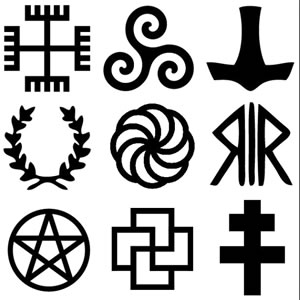 What is Pagan?
Paganism is a term first used in the fourth century by early Christians. It was applied on populations of the Roman Empire who practiced polytheism, either because they were increasingly rural and provincial relative to the Christian population or
because they were not milites Christi (soldiers of Christ). Alternate terms in Christian texts for the same group were hellene, gentile, and heathen. Pagan and paganism were pejorative terms for the same polytheistic group, implying its inferiority. Paganism has broadly connoted the "religion of the peasantry", and for much of its history was a derogatory term. Both during and after the Middle Ages, pagan was a pejorative term that was applied to any non-Abrahamic or unfamiliar religion, and the term presumed a belief in false god(s).