The Torah and Gospel (Injeel) in the Quran - Shabir Ally
3:02
1203 views
·
Last viewed: 7 hrs ago Uploaded:
09 Jul 2012 (14 years ago)
·
Shared: 28 Mar 2017
Video Description (from Youtube)
What does Islam say about Christians and Jews, their beliefs, and their practices? What is the difference between the Old Testament and the New Testament? How does Bible compare to the Quran? Answered
DISCLAIMER
All videos are shared for educational and information purposes only. All videos are hosted and viewable on Youtube servers. Video titles are generated using the original video title; overall content theme including actual dialogue and speech (Transcript); and A.I-based recommendations with a focus on SEO, keyword density, and internal search functions. The video title does not represent the views held by the Youtube video uploader, or any individual, organisation or business.
Shabir Ally is a Canadian Muslim preacher who serves as the president of the Islamic Information & Dawah Centre International in Toronto, Ontario
Canada. Ally is known for promoting a contextual interpretation of the Quranic verses, but seeks to find their justification in similar expressions within the Christian Bible. He has debated William Lane Craig, David Wood, Nabeel Qureshi, Michael Licona and John Dominic Crossan. He has also debated apologists James White and Jay Smith.
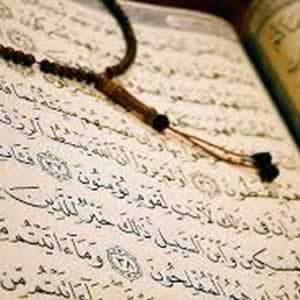
Quran, literally meaning "the recitation" is the central religious text of Islam, which Muslims believe to be a revelation from God (Allah). It is
widely regarded as the finest work in classical Arabic literature. The Quran is divided into chapters (surah in Arabic), which are then divided into verses (ayah). Muslims believe that the Quran was verbally revealed by God to Muhammad through the angel Gabriel (Jibril), gradually over a period of approximately 23 years, beginning on 22 December 609 CE, when Muhammad was 40, and concluding in 632, the year of his death. Muslims regard the Quran as the most important miracle of Muhammad, a proof of his prophethood, and the culmination of a series of divine messages that started with the messages revealed to Adam and ended with Muhammad.
Injeel, or Injil is the Arabic name for the Gospel of Jesus (Isa). The Injil is described by the Quran as one of the four Islamic holy books which was
revealed by God, the others being the Zabur (Psalms), the Tawrat (Torah), and the Quran. The word Injil is also used in the Quran, the Hadith and early Muslim documents to refer to both a book and revelations made by God to Jesus. Muslims believe the Injeel is lost and no longer available. The Injeel is not the modern New Testament Bible.
Gospel is the Old English translation of Greek evangelion, meaning "good news". It originally meant the Christian message itself, but in the 2nd
century it came to be used for the books in which the message was set out. The four gospels of the New Testament: Matthew, Mark, Luke and John are the main source of information on the life of Jesus.

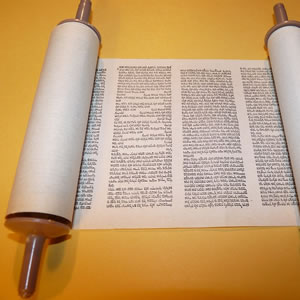
Torah, "Instruction", "Teaching" or "Law" has a range of meanings. Common to all these meanings, Torah consists of the origin of Jewish peoplehood:
their call into being by God, their trials and tribulations, and their covenant with their God, which involves following a way of life embodied in a set of moral and religious obligations and civil laws. In rabbinic literature the word Torah denotes both the five books "Torah that is written" and the Oral Torah "Torah that is spoken". The Oral Torah consists of interpretations and amplifications which according to rabbinic tradition have been handed down from generation to generation and are now embodied in the Talmud and Midrash. According to rabbinic tradition, all of the teachings found in the Torah, both written and oral, were given by God through the prophet Moses, some at Mount Sinai and others at the Tabernacle, and all the teachings were written down by Moses, which resulted in the Torah that exists today. The majority of Biblical scholars believe the written books were a product of the Babylonian captivity (c. 600 BCE), based on earlier written and oral traditions, which could only have arisen from separate communities within ancient Israel, and that it was completed by the period of Achaemenid rule (c. 400 BCE).
Mainstream biblical scholarship tracks the composition of the Torah (the first five books of the Bible) through a gradual process starting from traditional Mosaic oral codes to written records compiled during the mid-to-late 1st millennium BCE. While early fragments exist in ancient archaeological discoveries like the Dead Sea Scrolls, the authoritative text was systematically finalized and preserved by Jewish scribes over centuries of scriptural copy transmissions.
Yes, the Quran references previous scriptures in passages like Surah Al-Ma'idah (5:47), which tells the followers of the Gospel to judge by what God has revealed in it. From an academic perspective, this reflects the historical context of 7th-century Medina, where Jews and Christians were recognized as 'People of the Book' who possessed divine laws. While Islamic theology holds that modern biblical texts have suffered from textual corruption (tahrif), the Quran historically appeals to the core monotheistic truths remaining in those scriptures to validate Muhammad's message.
The Synoptic Gospels strictly portray Jesus through a human lens as an honorable prophet, a moral hero, and a devoted martyr. They do not present him as a literal God who assumed human flesh, nor do they frame his life as a cosmic sacrifice intended to die and rise again for the spiritual salvation of mankind.
Paul was deeply unyielding toward alternative views of the faith, explicitly writing in Galatians 1:9 that if any person preached a gospel different from the one his followers had received, that individual should be completely accursed. This indicates he aggressively dismissed the legalistic, Jewish-Christian perspectives held by original disciples like James and Peter.
The canonical gospels were composed during the second half of the 1st century, with Mark widely dated around 65-70 CE, followed by Matthew and Luke between 80-90 CE, and John close to 90-100 CE. These dates mean the texts were compiled decades after Jesus' earthly ministry, drawing on reliable oral traditions and early eyewitness testimonies.
In Galatians 1:6-9, Paul strongly condemned anyone preaching a different gospel, reflecting a significant conflict in the early church between his Gentile-inclusive mission and strict adherence to the Law.
The author of the fourth gospel is believed to be a Greek convert with limited knowledge of traditional Judaism, who frequently uses 'the Jews' as an antagonistic term over 60 times in the Gospel of John alone.
Apocrypha are works, usually written works, that are of unknown authorship, or of doubtful authenticity, or spurious, or not considered to be within a particular canon.
The Apocrypha (Greek for 'hidden away') are revered Biblical text which were excluded from the canon Bible. They were literally hidden away from the early Christians, and tell a very different story of Jesus.
Gospel of Nazoreans
Gospel of Ebionites
Gospel of Egyptians
Gospel of Peter
Gospel of Thomas
Gospel of Hebrews
Thomas is the most important non-canonical Gospel recently discovered in the last century. It positively features in current studies of Christian origins and the historical Jesus.
Gospel of Thomas with sayings of Jesus is thought to be earliest written record of his life produced within ten years of his death.
In the 2nd century, some Christians felt John gospel was so different in tone and approach in comparison to the other three synoptic gospels (Mark, Matthew, Luke); it should have been excluded from the cannon.
The books of Arius and his followers, after the first Council of Nicaea (325 C.E.), were burned for heresy by the Roman emperors Constantine, Honorius, and Theodosius I, who published a decree commanding that, 'the doctrine of the Trinity should be embraced by those who would be called catholics; that all others should bear the infamous name of heretics'.
Mythical Jesus, Catholics and Engineering of Dates, Events, Gospels and Epistles (Clement & Barnabas) affirming pre-existant pagan Christ cults - Mike Lawrence (NotoriUK)
Jesus' disciples were Aramaic speaking, lower class, uneducated labourers. Gospels were written by highly educated, Greeks 50 years after Jesus - Bart Ehrman
In Gospels, Jesus is crucified by 'innocent' Pontius Pilate who reluctantly bows to Jewish leaders. In reality, Pilate was a ruthless, sadistic ruler - Mark Goodacre
John's Gospel parallels Gnostic-Pagan-Hermetic ideas (dualism, oneness/son of God, trinity, Father etc.) to promote his Jewish-Christianity - Kegan Chandler