9:55
344 views
·
Last viewed: 8 hrs ago
Uploaded: 09 Mar 2026 (5 months ago) · Shared: 10 Mar 2026
Video Description (from Youtube)
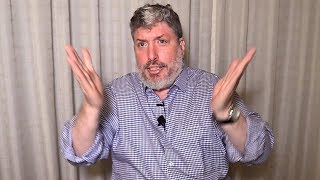
Why Were the Early Centuries of Christianity So Turbulent and Violent? TO SUPPORT THIS CHANNEL: Paypal.me/tenaktalk OR https://TanachTalk.Com (or) Patreon.com/tenaktalk (or) for snail mail: P.O. Box1444
Kingsland, Tx 78639.
Thanks for considering!
*************************************************************************************
SPECIAL THANKS TO: Javier and Sandy for creating my website. They work with people all over the world so no one is out of reach! Paste their website into your web browser: https://jvr.la
************************************************************************************
Learn Biblical Hebrew in ONE HOUR: https://www.youtube.com/watch?v=tk1njVL723w
************************************************************************************
OVER 30 BOOK RESOURCES WITH DIRECT LINKS RIGHT HERE IN THE VIDEO DESCRIPTION AREA. AS AN AMAZON ASSOCIATE, I EARN FROM QUALIFYING SALES. (DONATION LINKS AND SCHEDULE AT BOTTOM) https://www.amazon.com/shop/tenaktalk
COUNTER-MISSIONARY BOOKS:
************************************************************************************
1) Let’s Get Biblical Vol. 1: https://amzn.to/3ToX66t
2) Let‘s Get Biblical Vol. 2: https://amzn.to/3zWOw8u
3) Judaism & Christianity: A Contrast: https://amzn.to/3Tjq4Vw
& Spanish version: https://amzn.to/3zYah7B
4) Was the Serpent Defeated?: https://amzn.to/3EfuBEg5) The Mythmaker: Paul & the Invention of Christianity: https://amzn.to/3tvz3sp
6) Caesar‘s Messiah: the Roman Conspiracy to Invent Jesus: https://amzn.to/3FTir58
7) Christ in Egypt: the Horus-Jesus Connection: https://amzn.to/3zZt2rj
8) Newly Born Jew: Noahides & Conversion to Judaism: https://amzn.to/3NMHVTA
9) The Divine Code: https://amzn.to/3Ee4bm1
10) Brit Shalom: https://amzn.to/3Ti360X
11) Leaving Jesus: https://amzn.to/3TiMHJJ
TORAH, TANACH, HEBREW BIBLE and HOLY DAY BOOKS:
12) Artscroll Hebrew/English Tanach Hardcover w/commentary: https://amzn.to/3taClAY
13) Schottenstein Interlinear 1 Vol Complete Chumash: https://amzn.to/3FYLaWg
14) Interlinear Chumash Schottenstein Edition Vols. 1-5 [Box Set]: https://amzn.to/3DPT8OK
15) The Holy Scriptures (blue): The New JPS Translation according to the Traditional Hebrew Text:
https://amzn.to/3NS7v9J
16) Alef Bet Tracing and Practice: Learn to write Hebrew Alphabet, Alef Bet workbook for
beginners, primer for kids and adults: https://amzn.to/3UIDcop
17) Short Vort Hardcover Vol. 1: Inspiration from the Weekly Torah Portions:
https://amzn.to/3FTRU7L
18) Short Vort Hardcover Vol. 2: Inspiration from the Weekly Torah Portions:
https://amzn.to/3TdsSn6
19) A New Approach to Rosh Hashanah & Yom Kippur: https://amzn.to/3Ti3Xyz
Call in with your questions during specific shows: 855.952.4253
Scheduled Broadcast and may not start on time being they are LIVE shows:
CURRENT SCHEDULE: (ALL TIMES CENTRAL)
SUNDAY:
9:30 a.m. Let's Get Biblical Q&A (Members Only LIVE) Rabbi Tovia Singer
7:00 p.m. ***most Sundays*** 2-Guys Premiere (REPLAY)
MONDAY:
9:30 a.m. A Rabbi Cross-Examines the New Testament (Members Only LIVE) Rabbi Michael Skobac
8:00 p.m. TNT (Members Only LIVE) with Rabbi Stuart Federow
TUESDAY:
8:00 p.m. Rabbi Singer - Premiere (REPLAY)
WEDNESDAY:
7:00 p.m. Rabbi Skobac - Premiere (REPLAY)
9:00 p.m. Rabbi Federow - Premiere (REPLAY)
THURSDAY:
7:00 pm. Sanders - Torah Talk Weekly Parsha Premiere (REPLAY)
9:00 p.m. Pending...
Youtube.com/user/ToviaSinger1
OutreachJudaism.Org
JewsforJudaism.Ca
HebrewJumpStart.Com
WhatJewsBelieve.Org
*************************************************************************************
TOPICS: rabbi tovia singer christianity,rabbi tovia singer paul,rabbi tovia singer jesus,rabbi tovia singer,tovia singer,tovia singer latest,christian martyr,christian martyrs,christian martyr stories,christian martyrs throughout history,christian martyrdom,christian martyrs rome
DISCLAIMER
All videos are shared for educational and information purposes only. All videos are hosted and viewable on Youtube servers. Video titles are generated using the original video title; overall content theme including actual dialogue and speech (Transcript); and A.I-based recommendations with a focus on SEO, keyword density, and internal search functions. The video title does not represent the views held by the Youtube video uploader, or any individual, organisation or business.
If you spot any mistake, omission or give feedback, kindly Contact Us with details
EXPLORE TOPICS :
VIOLENCE |
41
TOVIA SINGER |
145
EARLY CHRISTIAN |
57
CHRISTIANITY |
236
CHRISTIAN |
883
SIN |
0
Overview & Key Concepts
What is Early Christian?
 Early Christianity, the period of Christianity preceding the First Council of Nicaea in 325 AD. This typically divides historically into the Apostolic
Age and the Ante-Nicene Period (from the Apostolic Age until Nicea). The first Christians, as described in the first chapters of the Book of Acts, were all Jews either by birth or conversion and historians refer to them as Jewish Christians. The early Gospel message spread orally, probably originally in Aramaic, and later in Greek. The New Testament's Acts of the Apostles and Epistle to the Galatians record that the first Christian community centered on Jerusalem and that its leaders included Peter, James, the brother of Jesus, and John the Apostle.
Who is Tovia Singer?
 Tovia Singer (born 1960) is a Jewish rabbi. Singer is the founder and director of Outreach Judaism, Indonesia.
What is Christianity?
 Christianity is a global religion centered on the life and teachings of Jesus Christ, who followers believe is the Son of God. It's a monotheistic
faith, meaning Christians believe in one God who exists in three co-equal persons: God the Father, God the Son (Jesus Christ), and the Holy Spirit. Christianity is based on the Bible, with the Old Testament and New Testament serving as sacred texts.
What is Violence?
 Violence in many forms is preventable. There is a strong relationship between levels of violence and modifiable factors such as concentrated poverty
income and gender inequality, the harmful use of alcohol, and the absence of safe, stable, and nurturing relationships between children and parents. Strategies addressing the underlying causes of violence can be effective in preventing violence. Violence is defined by the World Health Organization as "the intentional use of physical force or power, threatened or actual, against oneself, another person, or against a group or community, which either results in or has a high likelihood of resulting in injury, death, psychological harm, maldevelopment, or deprivation".
Frequently Asked Questions
1.Does Islam promote extremism, terrorism and violence?
No, the platform maintains that Islam is a religion of peace and tolerance, aligning with the message of all prophets.
2.Does the Quran encourage violence against the disbelievers (non-Muslims)?
Academic Islamic scholarship clarifies that verses in the Quran addressing warfare against non-Muslims were historically revealed during active, state-level conflicts with the pagan tribes of Mecca and their military allies. Mainstream historians emphasize that these specific martial passages must be read within their situational context of self-defence and treaty violations, rather than as an open-ended command to attack peaceful non-Muslims.
The historical context is that this Quran verse was revealed at the Battle of Badr, a battle in which the pagans of Makkah traveled over 200 miles to destroy the Muslims of Madinah. The Pagans of Makkah had an army of about 1000 while the Muslims were only 300 followers. Muhammad and his followers had suffered severe persecutions and torture for 13 years in the city of Makkah. Having fled from Makkah to the safety of Madinah, they found that they were once again threatened.
From a historical and textual context this Quran verse does not promote the killing of innocents.
3.Does Islam encourage violence?
From an objective theological perspective, standard Islamic jurisprudence explicitly prohibits unprovoked violence, aggression, and the targeting of civilians, defining warfare strictly under defensive parameters. While fringe extremist groups frequently misinterpret isolated text to justify modern terrorism, mainstream Islamic law actively prioritizes peace, diplomacy, and the protection of religious minorities.
4.Is their violence in the Quran?
Like many ancient religious scriptures, including the Hebrew Bible, the Quran contains passages dealing with warfare, military engagement, and state-level defense. Academic historians note that these specific verses were revealed chronologically during the 7th century to regulate battle conduct, enforce military discipline, and motivate the early Muslim community when they were heavily outnumbered by hostile pagan forces in Arabia.
5.Is the Bible a peaceful scripture with no violence?
No, historical-critical analysis proves the Bible contains highly diverse themes, including intense descriptions of ancient warfare and divine judgments. In the Old Testament, there are several instances where God commands total military destruction such as Moses ordering the execution of Midianite captives in Numbers 31 or Joshua's campaigns in Canaan to legally protect Israel's monotheistic identity from neighboring polytheistic influences.
6.Christianity and Hinduism revere their religious figures as gods or incarnations of God
According to Islam, all these righteous persons were mortal, human prophets of God, like Muhammad, having the same needs that every human being has. They all eventually died, as everyone must.
There are several reasons why they have come to be revered by their followers as 'gods'. One is that their words were misunderstood by the later generations, who mistook their figurative expressions in a literal sense. Another is that the details of their lives were not preserved accurately, and therefore a great many myths have grown up around them, and their works and deeds have been much exaggerated.
7.What is Christianity?
The platform defines Christianity as a religion that was originally and historically preached by Jesus himself, but argues that the mainstream version practiced across the world today has evolved into a system based almost entirely on the subsequent theological teachings, letters, and doctrines developed by the Apostle Paul.
8.How did the Early Jewish-Christians practise their religion?
The earliest Jewish-Christians strictly followed traditional Hebrew practices, including daily prayers, circumcision, rituals for purity, fasting, dietary laws, and temple, according to the source material.
9.Why did Christians turn away from the original message of Jesus?
By the time the New Testament Gospels (Mark, Matthew, Luke, John) were compiled, there was a growing movement to frame traditional Jewish practices as obsolete, driven by a desire to break free from strict Mosaic laws like circumcision, ritual purity, and dietary codes, which required portraying Judaism as an inferior path for the new faith to flourish.
10.What did early Jewish-Christians think of Apostle Paul?
Between 55 and 66 CE, early Jewish-Christian leaders in Jerusalem rejected Paul's teachings and challenged his authority, leading to a significant decline in his popularity.
11.When was Christianity born?
After 70 CE, Christianity became a new movement. Western Christian
writings after 70 CE are a product of that transformation. Christianity became a Mithras-type saviour cult whose hero was not a myth but a real man.
Anyone who questioned Jesus' divinity were viewed as ignorant and inferior, including early Jewish-Christians, Jews, Jesus' closest friends and even family.
12.Were the early Christians Jews?
Yes, Jesus and early followers were entirely Jewish, strictly observing traditional laws and customs.
13.Did Saul kill the early Jewish-Christians?
Before his conversion, Saul actively sought to imprison and execute early Jewish-Christians. Saul believed that he was serving God by finding Christians, throwing them into prison, and even executing them.
1 And Saul was consenting unto his death. And at that time there was a great persecution against the church which was at Jerusalem; and they were all scattered abroad throughout the regions of Judaea and Samaria, except the apostles.
2 And devout men carried Stephen to his burial, and made great lamentation over him.
3 As for Saul, he made havock of the church, entering into every house, and haling men and women committed them to prison.
[Acts 8:1-3]
2 And devout men carried Stephen to his burial, and made great lamentation over him.
3 As for Saul, he made havock of the church, entering into every house, and haling men and women committed them to prison.
[Acts 8:1-3]
14.How did the early Jewish-Christians view Jesus' resurrection?
The earliest Jewish-Christians did not believe that the resurrection meant Jesus was God, but rather that he was a righteous man approved by God through miracles, wonders, and signs. Based on texts like Acts 2:22-24, they maintained the theological view that Jesus had been raised by God, not that he was the Creator himself.
15.Who seperated Christianity from Judaism?
It was Apostle Paul's dramatic conversion and subsequent teachings that directly resulted in the permanent theological separation of Christianity from Judaism. Within mere months of Jesus' departure, the original human-centric and law-abiding message was fundamentally altered into an independent religious system.
16.What happened after Apostle Paul converted to Christianity?
Following his conversion, Paul did not immediately meet with the original Apostles in Jerusalem; instead, he went to Arabia and returned to Damascus, waiting three years before visiting Peter and James for only fifteen days, avoiding the others.
17.What dramatic experience made Apostle Paul convert to Christianity?
Paul experienced a sudden vision of a blinding light and a voice on the road to Damascus, but the multiple accounts recorded in the Book of Acts contain clear, direct contradictions regarding whether his companions also fell to the ground, and whether they actually heard the voice or saw the light.
18.How did Matthew (Gospel) support Apostle Pauline Christian doctrine?
The Gospel of Matthew, aimed at law-abiding Jewish-Christians, did not support Pauline doctrine and actually stood in direct opposition to it.
19.Where is Pauline Christianity today?
Pauline Christianity constitutes the majority of modern Christianity, though some scholars question if the early, law-observant Jewish-Christian church was more accurate than Paul's later, Trinitarian-focused theology.
20.How was Christianity made appealing to pagan idol worshippers?
Pope Gregory I (540-604 CE), a famous Christian leader encouraged accomodating pagan customs and beliefs. So if pagans worshipped a Tree or Spirit abiding in it, rather than shun the pagan worship, he urged priests to somehow link the worship to Jesus Christ, and allow them to continue their Tree or pagan idol worship.
21.Should Christians celebrate Jesus on 25th December?
Any believing Christian who is aware of the historical, pagan "Sun-Baal" connections of this date should entirely avoid celebrating Christmas. It points to certain denominations, such as Jehovah Witnesses, who explicitly refuse to participate in the celebration for this very reason.
22.Does the Christian Trinity come from pagan Triadic dieties?
Yes, the core teachings of modern Trinitarian Christian churches do not come from Jesus, but were pagan three-in-one concepts that existed long before his arrival and were later adopted by Christians to make their doctrine highly appealing to idol-worshipping masses.
23.How did Christianity start?
The road from Jesus to the Christian religion that finally emerged in the fourth century, with its myth of Jesus as the son of God solidly in place, is a very long and twisty path.
Christianity was not born of an immaculate conception. It was the product of myriad moments of intellectual labor and negotiated social agreements by the people investing in the experiment.
This discovery has been difficult for many Christians to accept. That is because the traditional picture of Christian beginnings starts with a Jesus who knows in advance what is required of him and his disciples in order to establish the Christian religion.
24.Who were the early Christians?
The earliest followers of Jesus were entirely Jewish individuals who continued to observe traditional Mosaic law and temple customs. They did not immediately form a new religion, but were initially viewed as a messianic sect within Judaism.
25.What does the Quran say about Jews and Christians?
The Quran recognizes Jews and Christians as "People of the Book" (Ahl al-Kitab), acknowledging that they were given previous divine revelations through prophets like Moses and Jesus. While it praises the righteous among them, it also critiques their theological developments, specifically rejecting the Christian doctrine of the Trinity and the divine sonship of Jesus.
26.Do Christians worship Mary?
Mainstream Christian denominations, including Catholics and Eastern Orthodox, explicitly state that they do not worship Mary as a goddess, as worship (latria) belongs strictly to God alone. Instead, they give her a high level of honor and veneration (hyperdulia) as the Mother of God (Theotokos), asking her to intercede and pray to God on their behalf.
Some Christians do worship Mary. Even today, the abstract of that is found in churches where she is called upon as THEOTOKOS in Greek which means "Mother of God", God bearer, one who give birth to God.
There was an idea that Mary was not the mother of God and counsels tried to change her name from THEOTOKOS to CHRISTOTOKOS, or from "Mother of God" to "Mother of Christ" - but this change was rejected.
27.What did Apostle Paul achieve by his Christian conversion?
By adopting faith in Jesus, Paul effectively expanded a localized, strictly observant Jewish movement into a highly adaptable, universal religion accessible to all cultures. He utilized his unique background as both a learned Pharisee and a Roman citizen to systematically build an expansive network of legal-exempt Christian communities across multiple Roman provinces.
28.I am a Christian and I know my sins are forgiven and I am going to Heaven. Is this correct?
Mainstream Christian theology teaches that a believer can have absolute assurance of salvation and the forgiveness of sins through personal faith in the sacrificial death and resurrection of Jesus Christ.
In contrast, Islamic theology emphasizes that definitive assurance of entering Heaven remains unknown during worldly life, as final judgment belongs entirely to God, who balances infinite mercy with a strict accountability of an individual's faith and actions.
29.How did the Christian Trinity come about?
The New Testament gospels show Jesus selecting twelve apostles to lead his immediate followers, but he did not lay down a detailed blueprint for a complex institutional priesthood or administrative hierarchy. The elaborate structures, clerical offices, and distinct liturgical traditions seen in modern churches developed gradually over centuries as the movement adapted to Roman institutional frameworks.
The concept of a dual human and divine nature in the person of Jesus is known as the Hypostatic Union, an essential component of modern Trinitarianism.
Yet it was not until the Council of Chalcedon that we see the emergence of an official doctrine of the Trinity in a form that is recognisable with what Christian Trinitarians believe in today. This took place in the fifth century, over 400 years after Jesus!
The evangelical theologian and Professor Wayne A. Grudem sums this up as follows:
"A precise understanding of how full deity and full humanity" argues Grudem, "could be combined together in one person was formulated only gradually in the church and did not reach the final form until the Chalcedonian Definition in 451 AD.
30.Does the Quran tell Jews and Christians to refer to their Scriptures (Torah and Bible)?
Yes, the Quran references previous scriptures in passages like Surah Al-Ma'idah (5:47), which tells the followers of the Gospel to judge by what God has revealed in it. From an academic perspective, this reflects the historical context of 7th-century Medina, where Jews and Christians were recognized as "People of the Book" who possessed divine laws. While Islamic theology holds that modern biblical texts have suffered from textual corruption (tahrif), the Quran historically appeals to the core monotheistic truths remaining in those scriptures to validate Muhammad's message.
31.Do all Christians believe Jesus was God or Son of God?
The early Jewish-Christians such as the Ebonites, the Cerinthians, the Basilidians, the Capocratians, and the Hypisistarians. The Arians, Paulicians and Goths also accepted Jesus as a prophet of God.
Even in the modern age there are churches in Asia, in Africa, the Unitarian church, the Jehovah's witnesses, and even the majority of todays Anglican Bishops do not worship Jesus as God.
32.Why did early Christians have church synods and councils?
Early Christian bishops organized regional synods and ecumenical councils to systematically define orthodox Christian doctrines and combat widespread heresies. These massive assemblies were essential for creating a unified creed, standardizing the New Testament canon, and establishing clear administrative laws for a rapidly growing global church. Prominent gatherings, like the Council of Nicaea, were often financed and politically mandated by Roman emperors to secure empire-wide religious stability.
33.There is only one Bible with one Christian doctrine?
No, textual criticism shows the Bible consists of thousands of varying manuscripts rather than a single, uniform text. These textual differences, such as in Jude 1:5, have historically contributed to diverse theological interpretations within Christianity.
Bible versions translate verses with different explanations. For example, in JUDE 1:5, who saves and then destroys the people of Egypt?
17 Bible versions state the "Lord" did
7 Bibles state "Jesus"
1 Bible claims "God" did
These differences give rise to different Christian theological views.
34.Does the Old Testament teach the Christian Trinity?
Mainstream biblical scholars and historians agree that the Old Testament does not explicitly teach the doctrine of the Trinity, nor did ancient Jewish communities possess a concept of a triune Godhead. There is no historical evidence in pre-Christian Jewish literature including the Hebrew text, the Dead Sea Scrolls, or ancient commentaries of a belief in a plurality of divine Persons. While Christian theologians retrospectively interpret certain plural expressions (such as "Let us make man" in Genesis 1:26) as hints of the Trinity, ancient Judaism strictly maintained a unitarian monotheistic understanding of God.
35.What is the Christian Trinity?
Orthodox Christian theologians define the doctrine of the Trinity as the belief that the Father is God, the Son is God, and the Holy Spirit is God, existing eternally as three distinct Persons within one single, undivided divine Being. These three Persons are considered entirely co-equal in power and co-eternal in time, with the Son being understood as "eternally begotten" of the Father and existing simultaneously as 100% God and 100% man. The platform notes that many modern Christians mistakenly believe they are practicing Trinitarianism simply by acknowledging the Father, Son, and Holy Spirit, without understanding the complex historical and philosophical mechanics required by the formal church dogma.
36.What do Christian 'Trinity' scholars say about the Old Testament?
Many theologians, including this analysis of Trinity dogma, note that the Old Testament does not explicitly contain the Trinity, which they believe was only fully revealed later.
The distinguished Trinitarian scholar Bertrand de Margerie in his book The Christian Trinity in History writes:
"Contemporary exegetes [Bible teachers] affirm unanimously that the Old Testament did not bring to the Jewish people a clear and distinct Revelation of the existence of a plurality of persons in God. In this they agree with the clear and frequent affirmation of Fathers such as Irenaeus, Hilary, and Gregory of Nazianzus: that the doctrine of the Trinity is revealed only in the New Testament."
So any person who lived before Jesus' ministry did not have to believe in the Trinity to be saved because the Trinity is not mentioned in the Old Testament.
37.What do Christian scholars say about the Trinity?
Mainstream scholars acknowledge that the Trinity is not explicitly defined in the New Testament but was formulated later by combining various verses and theological concepts.
Scholars freely admit that the Trinity is never presented as a complete doctrine in the New Testament, but rather is built from scattered Bible verses.
In the New Testament there is no explicit statement of the doctrine
Evangelical Dictionary of Theology (p. 1112)
It is not a Biblical doctrine in the sense that any formulation of it can be found in the Bible
New Bible Dictionary (p.1221)
The New Testament does not present a systematic presentation of the Trinity. The scattered segments from various writers that appear throughout the New Testament reflect a seemingly accepted understanding that exists without a full-length discussion.
Holman Bible Dictionary (p.1372)
Theologians admit the New Testament does not define the Trinity. Furthermore, there is no clear teaching that salvation depends on the belief in the Trinity.
38.When did Catholic Christianity become official religion of Rome?
In 380 CE, under the Edict of Thessalonica issued by Emperor Theodosius I, Nicene (Catholic) Christianity officially became the state religion of the Roman Empire, leading to the institutional regulation of religious practices and the formalisation of a calendar of feast days like Christmas and Easter.
39.What happened to Christians who questioned their creed?
Once Catholicism became the official state religion of the Roman Empire in the 4th century, it became highly dangerous to question or deviate from imperial doctrinal definitions. Imperial authorities enforced a strict monopoly on thought by carrying out systematic book burnings, completely destroying the philosophical refutations written by early critics like Celsus and Porphyry. As a result, modern academic knowledge of these ancient counter-arguments is limited to surviving snippets quoted inside the church's own refutation books.
- Porphyry (3rd century philosopher) wrote a 15-volume refutation of Christianity, the gospels and resurrection
- Celsus (2nd century philosopher) rejected the impossible concept of the resurrection
Once Christianity was established as the state religion, it became dangerous, as a subject of Rome, to question the doctrinal version of events.
40.Can Christians eat swine and pork?
While modern Christian practice permits eating pork, the text notes that God explicitly prohibited the consumption of pig and swine meat in the Old Testament laws. The source argues that the New Testament passage often used to defend eating pork was originally a specific debate regarding whether unwashed hands made clean food unclean, rather than a lifting of the pork ban.
41.Many Christians believe that Jesus abolished the Old Testament dietary laws
Many Christians believe that Jesus abolished the Old Testament dietary laws. The dietary interpretation of Jesus' words (i.e. swine pig consumption) does not exist in the Textus Receptus Bible, the authoritative Greek New Testament text that was accepted by the Christian Church until about 100 years ago.
This parenthetic interpretation of Jesus words was obviously a comment that some Bible scribe wrote in the margin of the text. Later scribes accidentally or deliberately incorporated the marginal comment into the text itself, so the statement appears only in corrupted texts.
But the statement does not appear in the Textus Receptus, so the KJV says nothing about Jesus "declaring all foods clean."
God had clearly prohibited pig, swine and pork in the Old Testament. This verse was over whether or not 'unwashed hands' caused clean food to become unclean.
"Thus he declared all foods clean" is completely missing from the Textus Receptus, the authoritative Greek New Testament line used for centuries. It claims this widespread dietary interpretation was likely a later scribal note added to the margins of the text, which was subsequently mistaken for Jesus' actual words in corrupted versions.
42.What life did Apostle Paul lead before his miraculous conversion to Christianity?
Before his conversion, Paul was known as Saul and operated as a strict Pharisee and enforcer hostile toward early followers of Jesus. Academic historians note that he worked under the authority of the high priestly administration in Jerusalem to systematically suppress the growing messianic movement, believing he was protecting traditional Judaism from a dangerous heresy
43.Who was the founder of Christianity?
The platform asserts that Jesus was not the actual founder of Christianity as an independent world religion, noting that the vast majority of the New Testament text does not directly focus on the historical Jesus but is defined by Paul. Academic critical scholars agree that while Jesus initiated the original localized movement within Judaism, it was Paul's theological letters and universal missionary blueprint that systematically institutionalized the faith globally.
44.What did Apostle Paul do after his miraculous conversion to Christianity?
Following his Damascus vision, Paul records in his letters that he did not seek instruction from others, but immediately withdrew into the Arabian desert for a period of reflection. The platform notes that this independence significantly elevated Paul's personal status, allowing him to claim he received his theological mandate directly from a divine revelation rather than from Jesus' twelve original earthly disciples.
45.What happened after Rome chose Christianity as the state religion?
When the Roman authorities officially adopted Christianity in the 4th century CE, they institutionalised the Roman Catholic version of the faith, favoring the universal theological framework of Paul over the localized, law-observant traditions of the original disciples. Mainstream historians emphasize that this political alliance standardized a singular imperial orthodoxy across the Mediterranean world, systematically suppressing alternative theological perspectives.
46.Did Jesus ever preach Christianity?
No. Neither Jesus nor his twelve disciples had any intention of founding a new, separate religion, as they operated entirely within the confines of traditional Judaism. Mainstream historians and biblical scholars affirm that the historical Jesus viewed his messianic mission as a internal renewal of Israel's covenant, continuing to follow the Mosaic Torah and temple rituals rather than building a separate world religion.
47.What are the origins of Christian church music?
Saint Ambrose (334-397), a keen advocate of church music is credited with introducing it into Christian worship.
48.How did early Catholics learn about Christianity?
Early Catholics were taught Christianity by the priests, nuns and at Catholic schools - and not through Bible study. The priests role was to pass on Christian beliefs and practise to his congregation. The priest acted as an intermediary between God and the people; as mankind was regarded as inherently sinful.
Catholics were discouraged from individual Bible study and pushed towards conforming with traditional Church teachings.
49.When was the word 'Christian' first ever used?
When Paul was joined in his missionary by Peter, Antioch became the first outreach centre for the Gentiles; it was here the term 'Christian' was first used.
The author of Acts (Luke, the companion of Paul) is assigning the term Christian to the disciples, all of whom were observant and respectful of Jewish Law.
50.What did Apostle Paul do after he converted to Christianity, on the road to Damascus?
Following his conversion 1-3 years after the crucifixion, Paul vanished from the public eye before re-emerging 13 years later (47-60 CE) as a missionary to the Gentiles.
51.Was Jesus a Catholic Christian?
Historically, Jesus was a practicing Jew, and the original Jesus movement was a reform movement within Judaism . Conversely, the Catholic Church views Jesus' mission as universal, intended for the entire world, not just the Jewish people .
52.How did Early Christians view the Old Testament?
Early Christians considered the Old Testament "God-breathed" and authoritative, but believed its ultimate meaning was only revealed through its connection to Jesus Christ, who fulfilled Israel's prophetic history.
53.In the past, how were the Christians viewed?
Paul's Christianity had a universal ambition; it aspired to bring salvation to the world.
Christianity had to reject the Hebrew representation of scripture, written in the obscure, provincial tongue only the Jews spoke, and to announce the miraculous new revelation of Septuagint, the eternal bible reincarnated in a language that everyone understood.
Videos on Violence (27)
 7:59
7:59
469
1456185600
1787063872
How Bible Stories Were Used For Genocide, White Supremacy, Racism and Sectarian Violence
000479
1
 1:05:25
479
1480896000
1786781880
Violence in Bible - Wars and battles by Abraham, Moses, Joshua, Saul and David - Bible Battles
003925
2
 5:46
5:46
309
1487808000
1787092851
Does Jesus use violence in the Bible? - Steven Anderson
000346
3
 9:05
9:05
656
1487808000
1787006116
Violence in Islamic Countries - Reza Aslan - CNN News
000545
4
 19:37
19:37
656
1487808000
1787111936
Can you explain the violence in the Quran? - Mohammed Hijab vs Lizzie 2/2
001177
5
 20:00
20:00
1036
1509322320
1787074140
Can you explain the violence in the Quran? - Mohammed Hijab vs Lizzie 1/2
001200
6
 10:38
10:38
814
1510214952
1787086395
In Quran 4:34, does God allow domestic violence? - Jonathan Brown and Mufti Menk
000638
7
 0:35
0:35
475
1516838220
1787086118
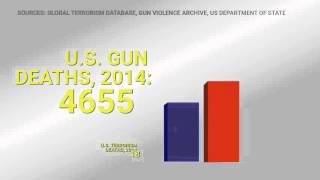
Gun violence is a bigger cause of death than Terrorism
000035
8
 11:13
11:13
426
1526597882
1786904444
Violence and Killings in the Old Testament Bible - Robert Barron
000673
9

476 views
20:01
476
1526694841
1787062104
Islam was spread by the sword, violence and forced conversions. Justify this claim - Mansur Ahmad vs Shazad 1/2
001201
10

616 views
17:50
616
1526694838
1786966913
Islam was spread by the sword, violence and forced conversions. Justify this claim - Mansur Ahmad vs Shazad 2/2
001070
11
 47:03
47:03
681
1526986106
1787100641
The GodFather: Muhammad executed 600 men. Moses, Joshua, David and Solomon did similar violence. Is the Old Testament immoral? - Adnan Rashid vs Jason Burns
002823
12
 3:00
3:00
525
1533125921
1786759123
Myth of Religious Violence & Extremism - Hamza Yusuf
000180
13
 4:19
4:19
493
1534072402
1786786298
Arian Controversy (311-383 AD) on Jesus' divinity led to bloody violence & conflict - Richard Rubenstein
000259
14
 29:42
29:42
1175
1534031328
1787029548
Conflict, Violence & War in Gaza, Palestine and Israel - Mohammed Hijab vs Joseph LondonSC 1/4
001782
15
 29:55
29:55
1095
1534092848
1787062173
Conflict, Violence & War in Gaza, Palestine and Israel - Mohammed Hijab vs Joseph LondonSC 2/4
001795
16
 29:27
29:27
1298
1534092801
1787018550
Conflict, Violence & War in Gaza, Palestine and Israel - Mohammed Hijab vs Joseph LondonSC 3/4
001767
17
 41:11
41:11
1190
1534005833
1786938920
Conflict, Violence & War in Gaza, Palestine and Israel - Mohammed Hijab vs Joseph LondonSC 4/4
002471
18
 27:00
27:00
1040
1540555529
1787093689
I condemn the violence in the Jewish Bible. Do you? - Mohammed Hijab vs Avi Yemeni
001620
19
 2:24
2:24
558
1567036179
1787048243
Why is Catholic history rife with Violence and Corruption? - Robert Barron
000144
20
 4:50
4:50
582
1589042698
1786983287
Coronavirus leads to violence against 'Tablighi Jamaat' Muslims in divided India - The Guardian
000290
21
 57:54
57:54
431
1628206193
1787098021
Satanic Agenda to use COVID to create Conflict and Violence around the World - talkGOD
003474
22
 7:33
7:33
723
1628199415
1786993121
Be ready for Violence if you refuse COVID Vaccine - Bull-Hansen
000453
23
 9:55
9:55
344
1773101530
1787093875
Extreme Violence in Early Christianity | Tovia Singer
000595
24
 2:27
2:27
125
1782165724
1787067063
UN blacklist Israel over sexual violence against Palestinians in war zone | TRT World
000147
25

212 views
5:17
212
1783208213
1787028310
Christian population in East Jerusalem reduced to 2% from 10% due to Israeli settler violence | TRT World
000317
26
 26:13
26:13
82
1784249045
1787112811
Misgendering is an 'Act of Violence' since 1948 | Steven Crowder debates LGBT College President
001573
27
EXPLORE TOPICS :
VIOLENCE |
41
TOVIA SINGER |
145
EARLY CHRISTIAN |
57
CHRISTIANITY |
236
CHRISTIAN |
883
SIN |
0