5:37
237 views
·
Last viewed: 17 hrs ago
Uploaded: 09 Jan 2016 (11 years ago) · Shared: 10 Jan 2016
Video Description (from Youtube)
Speakers Corner Hyde Park London: Christian vs Muslim, Are Muslims Idol Worshipers? did the Arabs have 365 deities made of stone? Black stone in the Kaaba (Mecca) Dawah. TITANS TV "The UK Sa Netertv"
DISCLAIMER
All videos are shared for educational and information purposes only. All videos are hosted and viewable on Youtube servers. Video titles are generated using the original video title; overall content theme including actual dialogue and speech (Transcript); and A.I-based recommendations with a focus on SEO, keyword density, and internal search functions. The video title does not represent the views held by the Youtube video uploader, or any individual, organisation or business.
If you spot any mistake, omission or give feedback, kindly Contact Us with details
EXPLORE TOPICS :
POLYTHEISM |
11
THE GODS |
11
IDOLS |
10
SPEAKERS CORNER |
3
ISLAM |
448
EARLY ISLAM |
16
MUSLIM |
305
Overview & Key Concepts
What is Speakers Corner?
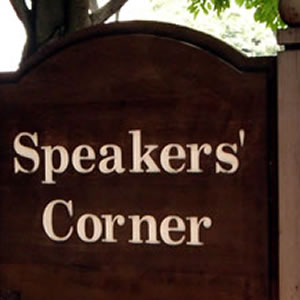 A Speakers' Corner is an area where open-air public speaking, debate, and discussion are allowed. The original and most noted is in the north-east
corner of Hyde Park in London, England. Historically there were a number of other areas designated as Speakers' Corners in other parks in London (e.g., Lincoln's Inn Fields, Finsbury Park, Clapham Common, Kennington Park, and Victoria Park). More recently, they have been set up in other British cities, and there are also Speakers' Corners in other countries.
What is Muslim?
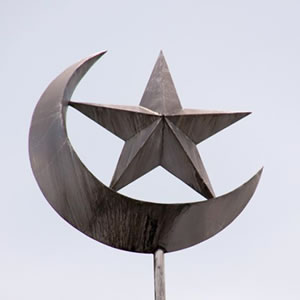 Early Islam or the history of Islam is believed, by most historians to have originated with Muhammad's mission in Mecca and Medina at the start of the
7th century CE. Although Muslims regard this time as a return to the original faith passed down by the Abrahamic prophets, such as Adam, Noah, Abraham, Moses, David, Solomon, and Jesus, with the submission (Islam) to the will of God. According to the traditional account, the Islamic prophet Muhammad began receiving what Muslims consider to be divine revelations in 610 CE, calling for submission to the one God, preparation for the imminent Last Judgement, and charity for the poor and needy.
What is Idols?
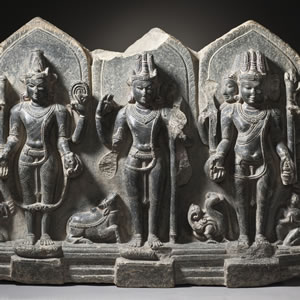 Polytheism is the worship of or belief in multiple deities, usually as a pantheon of gods and goddesses. In most religions which accept polytheism
the different gods and goddesses are representations of forces of nature or ancestral principles, and can be viewed either as autonomous or as aspects or emanations of a creator deity or transcendental absolute principle (monistic theologies), which manifests immanently in nature (panentheistic and pantheistic theologies). Most of the polytheistic deities of ancient religions, with the notable exceptions of the Ancient Egyptian and Hindu deities, were conceived as having physical bodies. Polytheism is a type of theism. Within theism, it contrasts with monotheism, the belief in a singular God, in most cases transcendent. Important polytheistic religions practiced today include Chinese traditional religion, Hinduism, Japanese Shinto, and various neopagan faiths.
Frequently Asked Questions
1.Were the Gods sacrificed?
* Horus - In Egypt, in the Heb-Sed festival, the powers of Pharaoh
(Horus incarnate) were tested. If found weak, Horus was expected to
sacrifice himself by donating his blood to the soil
* Kronos - A man was sacrified annually at the Phoenician
feast of Kronos. Kronos had a son, Ieoud who he sacrificed. Ieoud
was known as 'the only begotten son of his Father'
* Tammuz - A popular Syrian saviour-God born of a virgin
was killed and rose again every spring. Wherever Tammuz was
worshipped a human victim in royal robes was killed and eaten, so
his body and blood might bring salvation to the community.
2.Who are the Gods in the Bible?
Emperor Constantine at the opening of the Council of Nicaea (325 AD) quoted Psalm 82:6 to remind the bishops that their high office should raise them above jealousy and party feeling.
The term 'God' was applied to people of power, authority and rule who were considered to have greater nearness to God than others - an appellation which implies that you are God's representatives on earth, and that your decision is, in an important sense, to be regarded as his.
Videos on Speakers Corner (3)
 5:37
5:37
237
1452384000
1786991484
Do Muslims Worship Idols? - Speakers Corner, London
000337
1
 12:09
12:09
107
1490659200
1786273575
What is your purpose in Life? - Jameel at Speakers Corner, Hyde Park
000729
2
 36:46
36:46
840
1750681967
1786512099
Did America bomb Iran due to Israel-Mossad-Epstein links? | Heiko Khoo | Speakers Corner
002206
3
EXPLORE TOPICS :
POLYTHEISM |
11
THE GODS |
11
IDOLS |
10
SPEAKERS CORNER |
3
ISLAM |
448
EARLY ISLAM |
16
MUSLIM |
305