1:27:51
1345 views
·
Last viewed: 12 hrs ago
Uploaded: 02 Oct 2011 (15 years ago) · Shared: 29 Dec 2017
Video Description (from Youtube)
Click here to download the Study Guide for thislecture.
http://pdf.amazingdiscoveries.org/Study_Guides/TO/TO211-The_Secret_Behind_Secret_Societies.pdf
http://amazingdiscoveries.tv/media/123/211-the-secret-behind-secret-societies/
http://amazingdiscoveries.org/
Much has been written on secret societies and there are numerous speculations as to which powers control them. The nature of secrecy is such that the real power behind the power should remain exactly that-Secret. In this lecture, clear evidence is provided to show who really stands behind the throne of Earthly power.
DISCLAIMER
All videos are shared for educational and information purposes only. All videos are hosted and viewable on Youtube servers. Video titles are generated using the original video title; overall content theme including actual dialogue and speech (Transcript); and A.I-based recommendations with a focus on SEO, keyword density, and internal search functions. The video title does not represent the views held by the Youtube video uploader, or any individual, organisation or business.
If you spot any mistake, omission or give feedback, kindly Contact Us with details
EXPLORE TOPICS :
CATHOLIC |
106
ROMAN |
94
IDOLATORY |
14
PAGAN |
133
WALTER VEITH |
1
AMAZING DISCOVERIES |
1
POPE |
65
CHURCH |
256
Overview & Key Concepts
Who are Amazing Discoveries?

Who is Walter Veith?
 Walter Julius Veith (born 1949) is a South African zoologist. He is a Seventh-day Adventist author and speaker known for his work in nutrition
creationism and Biblical exegesis with the Amazing Discoveries media ministry. As a creationist he speaks internationally on this and other topics. His lectures, videos, and books promote creationist and Adventist beliefs and doctrines. These include an evangelical understanding of the Bible with a very strong commitment to the Textus Receptus and the King James Version of the Bible.
What is Idolatory?
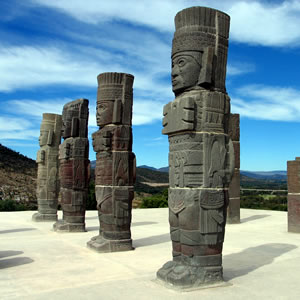 Idolatry literally means the worship of an "idol" such as a statue or icon. In Abrahamic religions, namely Christianity, Islam and Judaism, idolatry
connotes the worship of something or someone other than God as if it were God. In these and several other monotheistic religions, idolatry has been considered as the "worship of false gods" and is forbidden. In the traditional religions of ancient Egypt, Greece, Rome, Africa, Asia, the Americas and elsewhere, the reverence of an image or statue has been a common practice, and cult images have carried different meanings and significance. The definition of idolatry has been a contested topic within Abrahamic religions, with some Muslims considering the worship of Jesus Christ; the Christian use of the cross as a symbol of Christ; and of Madonna (Mary) in some churches, as forms of idolatry.
What is Catholic?
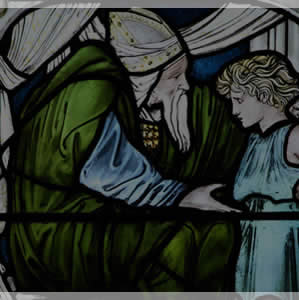 The Catholic Church, also known as the Roman Catholic Church. This is the largest Christian church, with approximately 1.3 billion baptised Catholics
worldwide, as of 2016. As one of the oldest religious institutions in the world, it has played a prominent role in the history and development of Western civilisation. The church is headed by the Bishop of Rome, known as the Pope. Its central administration, the Holy See, is in the Vatican City, an enclave within Rome, Italy. Catholic theology is based on the Nicene Creed.
What is the Church?
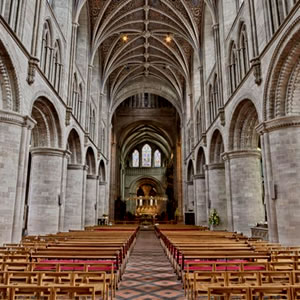 A church is a building used for Christian worship services and Christian activities. The earliest identified Christian church is a house church
founded between 233 AD and 256 AD. The word church also describes a body or assembly of Christian believers, while "the Church" refers to the worldwide Christian religious community.
What is Roman?
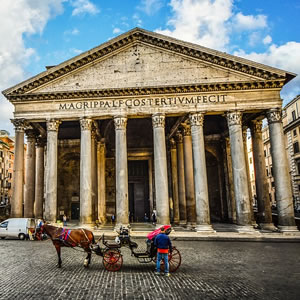 In historiography, ancient Rome is Roman civilization. From the founding of the city of Rome in the 8th century BC to the collapse of the Western
Roman Empire in the 5th century AD, encompassing the Roman Kingdom, Roman Republic and Roman Empire until the fall of the western empire. The civilization began as an Italic settlement in the Italian peninsula, dating from the 8th century BC, that grew into the city of Rome and which subsequently gave its name to the empire over which it ruled and to the widespread civilisation the empire developed. The Roman empire expanded to become one of the largest empires in the ancient world, though still ruled from the city, with an estimated 50 to 90 million inhabitants (roughly 20% of the world's population) and covering 5.0 million square kilometres at its height in AD 117.
What is Pagan?
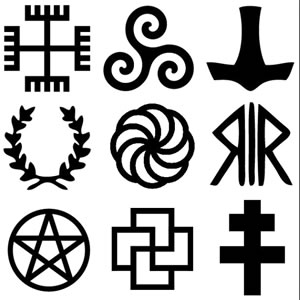 Paganism is a term first used in the fourth century by early Christians. It was applied on populations of the Roman Empire who practiced polytheism
either because they were increasingly rural and provincial relative to the Christian population or because they were not milites Christi (soldiers of Christ). Alternate terms in Christian texts for the same group were hellene, gentile, and heathen. Pagan and paganism were pejorative terms for the same polytheistic group, implying its inferiority. Paganism has broadly connoted the "religion of the peasantry", and for much of its history was a derogatory term. Both during and after the Middle Ages, pagan was a pejorative term that was applied to any non-Abrahamic or unfamiliar religion, and the term presumed a belief in false god(s).
Who is the Pope?
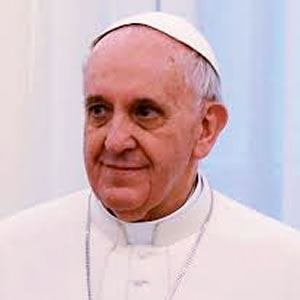 The pope, or supreme pontiff is the Bishop of Rome and therefore ex officio the leader of the worldwide Catholic Church. The primacy of the Roman
bishop is largely derived from his role as the apostolic successor to Saint Peter, to whom Jesus is said to have given the Keys of Heaven and the powers of "binding and loosing", naming him as the "rock" upon which the church would be built. Since the 1860s, the pope has also been head of state of Vatican City, a city-state entirely enclaved within Rome, Italy. The current pope is Pope Francis, who was elected on 13 March 2013, succeeding Benedict XVI.
Frequently Asked Questions
1.When was the word 'Catholic' first used?
The linguistic term 'Catholic' derived from a Greek word meaning 'universal' was historically recorded as early as 107 CE in the letters of Ignatius of Antioch.
2.When did Catholic Christianity become official religion of Rome?
In 380 CE, under the Edict of Thessalonica issued by Emperor Theodosius I, Nicene (Catholic) Christianity officially became the state religion of the Roman Empire, leading to the institutional regulation of religious practices and the formalisation of a calendar of feast days like Christmas and Easter.
3.How did early Catholics learn about Christianity?
Early Catholics were taught Christianity by the priests, nuns and at Catholic schools - and not through Bible study. The priests role was to pass on Christian beliefs and practise to his congregation. The priest acted as an intermediary between God and the people; as mankind was regarded as inherently sinful.
Catholics were discouraged from individual Bible study and pushed towards conforming with traditional Church teachings.
4.When were Catholics encouraged to read the Bible for themselves?
In 1909, Pope Pius X first encouraged Bible study. For the first time, Catholics could now study the Bible for themselves and Catholicism returned to being a 'religion of the book' for the people
5.Was Jesus a Catholic Christian?
Historically, Jesus was a practicing Jew, and the original Jesus movement was a reform movement within Judaism . Conversely, the Catholic Church views Jesus' mission as universal, intended for the entire world, not just the Jewish people .
6.Why did early Christians have church synods and councils?
Early Christian bishops organized regional synods and ecumenical councils to systematically define orthodox Christian doctrines and combat widespread heresies. These massive assemblies were essential for creating a unified creed, standardizing the New Testament canon, and establishing clear administrative laws for a rapidly growing global church. Prominent gatherings, like the Council of Nicaea, were often financed and politically mandated by Roman emperors to secure empire-wide religious stability.
7.How did James, leader of the Jerusalem Church, view Apostle Paul?
Paul's new doctrine met with disapproval from the Jewish-Christians of the Jerusalem Church led by James, who regarded the substitution of Jesus' atoning death for the observance of the Torah as a lapse into paganism.
Paul was duly summoned to Jerusalem by the leaders James, Peter and John to explain his doctrine in 50 AD.
8.What are the origins of Christian church music?
Saint Ambrose (334-397), a keen advocate of church music is credited with introducing it into Christian worship.
Videos on Catholic (59)
 7:44
7:44
449
1422576000
1786972183
Was Jesus A Catholic?- Shaykh Yusuf Estes
000464
1

575 views
57:37
575
1452384000
1786442523
A Catholic TV interview with Yusuf Estes
003457
2
 7:09
7:09
512
1487808000
1786258146
Why do Catholic Bibles have 7 more books than Protestant Bibles? - Michael Barber
000429
3
 5:32
5:32
375
1490659200
1786527769
Catholic Church Crimes - Cruel Tortures 2/4
000332
4

362 views
6:59
362
1490659200
1786222538
Catholic Church Crimes - Holocaust 3/4
000419
5
 9:53
9:53
570
1490659200
1786861383
Catholic Church Crimes - Hideous Popes 4/4
000593
6
 1:16:00
473
1493856000
1787123649
Spanish Inquisition - How the Catholic Church removed Muslims from Islamic Spain
004560
7
 43:58
43:58
831
1493856000
1786540098
Constantine and Roman Catholicism - Simcha Jacobovici
002638
8
 6:43
6:43
625
1493856000
1787032702
The Roman Catholic Church changed the Sabbath from Saturday to Sunday, not Jesus
000403
9
576 views
9:56
576
1493856000
1786354113
Catholic Bible vs Protestant Bible
000596
10
 12:02
12:02
776
1493856000
1786836408
Catholic vs Protestant versions of Christianity
000722
11
 59:55
59:55
524
1496793600
1786644748
Clarifying Catholic Christologies - The Three Gods of Catholicism - Dale Tuggy
003595
12
 6:49
6:49
1095
1501545600
1787156013
Crusades: Roman Catholic Church began the African Slave Trade - John Henrik Clarke
000409
13
 48:25
48:25
750
1501545600
1787169318
Ricardo, a Catholic Christian convert shares his journey to Islam
002905
14
 52:39
52:39
481
1501545600
1787023569
The Catholic Church hid the Truth and presented the 'best-dressed' Lie - Ray Hagins
003159
15
 58:41
58:41
447
1509580286
1787097862
We agree. Everything comes back to Scripture - Muhammad Tawheed & Abdul Hamid vs Catholic Colin
003521
16

1345 views
1:27:51
1345
1514550020
1787126657
Secret Societies - History of the Roman Catholic Church, Pope, Jesuits, Freemasonry, Idolatory and Paganism - Amazing Discoveries - Walter Veith
005271
17
 8:12
8:12
690
1514850983
1787130712
In Matthew 28:19, the Trinity text was a later insertion and corruption, after 200 AD, by the Catholic church
000492
18
 1:00:35
928
1515117940
1786655268
Mythical Jesus, Catholics and Engineering of Dates, Events, Gospels and Epistles (Clement & Barnabas) affirming pre-existant pagan Christ cults - Mike Lawrence (NotoriUK)
003635
19
 28:16
28:16
646
1516838036
1786548645
In John 20:17, Jesus said I am going to my Father and your Father. Whose Father? - Mansur Ahmad vs Catholic Priest
001696
20
 19:39
19:39
822
1519917800
1787079553
Inside The Vatican: The Catholic Church, Illuminati and New World Order - David Bass
001179
21
 2:26
2:26
1212
1528562589
1787125572
New Testament Bible compiled to agree with Catholic Christianity. Any opposing religious texts were destroyed - Doug Michael
000146
22
 47:41
47:41
615
1531739647
1786571129
Fullness of truth is in the Catholic Apostolic Church. Open your Bible and read Deuteronomy 6:4 - Chacha Usman vs Public
002861
23
 1:03
1:03
622
1532857626
1787162036
In 1492 AD, Muslims protected Jews from Catholic Christians in Spain - Shmuley Boteach
000063
24
 7:32
7:32
861
1533869027
1786674756
21 Ecumenical Church Councils defined Catholic Christianity, between 325 AD and 1962
000452
25
 2:19
2:19
457
1536234709
1787043254
It's Time to Quit the Catholic Church - Andrew Seidel
000139
26
 21:39
21:39
1102
1540936507
1787021977
Pope Francis is a Catholic Prophet. Was he a Bouncer who beat up people? - Chacha Usman vs Christian
001299
27
 6:35
6:35
661
1545605231
1787134343
Idolatory is praying to Mary or Saints, as Roman Catholics do - RC Sproul
000395
28

437 views
1:27:43
437
1549300252
1786546348
History of The Roman Catholic Church
005263
29
 5:06
5:06
939
1549451069
1787134095
Greek Apostate Fathers: Clement, Ignatius, Justin Martyr, Shepherd of Hermas & Polycarp founded the Catholic 'cult' of Rome - approvedofGod
000306
30
 4:18
4:18
807
1549453495
1787099363
Eusebius (260-340 AD) praised Philo of Alexandria's contribution to Catholicism - approvedofGod
000258
31
 6:59
6:59
972
1549453689
1787132799
From Proverbs 8:22, Philo of Alexandria applied a 'feminine' Wisdom (Sophia) in support of Roman Catholic teachings on Trinity - approvedofGod
000419
32
 3:39
3:39
653
1549453689
1786298016
In Council of Ephesus (431 AD), Roman Catholics elevated Mary, to 'Mother of God' aka 'Queen of Heaven' - approvedofGod
000219
33
 11:51
11:51
1648
1549453689
1787163179
Philo of Alexandria mixed Greek philosophy with Jewish-Christianity to invent Catholic Christianity & Trinity - approvedofGod
000711
34
 41:31
41:31
655
1550557081
1786699770
I believe in Muhammad. Am I still a Catholic Christian? - DawahIsEasy vs Philosopher
002491
35
 2:47
2:47
529
1559006505
1787146587
The Catholic Bible includes Apocrypha books, but its not important - Frank Turek
000167
36
508 views
16:46
508
1561323502
1786710765
Catholic Church challanges Transgender ideology as attack on Christian family values - Mark Dowd vs Jules Gomes
001006
37
 5:25
5:25
707
1563022065
1786807208
Can both Catholics and Protestants be True? - Christian Diversity
000325
38
 5:19
5:19
931
1563022046
1787144191
Catholic tradition decided the New Testament Bible, not Protestants - Christian Diversity
000319
39
 3:03
3:03
704
1563664708
1787041196
Ignatius' Letter to Smyrnaeans (110 AD) is earliest mention of 'Catholic' or 'Universal Church' - Jimmy Akin
000183
40
 0:47
0:47
445
1567036150
1786702237
Eucharist is a key part of Catholicism - Robert Barron
000047
41
1:50
524
1567036218
1786689437
Eucharist is only for baptized Catholics, not Protestants or anyone else - Robert Barron
000110
42
 3:26
3:26
440
1567036197
1787138999
Mary, bearer of God, mother to the Redeemed is central to Catholicism - Robert Barron
000206
43
 5:49
5:49
540
1567036191
1786977740
75% of Catholics do NOT believe the Eucharist, as they should - Robert Barron
000349
44
 2:31
2:31
640
1567036173
1787153292
Are Catholics Homophobes hating Gay-Homosexuals? - Robert Barron
000151
45
2:24
559
1567036179
1787163220
Why is Catholic history rife with Violence and Corruption? - Robert Barron
000144
46
2:02
656
1567036185
1786980027
Child Abuse is everywhere, not just the Catholic Church - Robert Barron
000122
47
540 views
24:06
540
1571269253
1787023150
Muhammad's wife, Aisha was aged between 6-15 years based on Historic Events - Uthman Ibn Farooq vs Catholic Man
001446
48
 9:37
9:37
1078
1591959651
1786962165
Catholic Church joins Trump to fight against the Deep State | Remnant Video
000577
49
 8:12
8:12
1141
1603386797
1786956687
Pope Francis: Homosexuals are children of God. Catholics must accept LGBT lifestyles? - talkRADIO
000492
50
 10:33
10:33
752
1610323288
1786636467
NWO and Vatican Catholic Church unite to build 'Inclusive Capitalism' - maneco64
000633
51
 12:51
12:51
652
1616418694
1787155636
Pope Francis, Catholicism and Homosexuality - Blogging Theology
000771
52
 30:18
30:18
1116
1747359829
1786687083
Protestant Christians rely on Roman Catholic Traditions | Tovia Singer
001818
53
 39:20
39:20
405
1770766511
1787143241
Israeli Zionists demand Christians and Catholic Church LEAVE Palestine | Taylor Marshall
002360
54
 31:30
31:30
323
1771261200
1787142206
Christian Catholics in Gaza, Palestine NEED OUR HELP | Jason Jones Show
001890
55
 4:29
4:29
321
1776118214
1786973140
Israel blocks Catholic Christians from Holy Sepulchre Church, Jerusalem | New York Post
000269
56
 9:35
9:35
288
1776118539
1786943104
Catholic Christians BANNED from Worship at Holy Sepulchre, Israel on Easter | Young Turks
000575
57
 27:13
27:13
151
1777512033
1787168710
Is The Pope OK with Catholic Homosexuals? | David Lynn
001633
58
 12:12
12:12
61
1784599555
1787148530
Will an Authoritarian UK Government punish Catholics for Hateful, Extremist beliefs? | G Ashenden
000732
59
EXPLORE TOPICS :
CATHOLIC |
106
ROMAN |
94
IDOLATORY |
14
PAGAN |
133
WALTER VEITH |
1
AMAZING DISCOVERIES |
1
POPE |
65
CHURCH |
256