16:45
352 views
·
Last viewed: 2 hrs ago
Uploaded: 23 Jul 2017 (9 years ago) · Shared: 21 Apr 2018
Video Description (from Youtube)
» Speaker: Anwar » Summary: Good conversation between Anwar and Christian who learnt that Muslims have a direct chain of narration going back to the Quran, unlike the Bible, there are no chains ofnarrations going back to it.
» Source / Credit: Not applicable.
» If you liked this video, please subscribe & share on your social media platforms. The Prophet said, “Whoever guides someone to goodness will have a similar reward.” [Sahih Muslim 1893]
» If you're from London and would like to meet brothers/sisters and attend circles of knowledge. Also if you're a non Muslim and have questions, please email and we will direct you, In sha Allah.Email us on: sunnidawah@outlook.com
» All rights reserved Worldwide. No part of this video may be reproduced or utilised in any form by electronic, mechanical, or other means now known or hereafter invented, without express written permission from the copyright holder "Sunni Dawah".
» The information and opinions within this footage are not necessarily reflected upon the opinions of "Sunni Dawah" or those that are in authority over its copyright. Neither "Sunni Dawah" nor anyone acting upon their behalf may be responsible for misuse of any information that is contained within their digital publication(s).
DISCLAIMER
All videos are shared for educational and information purposes only. All videos are hosted and viewable on Youtube servers. Video titles are generated using the original video title; overall content theme including actual dialogue and speech (Transcript); and A.I-based recommendations with a focus on SEO, keyword density, and internal search functions. The video title does not represent the views held by the Youtube video uploader, or any individual, organisation or business.
If you spot any mistake, omission or give feedback, kindly Contact Us with details
Overview & Key Concepts
What is The Bible?
 The Bible is a canonical collection of texts sacred in Judaism and Christianity. There is no single "Bible" and many Bibles with varying contents
exist. The term Bible is shared between Judaism and Christianity, although the contents of each of their collections of canonical texts is not the same.
<br><br>
Different religious groups include different books within their Biblical canons, in different orders, and sometimes divide or combine books, or incorporate additional material into canonical books.
<br><br>
The Hebrew Bible, or Tanakh, contains 24 books. Christian Bibles range from the 66 books of the Protestant canon to the 81 books of the Ethiopian Orthodox Church canon.
<br><br>
The first part of Christian Bibles is the Old Testament, which contains, at minimum, the 24 books of the Hebrew Bible divided into 39 books and ordered differently from the Hebrew Bible. The Catholic Church and Eastern Christian churches also hold certain deuterocanonical books and passages to be part of the Old Testament canon.
<br><br>
The second part is the New Testament, containing 27 books: the 4 Canonical gospels, Acts of the Apostles, 21 Epistles or didactic letters, and the Book of Revelation.
What is Christian?
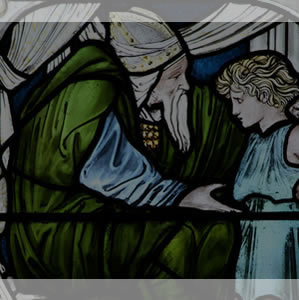 Christianity is a global religion centered on the life and teachings of Jesus Christ, who followers believe is the Son of God. It's a monotheistic
faith, meaning Christians believe in one God who exists in three co-equal persons: God the Father, God the Son (Jesus Christ), and the Holy Spirit. Christianity is based on the Bible, with the Old Testament and New Testament serving as sacred texts.
Who is Anwar?
 A Speakers' Corner is an area where open-air public speaking, debate, and discussion are allowed. The original and most noted is in the north-east
corner of Hyde Park in London, England. Speakers here may talk on any subject, as long as the police consider their speeches lawful, although this right is not restricted to Speakers' Corner only. Contrary to popular belief, there is no immunity from the law, nor are any subjects proscribed, but in practice the police intervene only when they receive a complaint. Speakers' Corner is often held up to demonstrate freedom of speech, as anyone can turn up unannounced and talk on almost any subject, although always at the risk of being heckled by regulars.
Frequently Asked Questions
1.Christianity and Hinduism revere their religious figures as gods or incarnations of God
Followers deified these human prophets because later generations mistook their figurative expressions literally and failed to preserve accurate historical details, causing myths and exaggerations to grow around their deeds.
2.What is Christianity?
The platform defines Christianity as a religion that was originally and historically preached by Jesus himself, but argues that the mainstream version practiced across the world today has evolved into a system based almost entirely on the subsequent theological teachings, letters, and doctrines developed by the Apostle Paul.
3.How did the Early Jewish-Christians practise their religion?
The earliest Jewish-Christians strictly followed traditional Hebrew practices, including daily prayers, circumcision, rituals for purity, fasting, dietary laws, and temple, according to the source material.
4.Why did Christians turn away from the original message of Jesus?
By the time the New Testament Gospels were compiled, there was a growing movement to frame traditional Jewish practices as obsolete, driven by a desire to break free from strict Mosaic laws like circumcision, ritual purity, and dietary codes, which required portraying Judaism as an inferior path for the new faith to flourish.
5.What did early Jewish-Christians think of Apostle Paul?
Between 55 and 66 CE, early Jewish-Christian leaders in Jerusalem rejected Paul’s teachings and challenged his authority, leading to a significant decline in his popularity.
6.When was Christianity born?
After 70 CE, the faith shifted into a Greco-Roman, divine-savior cult that began separating from its Jewish roots and labeling critics as ignorant.
7.Were the early Christians Jews?
es, early followers were entirely Jewish, strictly observing traditional laws and customs.
8.Did Saul kill the early Jewish-Christians?
Before his conversion, Saul actively sought to imprison and execute early Jewish-Christians, believing he was serving God.
9.How did the early Jewish-Christians view Jesus' resurrection?
The earliest Jewish-Christians did not believe that the resurrection meant Jesus was God, but rather that he was a righteous man approved by God through miracles, wonders, and signs. Based on texts like Acts 2:22-24, they maintained the theological view that Jesus had been raised by God, not that he was the Creator himself.
10.Who seperated Christianity from Judaism?
It was Apostle Paul's dramatic conversion and subsequent teachings that directly resulted in the permanent theological separation of Christianity from Judaism. Within mere months of Jesus' departure, the original human-centric and law-abiding message was fundamentally altered into an independent religious system.
11.What happened after Apostle Paul converted to Christianity?
Following his conversion, Paul did not immediately meet with the original Apostles in Jerusalem; instead, he went to Arabia and returned to Damascus, waiting three years before visiting Peter and James for only fifteen days, avoiding the others.
12.What dramatic experience made Apostle Paul convert to Christianity?
Paul experienced a sudden vision of a blinding light and a voice on the road to Damascus, but the multiple accounts recorded in the Book of Acts contain clear, direct contradictions regarding whether his companions also fell to the ground, and whether they actually heard the voice or saw the light.
13.How did Matthew (Gospel) support Apostle Pauline Christian doctrine?
The Gospel of Matthew, aimed at law-abiding Jewish-Christians, did not support Pauline doctrine and actually stood in direct opposition to it.
14.Where is Pauline Christianity today?
Pauline Christianity constitutes the majority of modern Christianity, though some scholars question if the early, law-observant Jewish-Christian church was more accurate than Paul’s later, Trinitarian-focused theology.
15.How was Christianity made appealing to pagan idol worshippers?
To increase conversions, early church leaders incorporated pagan traditions, such as adapting shrines and festivals, with leaders like Pope Gregory I advising that established practices, including tree veneration, be repurposed to align with Christian teachings.
16.Should Christians celebrate Jesus on 25th December?
Any believing Christian who is aware of the historical, pagan "Sun-Baal" connections of this date should entirely avoid celebrating Christmas. It points to certain denominations, such as Jehovah’s Witnesses, who explicitly refuse to participate in the celebration for this very reason.
17.Does the Christian Trinity come from pagan Triadic dieties?
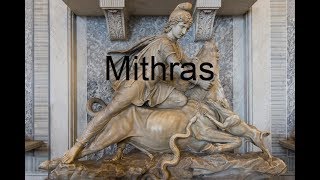
The core teachings of modern Trinitarian Christian churches do not come from Jesus, but were pagan three-in-one concepts that existed long before his arrival and were later adopted by Christians to make their doctrine highly appealing to idol-worshipping masses.
18.How did Christianity start?
Christianity historically originated as a 1st-century Jewish messianic movement focused on the life, moral teachings, and reported resurrection of Jesus of Nazareth. It gradually transitioned into an independent world religion as early disciples expanded their missionary work into the Greco-Roman world.
19.Who were the early Christians?
The earliest followers of Jesus were entirely Jewish individuals who continued to observe traditional Mosaic law and temple customs. They did not immediately form a new religion, but were initially viewed as a messianic sect within Judaism.
20.What does the Quran say about Jews and Christians?
The Quran recognizes Jews and Christians as "People of the Book" (Ahl al-Kitab), acknowledging that they were given previous divine revelations through prophets like Moses and Jesus. While it praises the righteous among them, it also critiques their theological developments, specifically rejecting the Christian doctrine of the Trinity and the divine sonship of Jesus.
21.Do Christians worship Mary?
Mainstream Christian denominations, including Catholics and Eastern Orthodox, explicitly state that they do not worship Mary as a goddess, as worship (latria) belongs strictly to God alone. Instead, they give her a high level of honor and veneration (hyperdulia) as the Mother of God (Theotokos), asking her to intercede and pray to God on their behalf.
22.What did Apostle Paul achieve by his Christian conversion?
By adopting faith in Jesus, Paul effectively expanded a localized, strictly observant Jewish movement into a highly adaptable, universal religion accessible to all cultures. He utilized his unique background as both a learned Pharisee and a Roman citizen to systematically build an expansive network of legal-exempt Christian communities across multiple Roman provinces.
23.I am a Christian and I know my sins are forgiven and I am going to Heaven. Is this OK to believe?
Christian Assurance: Mainstream Christian theology teaches that a believer can have absolute assurance of salvation and the forgiveness of sins through personal faith in the sacrificial death and resurrection of Jesus Christ.
Islamic Perspective: In contrast, Islamic theology emphasizes that definitive assurance of entering Heaven remains unknown during worldly life, as final judgment belongs entirely to God, who balances infinite mercy with a strict accountability of an individual's faith and actions.
24.How did the Christian Trinity come about?
The New Testament gospels show Jesus selecting twelve apostles to lead his immediate followers, but he did not lay down a detailed blueprint for a complex institutional priesthood or administrative hierarchy. The elaborate structures, clerical offices, and distinct liturgical traditions seen in modern churches developed gradually over centuries as the movement adapted to Roman institutional frameworks.
25.Does the Quran tell Jews and Christians to refer to their Scriptures (Torah and Bible)?
Yes, the Quran references previous scriptures in passages like Surah Al-Ma'idah (5:47), which tells the followers of the Gospel to judge by what God has revealed in it. From an academic perspective, this reflects the historical context of 7th-century Medina, where Jews and Christians were recognized as "People of the Book" who possessed divine laws. While Islamic theology holds that modern biblical texts have suffered from textual corruption (tahrif), the Quran historically appeals to the core monotheistic truths remaining in those scriptures to validate Muhammad's message.
26.Do all Christians believe Jesus was God or Son of God?
While the vast majority of modern Christians adhere to Trinitarian orthodoxy, diverse groups throughout history have explicitly rejected this view. Early Christian sects like the Ebionites and Arians viewed Jesus as an exalted human prophet or a uniquely created heavenly being rather than co-equal with God. In the modern era, non-Trinitarian movements such as Unitarians, Jehovah's Witnesses, and Christadelphians continue to reject the doctrine of his literal divinity, emphasizing instead strict unitarian monotheism.
27.Why did early Christians have church synods and councils?
Early Christian bishops organized regional synods and ecumenical councils to systematically define orthodox Christian doctrines and combat widespread heresies. These massive assemblies were essential for creating a unified creed, standardizing the New Testament canon, and establishing clear administrative laws for a rapidly growing global church. Prominent gatherings, like the Council of Nicaea, were often financed and politically mandated by Roman emperors to secure empire-wide religious stability.
28.There is only one Bible with one Christian doctrine?
No, textual criticism shows the Bible consists of thousands of varying manuscripts rather than a single, uniform text. These textual differences, such as in Jude 1:5, have historically contributed to diverse theological interpretations within Christianity.
29.Does the Old Testament teach the Christian Trinity?
Mainstream biblical scholars and historians agree that the Old Testament does not explicitly teach the doctrine of the Trinity, nor did ancient Jewish communities possess a concept of a triune Godhead. There is no historical evidence in pre-Christian Jewish literature including the Hebrew text, the Dead Sea Scrolls, or ancient commentaries of a belief in a plurality of divine Persons. While Christian theologians retrospectively interpret certain plural expressions (such as "Let us make man" in Genesis 1:26) as hints of the Trinity, ancient Judaism strictly maintained a unitarian monotheistic understanding of God.
30.What is the Christian Trinity?
Orthodox Christian theologians define the doctrine of the Trinity as the belief that the Father is God, the Son is God, and the Holy Spirit is God, existing eternally as three distinct Persons within one single, undivided divine Being. These three Persons are considered entirely co-equal in power and co-eternal in time, with the Son being understood as "eternally begotten" of the Father and existing simultaneously as 100% God and 100% man. The platform notes that many modern Christians mistakenly believe they are practicing Trinitarianism simply by acknowledging the Father, Son, and Holy Spirit, without understanding the complex historical and philosophical mechanics required by the formal church dogma.
31.What do Christian 'Trinity' scholars say about the Old Testament?
Many theologians, including this analysis of Trinity dogma, note that the Old Testament does not explicitly contain the Trinity, which they believe was only fully revealed later.
32.What do Christian scholars say about the Trinity?
Mainstream scholars acknowledge that the Trinity is not explicitly defined in the New Testament but was formulated later by combining various verses and theological concepts.
33.When did Catholic Christianity become official religion of Rome?
In 380 CE, under the Edict of Thessalonica issued by Emperor Theodosius I, Nicene (Catholic) Christianity officially became the state religion of the Roman Empire, leading to the institutional regulation of religious practices and the formalisation of a calendar of feast days like Christmas and Easter.
34.What happened to Christians who questioned their creed?
Once Catholicism became the official state religion of the Roman Empire in the 4th century, it became highly dangerous to question or deviate from imperial doctrinal definitions. Imperial authorities enforced a strict monopoly on thought by carrying out systematic book burnings, completely destroying the philosophical refutations written by early critics like Celsus and Porphyry. As a result, modern academic knowledge of these ancient counter-arguments is limited to surviving snippets quoted inside the church's own refutation books.
35.Can Christians eat swine and pork?
While modern Christian practice permits eating pork, the text notes that God explicitly prohibited the consumption of pig and swine meat in the Old Testament laws. The source argues that the New Testament passage often used to defend eating pork was originally a specific debate regarding whether unwashed hands made clean food unclean, rather than a lifting of the pork ban.
36.Many Christians believe that Jesus abolished the Old Testament dietary laws
"Thus he declared all foods clean" is completely missing from the Textus Receptus, the authoritative Greek New Testament line used for centuries. It claims this widespread dietary interpretation was likely a later scribal note added to the margins of the text, which was subsequently mistaken for Jesus' actual words in corrupted versions.
37.What life did Apostle Paul lead before his miraculous conversion to Christianity?
Before his conversion, Paul was known as Saul and operated as a strict Pharisee and enforcer hostile toward early followers of Jesus. Academic historians note that he worked under the authority of the high priestly administration in Jerusalem to systematically suppress the growing messianic movement, believing he was protecting traditional Judaism from a dangerous heresy
38.Who was the founder of Christianity?
The platform asserts that Jesus was not the actual founder of Christianity as an independent world religion, noting that the vast majority of the New Testament text does not directly focus on the historical Jesus but is defined by Paul. Academic critical scholars agree that while Jesus initiated the original localized movement within Judaism, it was Paul's theological letters and universal missionary blueprint that systematically institutionalized the faith globally.
39.What did Apostle Paul do after his miraculous conversion to Christianity?
Following his Damascus vision, Paul records in his letters that he did not seek instruction from others, but immediately withdrew into the Arabian desert for a period of reflection. The platform notes that this independence significantly elevated Paul's personal status, allowing him to claim he received his theological mandate directly from a divine revelation rather than from Jesus' twelve original earthly disciples.
40.What happened after Rome chose Christianity as the state religion?
When the Roman authorities officially adopted Christianity in the 4th century CE, they institutionalised the Roman Catholic version of the faith, favoring the universal theological framework of Paul over the localized, law-observant traditions of the original disciples. Mainstream historians emphasize that this political alliance standardized a singular imperial orthodoxy across the Mediterranean world, systematically suppressing alternative theological perspectives.
41.Did Jesus ever preach Christianity?
Neither Jesus nor his twelve disciples had any intention of founding a new, separate religion, as they operated entirely within the confines of traditional Judaism. Mainstream historians and biblical scholars affirm that the historical Jesus viewed his messianic mission as a internal renewal of Israel's covenant, continuing to follow the Mosaic Torah and temple rituals rather than building a separate world religion.
42.What are the origins of Christian church music?
Saint Ambrose (334-397 CE) is traditionally credited with introducing musical singing and hymnody into regular Christian worship.
43.How did early Catholics learn about Christianity?
Faith was traditionally taught through priests and schools rather than personal Bible study, with the priest acting as an intermediary for a supposedly sinful mankind.
44.When was the word 'Christian' first ever used?
The term "Christian" was first applied to the disciples in Antioch, when the Apostle Paul was joined in his missionary journey by Peter. The author of Acts (Luke) assigned this descriptor to the early followers, all of whom remained observant and deeply respectful of Jewish Law.
45.What did Apostle Paul do after he converted to Christianity, on the road to Damascus?
Following his conversion 1-3 years after the crucifixion, Paul vanished from the public eye before re-emerging 13 years later (47-60 CE) as a missionary to the Gentiles.
46.Was Jesus a Catholic Christian?
Historically, Jesus was a practicing Jew, and the original Jesus movement was a reform movement within Judaism . Conversely, the Catholic Church views Jesus' mission as universal, intended for the entire world, not just the Jewish people .
47.How did Early Christians view the Old Testament?
Early Christians considered the Old Testament "God-breathed" and authoritative, but believed its ultimate meaning was only revealed through its connection to Jesus Christ, who fulfilled Israel's prophetic history.
48.In the past, how were the Christians viewed?
Early Christianity, driven by a universal, global mission, shifted from the provincial Hebrew scriptures to the Septuagint, which was viewed as a Greek, widely accessible version of the divine message.
Videos on Anwar London (6)
 12:59
12:59
386
1520421755
1785726692
Muhammad came to 'perfect' our Manners and Moral Compass - Anwar London vs Tunis
000779
1
 16:45
16:45
352
1524298467
1787083234
Authorship of the Bible is a Mystery - Anwar London vs Christian
001005
2
 53:09
53:09
779
1525208904
1786949268
Church Fathers, Historians, Manuscripts and blind Faith prove Jesus spoke in John 1:1 - Anwar London vs Christian Jools
003189
3
 8:55
8:55
942
1534710047
1786916592
John did not write John. Who wrote John's Gospel? - Anwar London vs Christian
000535
4
 30:33
30:33
701
1553861426
1786919183
In John 21:24, the anonymous Author writes in the 'third person' and fails to identify himself - Anwar London vs Christian
001833
5
 19:16
19:16
467
1554734210
1787087614
Even if the Stars lined up, I would still deny an 'Intelligent Designer' God - Anwar London vs Atheist Phil
001156
6