9:06
692 views
·
Last viewed: 5 hrs ago
Uploaded: 06 Dec 2018 (8 years ago) · Shared: 18 Mar 2019
Video Description (from Youtube)
thehumanjesus.orgDISCLAIMER
All videos are shared for educational and information purposes only. All videos are hosted and viewable on Youtube servers. Video titles are generated using the original video title; overall content theme including actual dialogue and speech (Transcript); and A.I-based recommendations with a focus on SEO, keyword density, and internal search functions. The video title does not represent the views held by the Youtube video uploader, or any individual, organisation or business.
If you spot any mistake, omission or give feedback, kindly Contact Us with details
EXPLORE TOPICS :
ANTHONY BUZZARD |
34
MONOTHEISM |
16
MONOTHEIST |
13
JAMES DUNN |
4
YAHWEH |
43
GOD |
0
 JESUS
JESUS
JESUS
Overview & Key Concepts
Who is Anthony Buzzard?
 Sir Anthony Farquhar Buzzard, 3rd Baronet, ARCM (28 June 1935), is a biblical scholar, unitarian Christian theologian, author and professor on the
faculty of Atlanta Bible College. Buzzard gained a Diploma in Biblical Hebrew from the University of Jerusalem in 1970. He attended the University of London. He gained a Masters in Theology from Bethany Theological Seminary, Chicago, in 1990. Buzzard taught French and German at The American School in London and taught theology and Biblical languages for 24 years at Atlanta Bible College, McDonough, Georgia.
What is Monotheist?
 Monotheism has been defined as the belief in the existence of only one god. A god that created the world, is all-powerful and intervenes in the world
A broader definition of monotheism is the belief in one god. A distinction may be made between exclusive monotheism, and both inclusive monotheism and pluriform (panentheistic) monotheism which, while recognising various distinct gods, postulate some underlying unity.
Who is James Dunn?
 James DG "Jimmy" Dunn (born 1939) is a British New Testament scholar. He was for many years the Lightfoot Professor of Divinity in the Department of
Theology at the University of Durham, now Emeritus Lightfoot Professor. Dunn has an MA and BD from the University of Glasgow and a PhD and DD from the University of Cambridge. For 2002, Dunn was the President of the Studiorum Novi Testamenti Societas, an international body for New Testament study. He is a minister of the Church of Scotland and a Methodist local preacher.
Who is Yahweh?
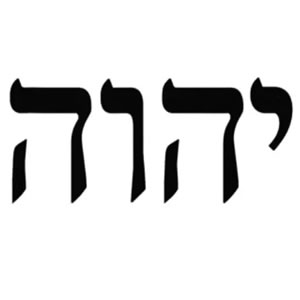 Yahweh was the national god of the Iron Age kingdoms of Israel (Samaria) and Judah. His exact origins are disputed, although they reach back to the
early Iron Age and even the Late Bronze: his name may have begun as an epithet of El, head of the Bronze Age Canaanite pantheon, but the earliest plausible mentions of Yahweh are in Egyptian texts that refer to a similar-sounding place name associated with the Shasu nomads of the southern Transjordan. In the oldest biblical literature, Yahweh is a typical ancient Near Eastern "divine warrior", who leads the heavenly army against Israel's enemies; he later became the main god of the Kingdom of Israel (Samaria) and of Judah, and over time the royal court and temple promoted Yahweh as the god of the entire cosmos, possessing all the positive qualities previously attributed to the other gods and goddesses.
Who is GOD?
 In monotheism and henotheism, God is conceived as the Supreme Being and principal object of faith. The concept of God as described by theologians
commonly includes the attributes of omniscience (infinite knowledge), omnipotence (unlimited power), omnipresence (present everywhere), omnibenevolence (perfect goodness), divine simplicity, and eternal and necessary existence.
<ul>
<li>In theism, God is the creator and sustainer of the universe</li>
<li>In deism, God is the creator, but not the sustainer, of the universe</li>
<li>Monotheism is the belief in the existence of one God or in the oneness of God</li>
<li>In pantheism, God is the universe itself</li>
<li>In atheism, God is purported not to exist, while deemed unknown or unknowable within the context of agnosticism. </li>
</ul>
Frequently Asked Questions
1.Did Jesus preach monotheism?
Yes. Jesus taught the absolute oneness of God within the established Jewish monotheistic tradition, rejecting pagan polytheism.
2.Where did the name Yahweh come from?
The name Yahweh is the principal, sacred vocalisation of the Hebrew Tetragrammaton (YHWH), revealed historically to Moses in the Old Testament Book of Exodus as God's personal covenant name. Biblical scholars note its linguistic roots link directly to an archaic Hebrew verb meaning 'To Be,' signifying the eternal, self-existing, and uncreated nature of the Creator.
Videos on Anthony Buzzard (34)
 1:13:52
988
1483401600
1787155840
Is Jesus God? - The Great Trinity debate - Anthony Buzzard & Joseph Good vs James White & Michael Brown 1/2
004432
1
 1:28:31
925
1483401600
1787131299
Is Jesus God? - The Great Trinity debate - Anthony Buzzard & Joseph Good vs James White & Michael Brown 2/2
005311
2
 13:58
13:58
384
1493856000
1786276326
In John 1:1, In the beginning was the Word, not God - Anthony Buzzard
000838
3
 4:24
4:24
815
1505863338
1787113158
In Psalm 110:1, is God speaking to another God? - Anthony Buzzard
000264
4
 4:54
4:54
295
1505868364
1786812332
In Mark 4:11, the kingdom of God is a parable - Anthony Buzzard
000294
5
 4:56
4:56
321
1513703440
1787061252
In John 1:1, 1 John 1 explains. There is only One God and Jesus was the word - Anthony Buzzard
000296
6
 2:47
2:47
560
1513808062
1787027877
In Hebrews 7:3, was Melchizedek a God? - Anthony Buzzard
000167
7
 5:29
5:29
1126
1514850975
1787122163
In Matthew 28:19, is not a Trinitarian verse. Trinity came through evolution and Early Church Fathers in 325 and 451 AD finally - Anthony Buzzard
000329
8
 41:59
41:59
672
1514850613
1786866971
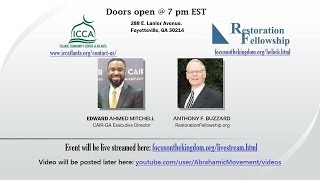
Jesus the Jew was a Unitarian. Monotheism is common amongst Unitarian Christians and Islam - Anthony Buzzard vs Ahmed Mitchell
002519
9
 8:25
8:25
447
1520597735
1787060471
In Psalm 110:1, Jesus quoted 'adoni' (non-Diety lord), not 'Adonai' (Diety LORD) which corrupted Modern English Translations use - Anthony Buzzard
000505
10
 7:41
7:41
776
1520597747
1787095154
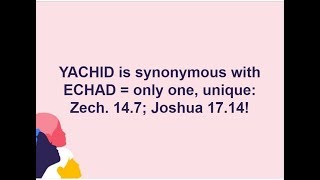
Echad and Yachid mean Singular 'One', not Compound 'One'. Christian Trinitarians have it all wrong! - Anthony Buzzard
000461
11
 2:37
2:37
427
1535194796
1787161751
Jesus was a Unitary Monotheist - Anthony Buzzard
000157
12
 3:47
3:47
827
1536982598
1787106792
Jesus was a Jew on Unitarian Monotheism, not a Trinitarian - Anthony Buzzard
000227
13
 6:38
6:38
515
1538190144
1786555008
In Genesis 19:24 and Zecheriah 2:11, there is only one Yahweh, not two - Anthony Buzzard
000398
14
 3:48
3:48
292
1543020950
1787090233
In 1 Timothy 3:16, He (God or Jesus?) was manifest in the flesh - Anthony Buzzard
000228
15

1505 views
8:08
1505
1546174509
1787142319
Greek philosophy influenced Early Christianity and re-defined One God into a Trinity - Anthony Buzzard
000488
16
 9:35
9:35
385
1546464448
1786250608
If Jesus is 'Son' of David, how can he be his 'Lord'? - Anthony Buzzard
000575
17
 2:49
2:49
708
1548481031
1786852281
The Third Temple will be Jewish and Unholy for Christians - Anthony Buzzard
000169
18
 11:16
11:16
478
1549455042
1787089088
In John 1:1, God incarnates Himself, or His Wisdom amongst us through His Son? - Michael Brown vs Anthony Buzzard
000676
19
 3:02
3:02
505
1549453760
1787120735
In Luke 1:35, Jesus is 'Son of God', not God, not Trinity - Anthony Buzzard
000182
20
 4:55
4:55
453
1550556977
1787098240
In 1 Timothy 3:16, who was 'manifest in the flesh', Jesus or God? - Anthony Buzzard
000295
21
 2:38
2:38
420
1550790238
1787116777
Jesus is not Yahweh - Larry Hurtado & Anthony Buzzard
000158
22
 3:38
3:38
497
1550790216
1787120593
In John 14:9, Jesus explains to Thomas how he is not equal to God - Anthony Buzzard
000218
23
 9:06
9:06
692
1552936896
1787146838
James Dunn: Jesus is not Yahweh. Jesus is a Monotheist reciting his belief in One God - Anthony Buzzard
000546
24
 3:49
3:49
493
1552936928
1786363356
Jesus was a Unitarian Monotheist - Anthony Buzzard
000229
25
 1:45
1:45
424
1561639051
1787041488
Jesus was a 1st century monotheist Jew - Anthony Buzzard
000105
26
 1:48
1:48
882
1563664721
1787140199
Trinity is not in the Bible. Jesus was not a Trinitarian - Anthony Buzzard
000108
27
 5:27
5:27
1029
1567036166
1787129075
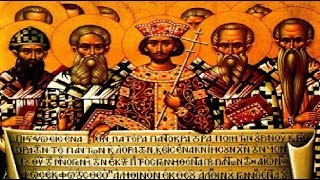
Polycarp, Justin Martyr or Irenaeus never believed in the Christian Trinity - Anthony Buzzard
000327
28
 2:02
2:02
345
1581192097
1787134582
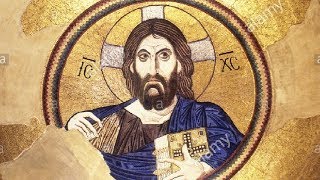
Jesus was a Jew. He had a God. He himself is not God - Anthony Buzzard
000122
29
 3:19
3:19
455
1584010861
1787100831
Jesus was a Monotheist, Non-Trinitarian Jew - Anthony Buzzard
000199
30
 3:05
3:05
652
1595787849
1786518969
In Mark 12:29, Jesus was an observant Jewish Man, not a Trinitarian - Anthony Buzzard
000185
31
 1:06
1:06
544
1600789057
1787148188
I Am A Singular, One-Person GOD - Anthony Buzzard
000066
32
 2:25
2:25
430
1602677017
1786072997
Jesus was a Monotheist Jew - Anthony Buzzard
000145
33
 3:17
3:17
815
1613685575
1786548201
Antichrist invites Arabs-Israel into Peace Treaty. Abraham Accords of today? - Anthony Buzzard
000197
34
EXPLORE TOPICS :
ANTHONY BUZZARD |
34
MONOTHEISM |
16
MONOTHEIST |
13
JAMES DUNN |
4
YAHWEH |
43
GOD |
0
JESUS
JESUS