852 views
·
Last viewed: 59 mins ago
Uploaded: 19 Oct 2021 (5 years ago) · Shared: 13 Jun 2025
and the Empires of Faith, Sean W. Anthony demonstrates how critical readings of non-Muslim and Muslim sources in tandem can breathe new life into the historical study of Muhammad and how his message transformed the world. By placing these sources within the intellectual and cultural world of Late Antiquity, Anthony offers a fresh assessment of the earliest sources for Muhammad’s life, taking readers on a grand tour of the available evidence, and suggests what new insights stand to be gained from the techniques and methods pioneered by countless scholars over the decades in a variety of fields. Muhammad and the Empires of Faith offers both an authoritative introduction to the multilayered traditions surrounding the life of Muhammad and a compelling exploration of how these traditions interacted with the broader landscape of Late Antiquity.
GET THE BOOK HERE: 👉 https://amzn.to/35FqNYf
=================================
MythVision Website: 🔥 https://mythvisionpodcast.com/
MythVision Patreon 👉 https://www.patreon.com/mythvision
MythVision Paypal. 👉 https://www.paypal.me/dereklambert7
Cashapp: 👉 $rewiredaddiction
Venmo: 👉 @Derek-Lambert-9
Recommeded books 👉 https://amzn.to/35FqNYf
Email MythVision 👉 mythvisionpodcast@gmail.com
Facebook page: 👉 https://www.facebook.com/MythVision/
Facebook group: 👉 https://www.facebook.com/groups/TheWaterBoyZRadio/
Twitter: 👉 @DerekPodcast
Instagram: 👉 @dereklambert_7
MythVision Discord: https://discord.gg/dRQXdZBq6E
0:00 Introductions
4:08 Was there a Muhammad?
7:08 Non-Muslim sources that speak to the existence of a historical Muhammad.
18:40 Evidence of Muhammad’s existence from the Arabic side - the Hijri calendar and Muhammad’s Hijra to Medina.
27:30 Was there an eschatological motivation in the Arab conquest? Apocalyptic literature in the 7th century.
33:58 The compilation of the Quran, how early was the Quran compiled?
41:43 Is the Quran preserved word for word?
44:50 Doctrina Jacobi
53:22 Jesus in the Quran - ‘Isa’, the hostility towards the iconography of the cross in the early Muslim communities.
1:03:42 How did the hadith corpus develop?
1:13:53 Was Muhammad a shepherd or a merchant?
1:20:20 Traditions and legends common to all Abrahamic religions, the Kaaba.
1:28:04 The origins of the name ‘Allah’
1:33:45 The Petra theory, Dhul al-Qarnayn/ Alexander the Great
1:38:20 The sleepers of Ephesus.
1:40:24 Apocalypticism in the Quran
1:47:40 Dr. Sean Anthony’s hopes for the future of scholarship of Islam and the Muslim community in general.
1:55:20 Final remarks.
#MythVision #Muhammad #SeanWAnthony #Islam
Uploaded: 19 Oct 2021 (5 years ago) · Shared: 13 Jun 2025
Video Description (from Youtube)
This is a must watch show for anyone interested in getting to the bottom of the Historical Muhammad question. His book is a gold mine of information about the earliest history of Islam. In Muhammadand the Empires of Faith, Sean W. Anthony demonstrates how critical readings of non-Muslim and Muslim sources in tandem can breathe new life into the historical study of Muhammad and how his message transformed the world. By placing these sources within the intellectual and cultural world of Late Antiquity, Anthony offers a fresh assessment of the earliest sources for Muhammad’s life, taking readers on a grand tour of the available evidence, and suggests what new insights stand to be gained from the techniques and methods pioneered by countless scholars over the decades in a variety of fields. Muhammad and the Empires of Faith offers both an authoritative introduction to the multilayered traditions surrounding the life of Muhammad and a compelling exploration of how these traditions interacted with the broader landscape of Late Antiquity.
GET THE BOOK HERE: 👉 https://amzn.to/35FqNYf
=================================
MythVision Website: 🔥 https://mythvisionpodcast.com/
MythVision Patreon 👉 https://www.patreon.com/mythvision
MythVision Paypal. 👉 https://www.paypal.me/dereklambert7
Cashapp: 👉 $rewiredaddiction
Venmo: 👉 @Derek-Lambert-9
Recommeded books 👉 https://amzn.to/35FqNYf
Email MythVision 👉 mythvisionpodcast@gmail.com
Facebook page: 👉 https://www.facebook.com/MythVision/
Facebook group: 👉 https://www.facebook.com/groups/TheWaterBoyZRadio/
Twitter: 👉 @DerekPodcast
Instagram: 👉 @dereklambert_7
MythVision Discord: https://discord.gg/dRQXdZBq6E
0:00 Introductions
4:08 Was there a Muhammad?
7:08 Non-Muslim sources that speak to the existence of a historical Muhammad.
18:40 Evidence of Muhammad’s existence from the Arabic side - the Hijri calendar and Muhammad’s Hijra to Medina.
27:30 Was there an eschatological motivation in the Arab conquest? Apocalyptic literature in the 7th century.
33:58 The compilation of the Quran, how early was the Quran compiled?
41:43 Is the Quran preserved word for word?
44:50 Doctrina Jacobi
53:22 Jesus in the Quran - ‘Isa’, the hostility towards the iconography of the cross in the early Muslim communities.
1:03:42 How did the hadith corpus develop?
1:13:53 Was Muhammad a shepherd or a merchant?
1:20:20 Traditions and legends common to all Abrahamic religions, the Kaaba.
1:28:04 The origins of the name ‘Allah’
1:33:45 The Petra theory, Dhul al-Qarnayn/ Alexander the Great
1:38:20 The sleepers of Ephesus.
1:40:24 Apocalypticism in the Quran
1:47:40 Dr. Sean Anthony’s hopes for the future of scholarship of Islam and the Muslim community in general.
1:55:20 Final remarks.
#MythVision #Muhammad #SeanWAnthony #Islam
Search Results on 'Archaeology indicates Polytheism did not exist in Pre-Islamic Mecca | Sean Anthony | MythVision'
SCROLL TO :TOPICS | 6NEWS | 7ARTICLES | 2FAQ | 2VIDEO | 150LINKS | 0TOPICS #POLYTHEISM MECCA MYTHVISION ARCHAEOLOGY SEAN ANTHONY POLYTHEIST
Topics include Polytheism, Mecca, MythVision, Archaeology, Sean Anthony, Polytheist (6)
What is Polytheism? Polytheism is the worship of or belief in multiple deities, usually as a pantheon of gods and goddesses. In most religions which accept polytheism, the different gods and goddesses are representations of forces of nature or ancestral principles, and can be viewed either as autonomous or as aspects
or emanations of a creator deity or transcendental absolute principle (monistic theologies), which manifests immanently in nature (panentheistic and pantheistic theologies). Most of the polytheistic deities of ancient religions, with the notable exceptions of the Ancient Egyptian and Hindu deities, were conceived as having physical bodies. Polytheism is a type of theism. Within theism, it contrasts with monotheism, the belief in a singular God, in most cases transcendent. Important polytheistic religions practiced today include Chinese traditional religion, Hinduism, Japanese Shinto, and various neopagan faiths. |
Where is Mecca? Mecca, or Makkah is a city in the Hejazi region of the Arabian Peninsula, and the plain of Tihamah in Saudi Arabia. It is also the capital and administrative headquarters of the Makkah Region. The city is located 70 km (43 mi) inland from Jeddah in a narrow valley at a height of 277 m (909 ft) above
sea level, and 340 kilometres (210 mi) south of Medina. Its resident population in 2012 was roughly 2 million, |
Who is MythVision? MythVision Podcast (MVP) brings you some of the finest information surrounding Mythology. Knowledge from a variety of people in search of a better understanding of ancient text. We discuss mythology, syncretism, astrotheology, gematria, sacred geometry, secret societies, ancient languages, history
prophecy, scholarship, conspiracies, heretical ideas, myth interpretations and much more. |
What is Archaeology?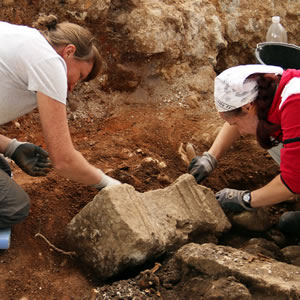 Archaeology or archeology is the study of human activity through the recovery and analysis of material culture. The archaeological record consists of artifacts, architecture, biofacts or ecofacts, sites, and cultural landscapes. Archaeology can be considered both a social science and a branch of the
humanities. |
Who is Sean Anthony? Sean W. Anthony is a historian of early Islamic history and Arabic literature. After receiving his doctorate from the University of Chicago in 2009, Anthony taught at the University of Oregon (Eugene) and the Ohio State University, where he is currently professor of Near Eastern Languages and
Cultures. |
What is a Polytheist? Polytheism is the belief in or worship of more than one deity, a type of theism. Polytheism contrasts with monotheism, the belief in only one deity that is, in most cases, transcendent. Oftentimes, polytheistic religions reflect belief in a pantheon of deities that may themselves have religious
sects and rituals dedicated to them. Polytheism was common in the time and place of the Abrahamic religions, namely Judaism, Christianity, and Islam. The Quran, central to Islam, quite explicitly denounces polytheism, though there is certainly evidence to suggest that the Hebrew Bible, which Judaism and Christianity are established upon, may have originally been polytheistic to some extent. |
News on Polytheism, Mecca, MythVision, Archaeology, Sean Anthony, Polytheist (7)
Articles on Polytheism, Mecca, MythVision, Archaeology, Sean Anthony, Polytheist (2)
Monotheism vs Polytheism

19,791 views
|
Bible - 27 Verses on Yahweh, Elohim(s) and The Gods

30,684 views
|
FAQ on Polytheism, Mecca, MythVision, Archaeology, Sean Anthony, Polytheist (2)
| 1.Were the Gods sacrificed? |
| 2.Who are the Gods in the Bible? |
Youtube Videos on Polytheism, Mecca, MythVision, Archaeology, Sean Anthony, Polytheist (150)

 Do Muslims Worship
  Is belief in
  Is Makkah (
 Did Abraham, Moses, Jethro, Midian, Aaron, Isaac and Ishmael do pilgrimage to
  In Genesis 16:11 and Isaiah 60:6, God praises Ishmael and a caravan of Camels from
  Return to
  Dan Gibson: Petra was original Qibla, not
  Pagan
Pagan  Pagan
Pagan  Pagan
Pagan  Is Christianity a
 All people should be United in Love with
  What is worse, doing Shirk (
 Israelite
  Shirk, or
  Was Petra (Jordan)
  Muhammad was expelled from
  93% of Romans were
  Trinity is 'veiled' Tri-theism (Three
 Pre-Islam Pagan Arabs made
  In Exodus 20:4, cleanse homes of graven Images,
  Bible Prophecy &
  Hinduism: From 1 God to 1 Million
  Can Dan Gibson prove Early Muslims prayed to Petra, Jordan and not
  Does Saudi Arabia fear
  In Quran 3:96, Bakkah might not be
  Saudi Arabia: Where Tall Buildings overwhelm
 74 Reasons Jesus is a copy of Joseph -
  Stories of Prophets: Abraham builds Kabah in
  Historical Understanding of God and
  Apostle Paul proclaimed Jewish Law insignificant (dietary, circumcision, divinity etc.) insignificant - James Valliant (
 Importance of Camels in Biblical
  Did Abraham Exist in Biblical
  Origins of Yahweh in a
 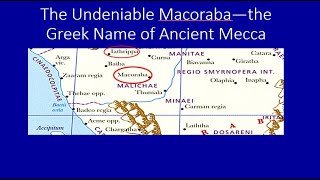 Macoraba is
  Abraham took Hagar and Ishmael to
 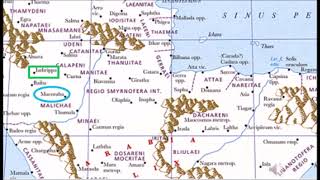 Historical Evidence proves Macoraba is
  Apostle Paul and his New Testament fantasy adventures - Ken Humphreys /
  Apostle Paul and his New Testament fantasy adventures - Ken Humphreys /
  Do Muslims follow
  Sabians of Yemen: 7
  Christianity, a collection of Pre-Christian Pagan Beliefs - David Madison /
 Pantheon, Roman Temple to
  Thusia (800 BC), Animal Sacrifice to
  Animal Sacrifice, a Gift from Farmers to
 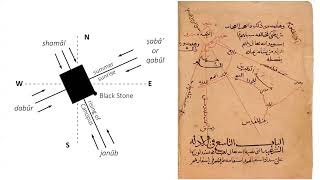 Kabah in
  Allah and
  Origins of Kabah in Pre-Islam
  Jesus and
  Adam & Eve Story copied from Early
  Jesus Resurrection Written for Greco-Roman Audience | Richard Miller |
  Before Noah: Alternative Mythical Flood Stories |
  Origins of Hellfire - A Social Tool for Population Control? |
  Ancient Pagan Myths Behind Biblical Stories |
  Critical Insight into Origins of Islam |
  Goddess Asherah,
  Adam And Eve's Origins Stolen from Mesopotamia? |
  History of Female
  Why was
  Origins of Cain & Abel in Ancient Mesopotamia |
 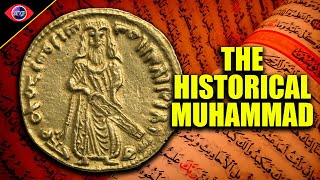 Muhammad &
 Muhammad - From Peaceful Preacher in
  Origins of Islam and
  Walking In Muhammad's Footsteps: 260 mile Hijrah from
  Did Muhammad borrow from Christianity & Judaism?
| Shady Nasser |
Did Muhammad borrow from Christianity & Judaism?
| Shady Nasser | 
 Ancient Mesopotamia studied Planets to Understand
 Early Developments in Quran Compilation, Islam & Kabah,
  Who wrote
  Did Rome Create
  Why did David collect 100 Foreskins? |
 What happened before Jesus defeated Death? |
  Jesus is GOD in Gospel of John only? | Robert Price |
  Early Quran Manuscripts | Daniel Brubaker |
  Child Sacrifice in
  Raglan Hero themes shared by Mythical characters: Romulus, Hercules, Dionysus, Zeus, Moses, Elijah and Jesus | Richard Miller |
  Jesus was copied from Osiris and Egyptian, North-African Mystery Cults? | Kara Cooney |
  Muhammad's Conquest of
  Who Understood Jesus - Christians or Muslims? | Bart Ehrman |
  Real Jesus - A Jew Preaching Judaism to Other Jews
| Reza Aslan |
Real Jesus - A Jew Preaching Judaism to Other Jews
| Reza Aslan |  Caesar Messiah EXPOSED: Did Rome Create Christianity? | Joseph Atwill |
 Fighting intolerance and advancing understanding of Biblical Texts | Joshua Bowen |
  4000 year Secret Behind Jacob and Esau |
 Was
Was  A Virgin Birth was a Common Narrative |
  Jesus vs Greek
  Did Ebionites, Early Christians reject Apostle Paul? | James Tabor |
 New
New 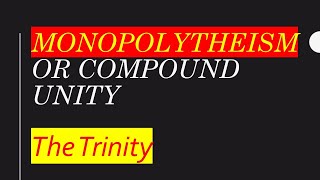 Christian Trinity is Mono-
 Quran written in mix of Arabic Dialects | Marijn Van Putten |
  Did Hagar really walk 800 Miles from Beersheba to
  Early Judaism was
  Comparing Adam with Earlier, Ancient Mythology | Robert Price |
  Jerusalem, City of Islam | Paul Ellis |
  Jerusalem, City of Islam | Paul Ellis |
  Rome-Persia War (602-628 AD) set
 Significance of Qibla (prayer direction) changing from Jerusalem to
 Did Early Islam emerge from Petra or
  Bart Ehrman Says NO ONE Can Prove
  Did Apostle Paul even exist? Scholar DESTROYS
  Did Christianity borrow from Pagan Myths? | Inspiring Philosophy vs
  Did Apostle Paul EVER Exist? Nina Livesey claims his Letters Are FICTION |
  How Satan, Demons, Hell & Evil were found in Christianity | Derreck Bennett on
  Jesus Existed - Just NOT in
  12 Tribes of Israel are 12 Zodiac Signs | Robert Price on Astrotheology |
  Was Jesus Born of a Virgin?
 Did Ancient Israelites Sacrifice Children to Yahweh? |
  Did Governments Create
  Was James
DISCLAIMER
All videos are shared for educational and information purposes only. All videos are hosted and viewable on Youtube servers. Video titles are generated using the original video title; overall content theme including actual dialogue and speech (Transcript); and A.I-based recommendations with a focus on SEO, keyword density, and internal search functions. The video title does not represent the views held by the Youtube video uploader, or any individual, organisation or business.
If you spot any mistake, omission or give feedback, kindly contact us with details
All videos are shared for educational and information purposes only. All videos are hosted and viewable on Youtube servers. Video titles are generated using the original video title; overall content theme including actual dialogue and speech (Transcript); and A.I-based recommendations with a focus on SEO, keyword density, and internal search functions. The video title does not represent the views held by the Youtube video uploader, or any individual, organisation or business.
If you spot any mistake, omission or give feedback, kindly contact us with details