1103 views
·
Last viewed: 1 day ago
Uploaded: 01 Apr 2019 (7 years ago) · Shared: 02 Apr 2019
not done deep research into this matter. Some are comfortable in what they believe and are not willing to study something that contradicts their theology.
Uploaded: 01 Apr 2019 (7 years ago) · Shared: 02 Apr 2019
Video Description (from Youtube)
Why do Trinitarian scholars, theologians, and historians act extremely ignorant when it comes to Philo of Alexandria's influence on Western theology? It is because many of them are ignorant. They havenot done deep research into this matter. Some are comfortable in what they believe and are not willing to study something that contradicts their theology.
Search Results on 'Greek philosophy, John's gospel and Philo of Alexandria were merged at Council of Nicaea in 325 AD - William Lane Craig & approvedofGod'
SCROLL TO :TOPICS | 6NEWS | 3ARTICLES | 3FAQ | 1VIDEO | 73LINKS | 0TOPICS #NICAEA WILLIAM LANE CRAIG APPROVEDOFGOD COUNCIL OF NICAEA PHILO
Topics include Nicaea, William Lane Craig, approvedofGod, Council of Nicaea, Philo (6)
Where is Nicaea?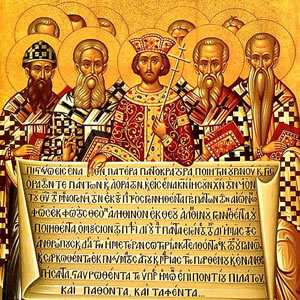 Nicaea or Nicea was an ancient city in northwestern Anatolia. It is primarily known as the site of the First and Second Councils of Nicaea (the first and seventh Ecumenical councils in the early history of the Christian Church), the Nicene Creed (which comes from the First Council), and as the
capital city of the Empire of Nicaea following the Fourth Crusade in 1204, until the recapture of Constantinople by the Byzantines in 1261. |
Who is William Lane Craig? William Lane Craig (born 1949) is an American analytic philosopher and Christian theologian. He holds faculty positions at Talbot School of Theology (Biola University), and Houston Baptist University. Craig has developed and defended the Kalam cosmological argument for the existence of God. He also
focused in his published work on a historical argument for the resurrection of Jesus. Craig established and runs the online apologetics ministry ReasonableFaith.org. |
Who was Philo Alexandria? Philo of Alexandria (20 BC - 50 AD), was a Hellenistic Jewish philosopher who lived in Alexandria, in the Roman province of Egypt. Philo used philosophical allegory to harmonize Jewish scripture, mainly the Torah, with Greek philosophy. His allegorical exegesis was important for some Christian
Church Fathers, but he had very little reception history within the Rabbinic Judaism. Philo adopted allegorical instead of literal interpretations of the Hebrew Bible. |
Who are approvedofGod?
I am here to teach all people, but especially the "body of Christ" (the Church), that the bible is sufficient for what we believe. Throughout the centuries, men have brought many doctrines into the church that have caused confusion and separation. My desire and goal is to clarify some of these
errors and bring all Christians back to the basics of the Bible. |
What was the Council of Nicaea?
The First Council of Nicaea was a council of Christian bishops convened in the Bithynian city of Nicaea (now ?znik, Bursa province, Turkey) by the Roman Emperor Constantine I in 325 AD. Its main accomplishments were settlement of the Christological issue of the divine nature of God the Son and his
relationship to God the Father, the construction of the first part of the Nicene Creed, establishing uniform observance of the date of Easter, and promulgation of early canon law. |
Who was Philo? Philo of Alexandria (20 BC-50 AD) was a Hellenistic Jewish philosopher who lived in Alexandria, in the Roman province of Egypt. Philo used philosophical allegory to harmonize Jewish scripture, mainly the Torah, with Greek philosophy. His method followed the practices of both Jewish exegesis and
Stoic philosophy. His allegorical exegesis was important for some Christian Church Fathers, but he had very little reception history within the Rabbinic Judaism. He adopted allegorical instead of literal interpretations of the Hebrew Bible. Some scholars hold that his concept of the Logos as God's creative principle influenced early Christology. |
News on Nicaea, William Lane Craig, approvedofGod, Council of Nicaea, Philo (3)
Articles on Nicaea, William Lane Craig, approvedofGod, Council of Nicaea, Philo (3)
Council of Nicaea 325 AD

23,513 views
|
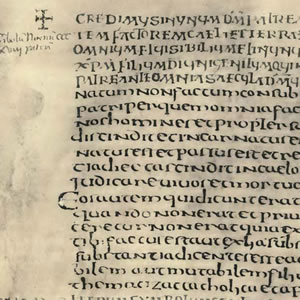
Nicene Creed - Council of Nicaea 325 AD
23,263 views
|
Constantine, Nicaea and History

21,888 views
|
FAQ on Nicaea, William Lane Craig, approvedofGod, Council of Nicaea, Philo (1)
| 1.What happened at the Council of Nicaea in 325 AD? |
Youtube Videos on Nicaea, William Lane Craig, approvedofGod, Council of Nicaea, Philo (73)
 Was the Resurrection a Hoax? - Shabir Ally vs
  At
At  Mystery
  Is Trinity supported in the Bible? - Tovia Singer vs
  The
The  Who was
  Arian Controversy and the
  Serapis Christus, Ptolemy and how Constantine created Jesus Christ at the
  At
At  Early Christianity: Arius, Athanasius and
  After the
  Arius, Athanasius & Constantine at
  In 325 AD, Trinity became Official Church Doctrine at
  In 325 AD,
  Arguing Bishops at
  In 325 AD,
  In the End Times (Eschatology), Jesus will return to the Earth -
  Jesus, a Jew who worshiped the Old Testament God -
  At
At  After
After  Christianity did not exist until AFTER the
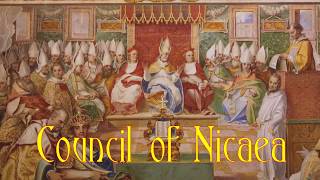 In 325 AD,
  At
At 
 Nicene Creed (
 I am a Jesus Mythicist due to:
  Nobody believed Jesus was God, until the
  What Happened at the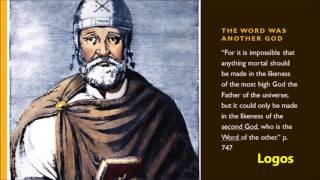
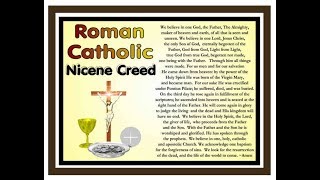 Eusebius, an early Church Father loyal to
  Greek Apostate Fathers: Clement, Ignatius, Justin Martyr, Shepherd
  Eusebius (260-340 AD) praised
  Trinity (Triune Gods) are found in Gnostic and Kabbalah beliefs dating to Ancient Babylon -
  Early Church Fathers and their contributions -
  Jesus, a 'Begotten God' contradicts an Eternal, Everlasting God -
  In 180 AD, Theophilus
  Athanasian Creed was NOT written by Athanasius -
  Jesus, the 'Begotten God'
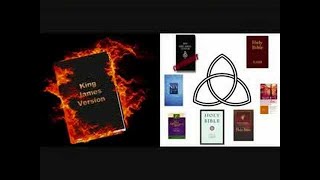 On John 1:18, this verse contradicts the Old Testament -
  From Proverbs 8:22,
 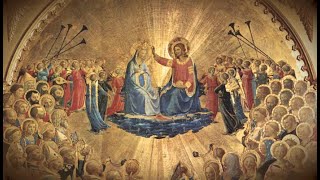 In
In 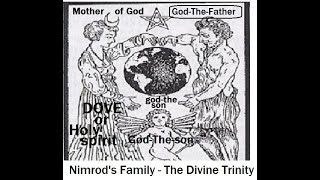 Trinity is based on the Babylonian Trinity (2700 BC)
 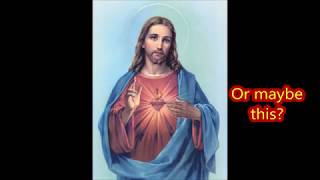 Nobody knows what Jesus or Mary looked like -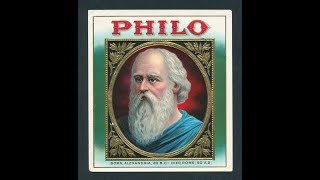
 Is Mark's Gospel based on writings
  Jesus was a Jew, not a Trinitarian -
  God is One. He moves by Spirit. He creates through Spoken Word (Trinity is from Pagan philosophy) -
  Greek Philosophy won at
  Greek philosophy, John's gospel and
  Biggest challenges facing the Church today? -
  In 325 AD, the
 Were Ignatius, Polycarp, Clement, Tertullian & Origen followers
  Both Apostle Paul and
  Theophilus
  Nicene Creed: Eusebius was influenced by
 In 431 AD,
 Majority rejected Tertullian's Trinity (240 AD), based on Greek philosophy -
  Why Did God Send COVID-19? -
  Christian Viewpoints on Adam -
  Were Adam & Eve really Homo Sapiens, Neanderthals, Heidelbergensis, or just rational souls? -
  Why should we praise God |
 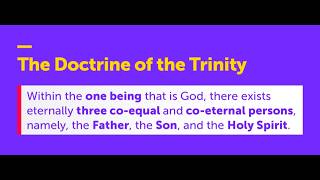 Early Christians rejected the Trinity Doctrine |
 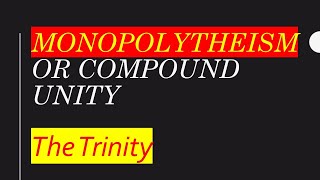 Christian Trinity is Mono-Polytheism adopted from Greek Philosophy |
DISCLAIMER
All videos are shared for educational and information purposes only. All videos are hosted and viewable on Youtube servers. Video titles are generated using the original video title; overall content theme including actual dialogue and speech (Transcript); and A.I-based recommendations with a focus on SEO, keyword density, and internal search functions. The video title does not represent the views held by the Youtube video uploader, or any individual, organisation or business.
If you spot any mistake, omission or give feedback, kindly contact us with details
All videos are shared for educational and information purposes only. All videos are hosted and viewable on Youtube servers. Video titles are generated using the original video title; overall content theme including actual dialogue and speech (Transcript); and A.I-based recommendations with a focus on SEO, keyword density, and internal search functions. The video title does not represent the views held by the Youtube video uploader, or any individual, organisation or business.
If you spot any mistake, omission or give feedback, kindly contact us with details