1:08:31
108 views
·
Last viewed: 1 hr ago
Uploaded: 10 Jul 2026 (1 month ago) · Shared: 27 Jul 2026
Video Description (from Youtube)
Please help us continue having these discussions by supporting us over on Patreon: https://www.patreon.com/c/SolomonSmith Who wrote the Quran? Did it flow directly from God? Did Muhammad compose it?Did several authors compose it over several centuries? Does it have the characteristics of a dictated text, or a written text? How simple or complicated is the story of the Quran's origins?
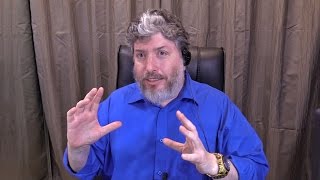
In this episode, Jack and Milo are joined by Islamic studies scholar Gabriel Said Reynolds to explore one of the most controversial questions in Islamic Studies.
The conversation examines the traditional Islamic account of the Quran alongside modern academic perspectives. Reynolds argues that the evidence may point toward a more complex process of composition than is commonly assumed, challenging the long-standing Western, secular scholarly consensus that Muhammad himself was the sole human author.
Topics include:
• Who wrote the Quran?
• Did Muhammad write the Quran?
• The traditional Islamic narrative of revelation
• Academic theories of Quranic authorship
• How the Quran was compiled and transmitted
• Why the Quran is arranged by surah length rather than chronology
• The relationship between the Quran, the Torah, and the Gospel
• The emergence of Classical Arabic
• The literary qualities and inimitability (i'jaz) of the Quran
• Early Islamic history
• Historical-critical approaches to the Quran
• Western scholarship on the origins of Islam
If you enjoy long-form conversations on religion, philosophy, history, and literature, consider subscribing for more discussions with scholars.
DISCLAIMER
All videos are shared for educational and information purposes only. All videos are hosted and viewable on Youtube servers. Video titles are generated using the original video title; overall content theme including actual dialogue and speech (Transcript); and A.I-based recommendations with a focus on SEO, keyword density, and internal search functions. The video title does not represent the views held by the Youtube video uploader, or any individual, organisation or business.
If you spot any mistake, omission or give feedback, kindly Contact Us with details
EXPLORE TOPICS :
MANUSCRIPT |
36
THE QURAN |
303
GABRIEL REYNOLDS |
16
EXPLORING QURAN BIBLE |
4
 MUHAMMAD
MUHAMMAD
Overview & Key Concepts
Who is Gabriel Reynolds?
 Gabriel Reynolds is an American academic and historian of religion who serves as professor of Islamic Studies and Theology at the University of Notre
Dame. His scholarship focuses on World Religions and World Church, History of Christianity, Quranic Studies, Islamic Origins, and Muslim-Christian relations. Gabriel Said Reynolds obtained his PhD in Islamic Studies at Yale University.<br><br>The 'Exploring the Quran and the Bible' Youtube channel is dedicated to thoughtful, cutting-edge, and respectful conversations with leading scholars worldwide on the Bible or the Quran.
What is Manuscript?
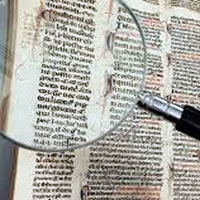 A manuscript was, traditionally, any document written by hand. Once practical typewriters became available, typewritten as opposed to being
mechanically printed or reproduced in some indirect or automated way.
What is The Quran?
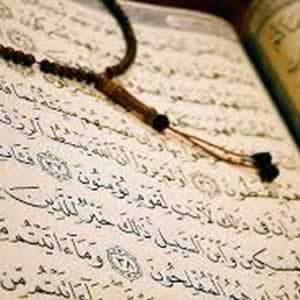 Quran, literally meaning "the recitation" is the central religious text of Islam, which Muslims believe to be a revelation from God (Allah). It is
widely regarded as the finest work in classical Arabic literature. The Quran is divided into chapters (surah in Arabic), which are then divided into verses (ayah). Muslims believe that the Quran was verbally revealed by God to Muhammad through the angel Gabriel (Jibril), gradually over a period of approximately 23 years, beginning on 22 December 609 CE, when Muhammad was 40, and concluding in 632, the year of his death. Muslims regard the Quran as the most important miracle of Muhammad, a proof of his prophethood, and the culmination of a series of divine messages that started with the messages revealed to Adam and ended with Muhammad.
Videos on Uniterianism (0)
EXPLORE TOPICS :
MANUSCRIPT |
36
THE QURAN |
303
GABRIEL REYNOLDS |
16
EXPLORING QURAN BIBLE |
4
MUHAMMAD
MUHAMMAD