17:50
775 views
·
Last viewed: 18 mins ago
Uploaded: 03 Dec 2018 (8 years ago) · Shared: 07 Dec 2018
Video Description (from Youtube)
World Religions - JUDAISM - Trinity vs One God - Trinity vs ONE GOD - Learn why Fod is COMPLETELY Unique, Rational, and Logical in JUDAISM. Karaite Judaism Hakham (Rabbi) Peleh shows why Judaism doesnot accept the Christian idea of God...nor any other images - or gods in world religions - Learn why God has no image in Judaism (Israel) Torah - Tanakh
Dont forget to LIKE and SUBSCRIBE.
Website for Karaite Jews - karaite-korner.org
Want to Donate and help my efforts for this Channel? https://www.paypal.me/PelehAvraham
DISCLAIMER
All videos are shared for educational and information purposes only. All videos are hosted and viewable on Youtube servers. Video titles are generated using the original video title; overall content theme including actual dialogue and speech (Transcript); and A.I-based recommendations with a focus on SEO, keyword density, and internal search functions. The video title does not represent the views held by the Youtube video uploader, or any individual, organisation or business.
If you spot any mistake, omission or give feedback, kindly Contact Us with details
EXPLORE TOPICS :
TRINITY |
154
TRINITARIAN |
18
PELEH BEN AVRAHAM |
22
OLD TESTAMENT |
57
ELOHIM |
15
GOD |
0
SIN |
0
Overview & Key Concepts
Who is Peleh Ben Avraham?
 Teacher of Karaite Judaism Hakham. Israelite, Married, Children
What is Old Testament?
 The Old Testament (OT) is the first part of Christian Bibles. This is based primarily upon the Hebrew Bible (or Tanakh), a collection of ancient
religious writings by the Israelites believed by most Christians and religious Jews to be the sacred Word of God. The second part of the Christian Bible is the New Testament.
<br><br>
The books that comprise the Old Testament canon, as well as their order and names, differ between Christian denominations. The Catholic canon comprises 46 books, and the canons of the Eastern Orthodox and Oriental Orthodox Churches comprise up to 51 books and the most common Protestant canon comprises 39 books.
What is Trinity?
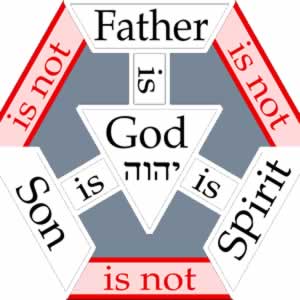 The Christian doctrine of the Trinity (Latin: trinus "threefold") holds that God is one God, but three coeternal consubstantial persons or
hypostases. These being the Father, the Son (Jesus Christ), and the Holy Spirit - as "one God in three Divine Persons". The three Persons are distinct, yet are one "substance, essence or nature" (homoousios).
Who is Elohim?
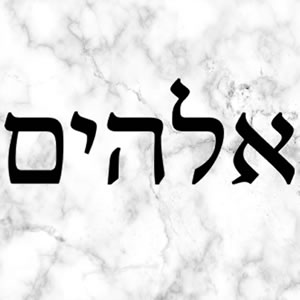 Elohim in the Hebrew Bible refers to deities, and is one of the many names or titles for God in the Hebrew Bible. The word is identical to the plural
of el, meaning gods or magistrates, and is used for the pantheon of Canaanite gods, the children of El, and conventionally vocalized as "Elohim". The notion of divinity underwent radical changes in the early period of Israelite identity and development of Ancient Hebrew religion. The ambiguity of the term elohim is the result of such changes, cast in terms of "vertical translatability", i.e. the re-interpretation of the gods from 7th century BC, Judah to the emergence of monotheist Rabbinical Judaism in the 2 AD.
Who is GOD?
In monotheism and henotheism, God is conceived as the Supreme Being and principal object of faith. The concept of God as described by theologians
commonly includes the attributes of omniscience (infinite knowledge), omnipotence (unlimited power), omnipresence (present everywhere), omnibenevolence (perfect goodness), divine simplicity, and eternal and necessary existence.
<ul>
<li>In theism, God is the creator and sustainer of the universe</li>
<li>In deism, God is the creator, but not the sustainer, of the universe</li>
<li>Monotheism is the belief in the existence of one God or in the oneness of God</li>
<li>In pantheism, God is the universe itself</li>
<li>In atheism, God is purported not to exist, while deemed unknown or unknowable within the context of agnosticism. </li>
</ul>
What is Sin?
In Abrahamic contexts, sin is the act of violating God's will. Sin can also be viewed as anything that violates the ideal relationship between an
individual and God; or as any diversion from the ideal order for human living. To sin has been defined as "to miss the mark".
<br><br>
Sins fall in a spectrum from minor errors to deadly misdeeds. Catholicism regards the least corrupt sins as venial sins which are part of human living and carry immediate consequences on earth, and, if unrepented for, more painful purgation, assuming the person is destined to heaven, as it is written in the formation letter "Purgatory", "most of the early Fathers of the Church speak of a cleansing fire, though we cannot tell whether this means actual or spiritual fire."
<br><br>
Conversely, sins of great evil are mortal sins which bring the consequence of hell if they are not addressed either through an act of perfect contrition or going to confession about them.
Frequently Asked Questions
1.How were the Triadic or 'Trinity-like' Pagan Gods presented?
The pagan Triadic dieties were shown as a single-head with 3 faces, 3 mouths but only 4 mouths. Such images were preserved across the Roman Empire.
2.Does the Christian Trinity come from pagan Triadic dieties?
Does the Christian Trinity come from pagan Triadic dieties?
Yes. The core teachings of the Trinitarian Christian churches
today do not come from Jesus.
The three-in-one Gods are pagan concepts that existed long before
Jesus arrived. Later on, Christians adopted this concept and
instantly made Christian doctrine an appealing alternative to the
pagan God worshipping masses.
3.Why is the Trinity so difficult to understand?
"It is not a biblical doctrine in the sense that any formulation of it can be found in the Bible."
(Illustrated Bible Dictionary)
Trinitarians have been looking for Bible texts and even twisting verses to find support for the Trinity teaching.
4.How did the Christian Trinity come about?
The concept of a dual human and divine nature in the person of Jesus is known as the Hypostatic Union, an essential component of modern Trinitarianism.
Yet it wasn’t until the Council of Chalcedon that we see the emergence of an official doctrine of the Trinity in a form that is recognisable with what Christian Trinitarians believe in today. This took place in the fifth century, over 400 years after Jesus!
The evangelical theologian and Professor Wayne A. Grudem sums this up as follows:
"A precise understanding of how full deity and full humanity" argues Grudem, "could be combined together in one person was formulated only gradually in the church and did not reach the final form until the Chalcedonian Definition in 451 AD
Source: [Grudem, Systematic Theology: Chapter 26 – The Person of Christ, 1994, p. 554.]
5.Does the Bible support the Trinity (3-in-1) God concept?
This verse mentions the Trinity (Father, Son, Holy Ghost) in the King James Version Bible (KJV). Bible critics agree the KJV verse is a forgery that was added into the Bible. More modern, accurate Bibles give different text:
And the Spirit is the witness, because the Spirit is the truth - (RSV Bible)
And it is the Spirit that beareth witness, because the Spirit is the truth - (ASV Bible)
For there are three that testify: the Spirit, the water and the blood; and the three are in agreement. (NIV Bible)
6.Does the Old Testament teach the Christian Trinity?
The Old Testament does not teach the Trinity, or even set forth the Messiah would be God. There is no evidence of anyone knowing about, or believing in, the Trinity in all the Jewish literature before Christ, including the Old Testament, the Jewish targums and commentaries, the Apocrypha or other apocryphal literature, or the Dead Sea Scrolls.
7.What is the Christian Trinity?
Orthodox Christian theologians define the doctrine of the Trinity is that the Father is God, the Son is God, the Holy Spirit is God, and together these 'three Persons' make one God; and these three are co-equal and co-eternal, the Son having been 'eternally begotten' of the Father, and Jesus being simultaneously 100% God and 100% man.
Today, many Christians think they are Trinitarians simply because they believe in the Father, Son, and the Holy Spirit - but that is not the Trinity!
8.What do Christian 'Trinity' scholars say about the Old Testament?
The distinguished Trinitarian scholar Bertrand de Margerie in his book The Christian Trinity in History (p.3) writes:
"…contemporary exegetes [Bible teachers] affirm unanimously that the Old Testament did not bring to the Jewish people a clear and distinct Revelation of the existence of a plurality of persons in God. In this they agree with the clear and frequent affirmation of Fathers such as Irenaeus, Hilary, and Gregory of Nazianzus: that the doctrine of the Trinity is revealed only in the New Testament."
So any person who lived before Jesus' ministry did not have to believe in the Trinity to be saved because the Trinity is not mentioned in the Old Testament.
9.What do Christian scholars say about the Trinity?
Scholars freely admit that the Trinity is never presented as a complete doctrine in the New Testament, but rather is built from scattered Bible verses.
In the NT there is no explicit statement of the doctrine….
Evangelical Dictionary of Theology (p. 1112)
…it is not a Biblical doctrine in the sense that any formulation of it can be found in the Bible….
New Bible Dictionary (p.1221)
The New Testament does not present a systematic presentation of the Trinity. The scattered segments from various writers that appear throughout the New Testament reflect a seemingly accepted understanding that exists without a full-length discussion.
Holman Bible Dictionary (p.1372)
Theologians admit the New Testament does not define the Trinity. Furthermore, there is no clear teaching that salvation depends on the belief in the Trinity.
10.What is the God of the Old Testament like?
The God of the Old Testament is a jealous, bloodthirsty, vicious God that mercilessly commanded horrific attrocities like, for example:
Killing every human on the planet except the handful that went with Noah.
Moses commanding his people to shed each others blood as atonement for creating and worshiping the golden calf
The genocide of the people in the promised land when the Hebrews finally ended their 40-year stay in the dessert. Under the command of God, they wiped out whole cities, killing every man, woman and child.
11.Is the Old Testament historically authentic?
The sheer number of Old Testament authors who tell the same story, plus all the revisions carried out on the text of certain books from the pre-Christian era, constitute as many reasons for inaccuracy and contradiction
12.Did Jesus abolish the Old Testament Law?
Jesus said I have come to fulfil the Law (i.e. observe and uphold it)
13.What did James say of the Old Testament Law?
James advocated strict adherence to the Old Testament Law including the Ten Commandments, and if a part of it was broken or ignored, the entire law has been violated
14.What is the punishment for apostasy in The Bible (Old Testament)?
According to the Bible (Old Testament), the punishment for apostasy (turning away from Gods religion) is death
15.What was the foundation of the Old Testament?
It is known the foundation of the Old Testament was, 'Hear, O Israel: The LORD our God is one LORD' (Deuteronomy 6:4), and the Jews fiercely defended that faith against polytheism of all kinds.
16.Does the Old Testament teach the Christian Trinity?
The Old Testament does not teach the Trinity, or even set forth the Messiah would be God. There is no evidence of anyone knowing about, or believing in, the Trinity in all the Jewish literature before Christ, including the Old Testament, the Jewish targums and commentaries, the Apocrypha or other apocryphal literature, or the Dead Sea Scrolls.
17.What do Christian 'Trinity' scholars say about the Old Testament?
The distinguished Trinitarian scholar Bertrand de Margerie in his book The Christian Trinity in History (p.3) writes:
"…contemporary exegetes [Bible teachers] affirm unanimously that the Old Testament did not bring to the Jewish people a clear and distinct Revelation of the existence of a plurality of persons in God. In this they agree with the clear and frequent affirmation of Fathers such as Irenaeus, Hilary, and Gregory of Nazianzus: that the doctrine of the Trinity is revealed only in the New Testament."
So any person who lived before Jesus' ministry did not have to believe in the Trinity to be saved because the Trinity is not mentioned in the Old Testament.
18.Many Christians believe that Jesus abolished the Old Testament dietary laws
Many Christians believe that Jesus abolished the Old Testament dietary laws. The dietary interpretation of Jesus' words (i.e. swine pig consumption) does not exist in the Textus Receptus Bible, the authoritative Greek New Testament text that was accepted by the Christian Church until about 100 years ago.
This parenthetic interpretation of Jesus words was obviously a comment that some Bible scribe wrote in the margin of the text. Later scribes accidentally or deliberately incorporated the marginal comment into the text itself, so the statement appears only in corrupted texts.
But the statement does not appear in the Textus Receptus, so the KJV says nothing about Jesus "declaring all foods clean."
God had clearly prohibited pig, swine and pork in the Old Testament. This verse was over whether or not 'unwashed hands' caused clean food to become unclean.
19.How did Early Christians view the Old Testament?
The superior authority of Christ meant that while the authors of the NT embraced the OT as 'God-breathed' and thus would never feel free to reject any portion of it, they were equally convinced that the ultimate God-intended meaning of any given passage, and of the OT as a whole, was only found when seen in relation to Christ.
For example, for one or more of the Gospel authors, Jesus's birth fulfills Israel's longing for a messiah, his exodus out of Egypt fulfills Israel's exodus out of Egypt, his temptations in the desert fulfills Israel's trials in the desert, his twelve disciples fulfill the mission of the twelve tribes of Israel, his five sets of teachings in Matthew fulfill Moses’s Pentateuch, his sufferings fulfill the call of Israel to be a suffering servant, and his resurrection is the fulfillment of Israel's calling and longing for restoration.
Videos on Uniterianism (0)
EXPLORE TOPICS :
TRINITY |
154
TRINITARIAN |
18
PELEH BEN AVRAHAM |
22
OLD TESTAMENT |
57
ELOHIM |
15
GOD |
0
SIN |
0