22:53
589 views
·
Last viewed: 1 hr ago
Uploaded: 29 Nov 2011 (15 years ago) · Shared: 30 Aug 2018
Video Description (from Youtube)
Speaker: Dr. Hakim QuickDISCLAIMER
All videos are shared for educational and information purposes only. All videos are hosted and viewable on Youtube servers. Video titles are generated using the original video title; overall content theme including actual dialogue and speech (Transcript); and A.I-based recommendations with a focus on SEO, keyword density, and internal search functions. The video title does not represent the views held by the Youtube video uploader, or any individual, organisation or business.
If you spot any mistake, omission or give feedback, kindly Contact Us with details
Overview & Key Concepts
Who is Abdullah Hakim Quick?
 Abdullah Hakim Quick (born 1949) is an imam, historian and travelling lecturer from North America. He received a Bachelor's Degree from the Islamic
University of Madinah in 1979. He was one of the first two students from the west and the first American to have done so and receive an Ijazah. Quick received a Master's Degree and PhD from the University of Toronto. His thesis was an analysis of the life and writings of Sheikh Uthman Dan Fodio, a great West African Scholar, warrior, and social activist.
What is Christmas?
 Christmas is an annual festival commemorating the birth of Jesus Christ. It is observed primarily on December 25 as a religious and cultural
celebration among billions of people around the world.
Christmas Day is a public holiday in many of the world's nations, is celebrated religiously by a majority of Christians, as well as culturally by many non-Christians, and forms an integral part of the holiday season centered around it. Although the month and date of Jesus' birth are unknown, by the early-to-mid fourth century the Western Christian Church had placed Christmas on December 25, a date that was later adopted in the East. Today, most Christians celebrate on December 25 in the Gregorian calendar, which has been adopted almost universally in the civil calendars used in countries throughout the world.
What is Pagan?
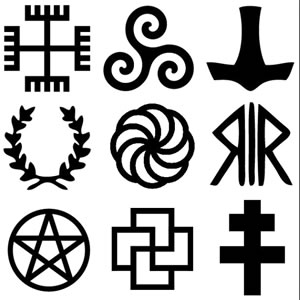 Paganism is a term first used in the fourth century by early Christians. It was applied on populations of the Roman Empire who practiced polytheism
either because they were increasingly rural and provincial relative to the Christian population or because they were not milites Christi (soldiers of Christ). Alternate terms in Christian texts for the same group were hellene, gentile, and heathen. Pagan and paganism were pejorative terms for the same polytheistic group, implying its inferiority. Paganism has broadly connoted the "religion of the peasantry", and for much of its history was a derogatory term. Both during and after the Middle Ages, pagan was a pejorative term that was applied to any non-Abrahamic or unfamiliar religion, and the term presumed a belief in false god(s).
Frequently Asked Questions
1.How was Christianity made appealing to pagan idol worshippers?
Pope Gregory I (540-604 CE), a famous Christian leader encouraged accomodating pagan customs and beliefs. So if pagans worshipped a Tree or Spirit abiding in it, rather than shun the pagan worship, he urged priests to somehow link the worship to Jesus Christ, and allow them to continue their Tree or pagan idol worship.
2.How was 25th December celebrated by pagans?
December 25th was the most important of Sun Festivals, the new
birth of the God, rising three days after 'dying' at the winter
solstice. Today, the celebration continues and its many features
can be witnessed. A few of these include:
* Excessive eating, drinking and merry was commin in Saturnalia
festival
* Father Christmas (Red Man) - who was originally Apollo, the
Sun-God or Thor God depicted as an elderly man, jovial or
friendly, of heavy build with a long white beard who drove a
chariot through the sky
* Fireplace - the fireplace in pagan homes was sacred to Thor
God which he would descend though the chimney
* Giving of gifts - a feature of Saturnalia festival
* Christmas card bearing the cheeky robin bird (with its chest
bearing the flame symbol)
* Snowman - who melts when the Sun comes out (is defeated by
the Sun)
* Fir-tree trinkets and decorations, symbolising life in the
'dead' parts of the world
* Holly - to deflect evil goblins in winter solstice
* Ivy - the female version of the 'male' holly
* Mistletoe - used by pagan druids in their worship
* Yule Log - sacred to the Thor God which is symbolised today as a chocolate cake
3.How were the Triadic or 'Trinity-like' Pagan Gods presented?
Ancient triadic deities in the Roman Empire were depicted in art and monuments as a single, unified figure featuring three distinct faces or heads to illustrate their triune nature.
4.Does the Christian Trinity come from pagan Triadic dieties?
Yes, the core teachings of modern Trinitarian Christian churches do not come from Jesus, but were pagan three-in-one concepts that existed long before his arrival and were later adopted by Christians to make their doctrine highly appealing to idol-worshipping masses.
5.Why are their so many similarities between Jesus Christ and all the pagan Gods?
It is probable the reason why the Church priests burned and destroyed the earlier records of pagan Gods was to hide the evidence for the real origins of their own Christian mythology.