37:09
424 views
·
Last viewed: 1 hr ago
Uploaded: 09 Nov 2012 (14 years ago) · Shared: 07 Jun 2017
Video Description (from Youtube)
Four great Scriptural passages are considered in this presentation! Dr. Dale Tuggy of the State University of New York at Fredonia (SUNY) lectures at a recent Theological Conference in Atlanta aboutthe relationship of logic and the New Testament. He tells us that God is logical and so are the Scriptures. Dr. Tuggy begins with a short introduction to the principles of logic and then takes up the matter of logic in four "controversial" passages: John 10:30-36, John 17:1-3, John 20:17 and 1 Corinthians 8:6. This Christian Video produced by J. Dan Gill of 21st Century Reformation. For other presentations and interviews go to http://www.21stcr.org. To visit Dale Tuggy's blog, go to http://www.trinities.org/blog/
DISCLAIMER
All videos are shared for educational and information purposes only. All videos are hosted and viewable on Youtube servers. Video titles are generated using the original video title; overall content theme including actual dialogue and speech (Transcript); and A.I-based recommendations with a focus on SEO, keyword density, and internal search functions. The video title does not represent the views held by the Youtube video uploader, or any individual, organisation or business.
If you spot any mistake, omission or give feedback, kindly Contact Us with details
Overview & Key Concepts
What is New Testament?
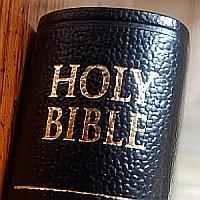 The New Testament is the second part of the Christian biblical canon. The first part being the Old Testament, based on the Hebrew Bible. The New
Testament discusses the teachings and person of Jesus, as well as events in first-century Christianity. Christians regard both the Old and New Testaments together as sacred scripture. The New Testament (in whole or in part) has frequently accompanied the spread of Christianity around the world. It reflects and serves as a source for Christian theology and morality.
Who is Dale Tuggy?
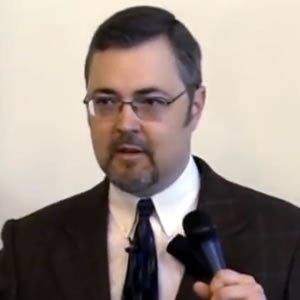 Dale Tuggy (PhD, Brown University) is Professor of Philosophy at the State University of New York at Fredonia. He has authored about two dozen
peer-reviewed articles and book chapters relating to the Trinity and other topics in analytic theology and philosophy of religion. Tuggy takes an interest in World Religions, Philosophy of Religion courses, the history of Philosophy, Eastern philosophies and religions, and Introduction to Philosophy.
What is Sin?
 In Abrahamic contexts, sin is the act of violating God's will. Sin can also be viewed as anything that violates the ideal relationship between an
individual and God; or as any diversion from the ideal order for human living. To sin has been defined as "to miss the mark".
<br><br>
Sins fall in a spectrum from minor errors to deadly misdeeds. Catholicism regards the least corrupt sins as venial sins which are part of human living and carry immediate consequences on earth, and, if unrepented for, more painful purgation, assuming the person is destined to heaven, as it is written in the formation letter "Purgatory", "most of the early Fathers of the Church speak of a cleansing fire, though we cannot tell whether this means actual or spiritual fire."
<br><br>
Conversely, sins of great evil are mortal sins which bring the consequence of hell if they are not addressed either through an act of perfect contrition or going to confession about them.
Frequently Asked Questions
1.What is the King James Version (KJV) of the New Testament?
The King James Version (KJV) of the New Testament was completed in 1611 by 8 members of the Church of England.
There were (and still are) no original texts to translate. The oldest manuscripts we have were written down hundreds of years after the last Apostle died. There are over 8000 of these old manuscripts, with no two alike.
The King James translators chose to use none of the texts. Instead, they edited previous translations to create the New Testament their king and parliament would approve.
So today, 21st century Christians believe the 'Word of God' is a book edited in the 17th century from 16th century translations of 8000 contradictory copies of 4th century scrolls that claim to copies of lost letters written in the 1st century by unknown authors.
2.Is the New Testament historically authentic?
Textual critics note that the original autographs of the New Testament books no longer exist, leaving thousands of handwritten Greek manuscripts that contain thousands of minor variants, mostly consisting of spelling or word order differences. Despite these historical copy changes, scholars emphasize that modern textual reconstruction methods allow historians to confidently identify the original 1st-century text, ensuring no essential historical narrative or Christian doctrine is left in doubt.
3.What is the oldest manuscript of the Bible New Testament?
It is of enormous importance in establishing the biblical text. There are three earliest manuscripts of the Bible New Testament:
1. Codex Alexandrinus is one of the earliest and most important manuscripts of the entire Bible in Greek
2. Codex Sinaiticus is one of the most important books in the world and is kept in the British Library. Handwritten well over 1600 years ago, the manuscript contains the Christian Bible in Greek, including the oldest complete copy of the New Testament.
3. Codex Vaticanus in Rome
4.What language is the earliest New Testament in?
The earliest New Testament manuscripts are in Koine Greek. But there are Aramaic phrases in the Gospels. Therefore, Scholars believe an Aramaic layer lies beneath the written Greek of the New Testament, one which may never have been written down.
If true, the Greek text is itself a translation, and English text would be a translation of a translation, which raises textual inerrancy and corruption issue.
Since every translation is a personal judgement of which word to best use, made at the translators discretion.