1:02
289 views
·
Last viewed: 1 hr ago
Uploaded: 01 May 2011 (15 years ago) · Shared: 28 Jul 2015
Video Description (from Youtube)
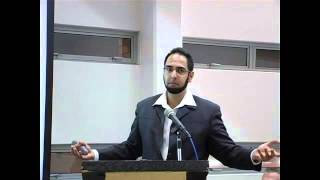
Continue the stories of the holy Quran. In this video, Dr.Bashar Shala talks about : The Story of Creation; Creation of Adam; The Prostration; The First Sin; Pride & Arrogance, Ungratefulness, EnvyLack of Submission, Stubbornness; The Expulsion of Iblees &The Vow of Iblees;
http://www.youtube.com/user/IslamResponses?feature=mhum#g/c/0B6ABAA29EF375AA
DISCLAIMER
All videos are shared for educational and information purposes only. All videos are hosted and viewable on Youtube servers. Video titles are generated using the original video title; overall content theme including actual dialogue and speech (Transcript); and A.I-based recommendations with a focus on SEO, keyword density, and internal search functions. The video title does not represent the views held by the Youtube video uploader, or any individual, organisation or business.
If you spot any mistake, omission or give feedback, kindly Contact Us with details

Overview & Key Concepts
What is Creation?
 A creation myth or cosmogonic myth is a type of cosmogony, a symbolic narrative of how the world began and how people first came to inhabit it. While
in popular usage the term myth often refers to false or fanciful stories, members of cultures often ascribe varying degrees of truth to their creation myths. In the society in which it is told, a creation myth is usually regarded as conveying profound truths - metaphorically, symbolically, historically, or literally. They are commonly, although not always, considered cosmological myths - that is, they describe the ordering of the cosmos from a state of chaos or amorphousness.
Creation myths often share several features. They often are considered sacred accounts and can be found in nearly all known religious traditions. They are all stories with a plot and characters who are either deities, human-like figures, or animals, who often speak and transform easily.
What is Sin?
 In Abrahamic contexts, sin is the act of violating God's will. Sin can also be viewed as anything that violates the ideal relationship between an
individual and God; or as any diversion from the ideal order for human living. To sin has been defined as "to miss the mark".
<br><br>
Sins fall in a spectrum from minor errors to deadly misdeeds. Catholicism regards the least corrupt sins as venial sins which are part of human living and carry immediate consequences on earth, and, if unrepented for, more painful purgation, assuming the person is destined to heaven, as it is written in the formation letter "Purgatory", "most of the early Fathers of the Church speak of a cleansing fire, though we cannot tell whether this means actual or spiritual fire."
<br><br>
Conversely, sins of great evil are mortal sins which bring the consequence of hell if they are not addressed either through an act of perfect contrition or going to confession about them.
Frequently Asked Questions
1.Did a prophet ever commit a sin?
Islam teaches all prophets were of high moral character and did not succumb to the sins their people committed. Although prophets were humans and capable of human errors of judgment, but such errors does not diminish their superiority or the respect Muslims are obliged to have for them.
2.Since Muslims believe in all the Prophets equally, why is Muhammad special?
All Prophets were equally from God, and equally true, but the scope of their missions varied. The messengers before Muhammad were each given teachings limited to their respective nations, because in those times a nation did not have much to do with other nations.
Furthermore, the teachings of each Prophet applied for a limited period of time only, after which God would raise another Prophet to revise some of the teachings for the new circumstances.
The time came to unite all the nations upon a single religion so that mankind may live in peace as one nation. Muhammad, to whom God gave teachings for the whole world for all time to come fulfilled this purpose.
3.What is the Codex Sinaiticus?
The Codex Sinaiticus is one of the most important books in the world. Handwritten well over 1600 years ago, the manuscript contains the Christian Bible in Greek, including the oldest complete copy of the New Testament
It is a fact of Christian history that the earliest Gospels did not record a resurrection of Jesus Christ, and this fact is supported in the Codex Sinaiticus.
Called the Codex Sinaiticus, or Sinai Bible, the oldest known complete Bible available to mankind today, was named after Mt. Sinai, the location of St. Catherines Monastery where it was discovered in 1859 by Dr Constantine Von Tischendorf (1815-1874).
The discovery of the Sinai Bible provided biblical scholars with irrefutable evidence of wilful falsifications in all modern-day Gospels, and a comparison identified a staggering 14,800 later editorial alterations in modern Bibles.
4.I am a Christian and I know my sins are forgiven and I am going to Heaven. Is this correct?
Mainstream Christian theology teaches that a believer can have absolute assurance of salvation and the forgiveness of sins through personal faith in the sacrificial death and resurrection of Jesus Christ.
In contrast, Islamic theology emphasizes that definitive assurance of entering Heaven remains unknown during worldly life, as final judgment belongs entirely to God, who balances infinite mercy with a strict accountability of an individual's faith and actions.
5.Did Jesus wipe away our sins?
In mainstream Christian theology, Jesus' death on the cross serves as the ultimate, substitutionary atonement that completely forgives and wipes away the sins of all who believe. Conversely, Islamic theology states that no individual can bear the spiritual burden or sins of another, maintaining that forgiveness is granted directly by God through personal, sincere repentance.
6.Can Jesus wipe away our sins?
During the 4th and 5th centuries, the early church held historic councils (such as Nicaea and Chalcedon) to legally resolve intense theological disputes regarding how Jesus could be both human and divine. These imperial debates aimed to establish a unified orthodoxy and eliminate alternative theological views that threatened the political and religious cohesion of the Roman Empire.
7.Jesus was God as he had the power to forgive sin. Was he God?
Historical-critical scholars note that in 1st-century Jewish thought, a prophet or messianic figure could act as a uniquely authorized agent of the divine king, possessing the delegated authority to declare God's forgiveness on Earth without being God Himself.
Islamic theology maintains that the absolute power to forgive sins belongs exclusively to the Creator; therefore, any historical accounts of a prophet pronouncing forgiveness are understood as an announcement of God's mercy rather than a claim to personal divinity.