22:00
748 views
·
Last viewed: 3 hrs ago
Uploaded: 14 Oct 2012 (14 years ago) · Shared: 04 May 2017
Video Description (from Youtube)
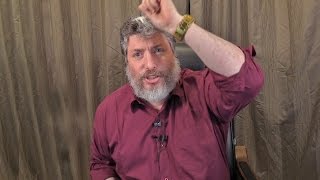
Dr. Laurence Brown talks about the Evidence that Muhammad (peace be upon him) is a Prophet of God in this 5 series of lectures The Evidence that Muhammad (ﷺ) is a Prophet of God - (part1)
http://www.youtube.com/watch?v=xiCeUWCEi0Q&feature=plcp
The Evidence that Muhammad (ﷺ) is a Prophet of God - (part 2)
http://www.youtube.com/watch?v=VCtf0IP06_8&feature=plcp
The Evidence that Muhammad (ﷺ) is a Prophet of God - (part 3)
http://www.youtube.com/watch?v=LxWBr5DlSJ4&feature=plcp
The Evidence that Muhammad (ﷺ) is a Prophet of God - (part 4)
http://www.youtube.com/watch?v=dgVEADMQOCc&feature=plcp
The Evidence that Muhammad (ﷺ) is a Prophet of God - (part 5)
http://www.youtube.com/watch?v=ClAucQMEmlw&feature=plcp
____________________
Those to whom We gave the Scripture (Jews and Christians) recognise him (Muhammad or the Ka'bah at Makkah) as they recongise their sons. But verily, a party of them conceal the truth while they know it - [i.e. the qualities of Muhammad which are written in the Taurât (Torah) and the Injeel (Gospel)]. (Al-Baqarah 2:146)
__________________________
ABOUT THE SPEAKER -
Dr. Laurence Brown is a graduate of Cornell University, Brown University Medical School and George Washington University Hospital residency program, Laurence B. Brown is an ophthalmic surgeon, a retired Air Force officer, and the medical director and chief ophthalmologist of a major eye center. He is also an ordained interfaith minister with a doctorate in divinity and a PhD in religion, and the author of a number of books of comparative religion and reality-based fiction. His works can be found on his website, http://www.LevelTruth.com Like DigitalMimbar on Facebook: http://www.fb.com/TheMimbar
Follow DigitalMimbar on Twitter: http://twitter.com/DigitalMimbar
DISCLAIMER
All videos are shared for educational and information purposes only. All videos are hosted and viewable on Youtube servers. Video titles are generated using the original video title; overall content theme including actual dialogue and speech (Transcript); and A.I-based recommendations with a focus on SEO, keyword density, and internal search functions. The video title does not represent the views held by the Youtube video uploader, or any individual, organisation or business.
If you spot any mistake, omission or give feedback, kindly Contact Us with details
Overview & Key Concepts
Who is Laurence Brown?
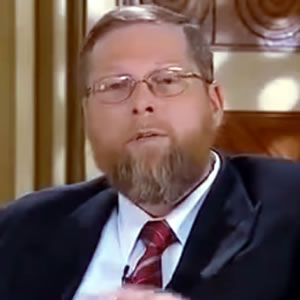 Laurence Brown is a convert to Islam. He received his BA from Cornell University, his MD from Brown University Medical School and his ophthalmology
residency training at George Washington University Hospital in Washington, DC.
What is a Prophet?
 In religion, a prophet is an individual who is regarded as being in contact with a divine being and is said to speak on that entity's behalf. They
claim to be serving as an intermediary with humanity by delivering messages or teachings from the supernatural source to other people. The message that the prophet conveys is called a prophecy. In Islam, all prophetic messengers are prophets (such as Adam, Noah, Abraham, Moses, Jesus, and Muhammad) though not all prophets are prophetic messengers. The primary distinction is that a prophet is required to demonstrate God's law through his actions, character, and behavior without necessarily calling people to follow him, while a prophetic messenger is required to pronounce God's law (i.e. revelation) and call his people to submit and follow him.
Who is GOD?
 In monotheism and henotheism, God is conceived as the Supreme Being and principal object of faith. The concept of God as described by theologians
commonly includes the attributes of omniscience (infinite knowledge), omnipotence (unlimited power), omnipresence (present everywhere), omnibenevolence (perfect goodness), divine simplicity, and eternal and necessary existence.
<ul>
<li>In theism, God is the creator and sustainer of the universe</li>
<li>In deism, God is the creator, but not the sustainer, of the universe</li>
<li>Monotheism is the belief in the existence of one God or in the oneness of God</li>
<li>In pantheism, God is the universe itself</li>
<li>In atheism, God is purported not to exist, while deemed unknown or unknowable within the context of agnosticism. </li>
</ul>
Frequently Asked Questions
1.What is a Prophet?
A prophet is a person who is assigned a special mission by God to guide mankind and include Noah, Abraham, Moses, Jesus and Muhammad
2.Were all Prophets Muslim?
In essence, all the prophets were Muslim because they preached Monotheism (i.e. the worship of one God, and not the worship false dieties).
3.How many prophets were their?
Historical sources mention 124,000, 224,000 or 1,200,000 prophets. Regardless of the exact number, God sent prophets to every land, people and period
4.What message have the prophets brought?
All prophets gave guidance and instruction to their people about how to properly worship God and live their lives. Since God is One, His message has been one and consistent throughout time. In essence, all prophets taught the message of Islam - to find peace in your life through submission to the One Almighty Creator; to believe in God and to follow His guidance.
5.Why did God send so many prophets?
God sent thousands of prophets with the sole message to worship the one, true God (the Creator) and not worship Creation, such as other men, prophets, spiritual leaders, trees, water, fire, animals, weather, money etc.
6.Do Muslims believe in Prophets?
A Muslim must believe, honour and respect each and every prophet of God
7.Did a prophet ever commit a sin?
Islam teaches all prophets were of high moral character and did not succumb to the sins their people committed. Although prophets were humans and capable of human errors of judgment, but such errors does not diminish their superiority or the respect Muslims are obliged to have for them
8.Why choose the name MuslimProphets.com?
All Prophets preached Monotheism. The worship of one God and forbade the worship of false diety. Therefore, all Prophets 'in-essence' are considered to be Muslim.
9.If all prophets taught Islam, what was so different about Muhammad?
The teachings delivered by previous prophets had gradually become lost, altered and obscured. God then sent Muhammad to:
* re-establish those original principles,
* preach other truths which had not been preached before, but were necessary now because mankind had advanced,
* to collect together the best of every religion into one faith.
So Muhammad appeared as the Last Prophet to give to the whole world one, perfect and ever-lasting, religion - Islam.
10.What is a prophet or messenger of God?
A prophet or messenger of God is a human being to whom God gives His guidance and whom He charges with the task of conveying that guidance to the people, so that they may do good and avoid evil.
11.In which countries of the world did Prophets arise?
God sent prophets to all nations on earth, at various stages of their history.
12.Which prophets do Muslims have to believe in?
Muslims have to believe in all the prophets and messengers of God, equally, without distinction, wherever they may have appeared.
13.What are the names of some prophets?
Many prophets are mentioned by name in the Quran; for example, Noah, Abraham, Moses, David, and Jesus from the Biblical prophets, and also non-Biblical prophets some of whose names are Luqman, Eber and Ezekiel.
14.What did the Prophets teach?
They all gave the same basic teaching: that man should worship God, and God alone, and do good to his fellow beings. Ofcourse, the details of the teachings differed according to the nation and the time in which a Prophet appeared. In the Quran, the teachings of all Prophets are called Islam, and the Prophets and their true followers are labelled Muslims. This refers to the fact that the fundamental teachings given by all of them were the same - submission to God.
15.Since Muslims believe in all the Prophets equally, why is Muhammad special?
All Prophets were equally from God, and equally true, but the scope of their missions varied. The messengers before Muhammad were each given teachings limited to their respective nations, because in those times a nation did not have much to do with other nations.
Furthermore, the teachings of each Prophet applied for a limited period of time only, after which God would raise another Prophet to revise some of the teachings for the new circumstances.
The time came to unite all the nations upon a single religion so that mankind may live in peace as one nation. Muhammad, to whom God gave teachings for the whole world for all time to come fulfilled this purpose.
16.Could there be a Prophet after Muhammad?
Muhammad is the final prophet from God. The teachings God gave to him are intended for all nations, for all times, so that the entire world be united in one, perfect brotherhood.
17.How are Noah, Abraham, Moses and Jesus considered Muslim Prophets, when Islam came 600-years after Jesus?
A Muslim is essentially a person who believes in one God.
All of the prophets of God preached the message of 'Monotheism' (they all called people to the worship of one God). Based on this fact, they are considered 'in-essence', in terms of their basic beliefs to be Muslim.
18.How many prophets did God send?
According to sources, God sent 124,000 prophets to guide mankind
19.Were any prophets of Arab background?
God sent 1000's of prophets and we do not know about the majority of them. However, we do know of four Arab prophets: Hud, Saleh, Shuaib and Muhammad
20.Did people believe Jesus was a Prophet?
And he said to them, “What things?” And they said to him, “Concerning Jesus of Nazareth, a man who was a prophet mighty in deed and word before God and all the people,
Luke 24:19
And the crowds said, "This is the prophet Jesus, from Nazareth of Galilee."
Matthew 21:11
21.How did the prophets Moses, Jesus, Abraham etc. call out to God?
Most likely the Aramaic or (later) Hebrew form of Allah, which would be Elah or El. These are the generic names, but we do not know if it became generic due to normative use.
Multipart Video (5)
This video is part of a series as displayed below :Evidence Muhammad is a Prophet of God - Laurence Brown 1/5
Evidence Muhammad is a Prophet of God - Laurence Brown 2/5
Evidence Muhammad is a Prophet of God - Laurence Brown 3/5
Evidence Muhammad is a Prophet of God - Laurence Brown 4/5
Evidence Muhammad is a Prophet of God - Laurence Brown 5/5